I see myself as a writer; I’m a professional liar.
– Harlan Ellison, 1976
Every now and then, we need a little reminder of our need to be antagonistic toward the establishment and really break things open that need to be broken.
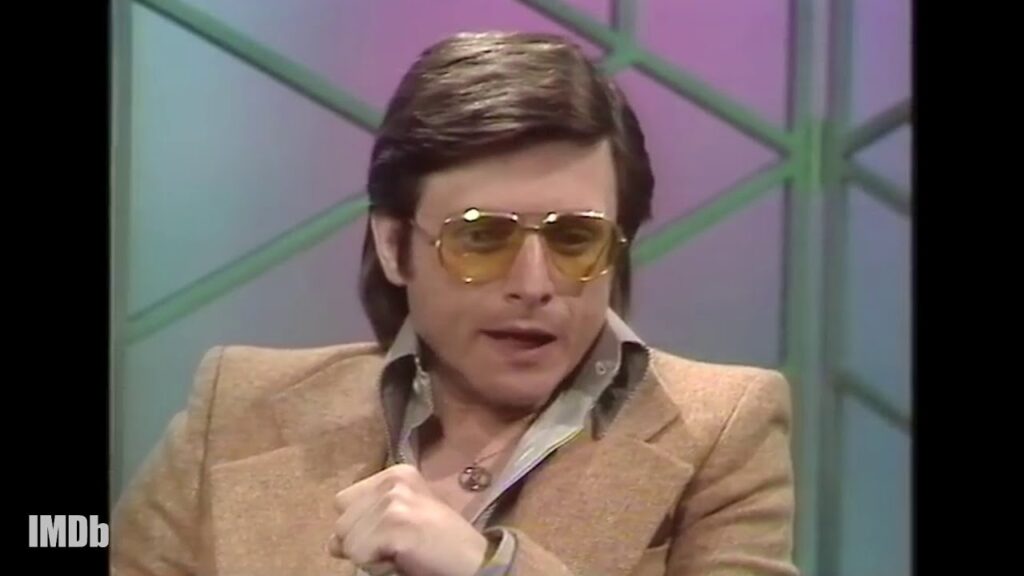
In this interview from British television in 1976 (sorry, it won’t let me embed here), Harlan Ellison speaks about a bit of his life and his consistent efforts to be a thorn in the side of those in power.
The world might be a better place if we could stir up a little trouble as teachers and students by being a little more contrarian.
Interviewer: “I’ve read your stories and I was quite disturbed. There’s a lot of violence sometimes.
HE: “There’s a lot of violence in the world.”
Truth.
Interviewer: “I would call you a science fiction writer. Now, is that exactly what you are?”
HE: “No, that is exactly what I am not… I take contemporary events and look at them through the lens of fantasy and see what they really mean in mythic terms.”
Critiquing the world as it is through stories has been the primary mode of improving society since societies first formed.
On why he owns a gun (after describing taking out a sniper outside his home):
I own a gun because as much as I’d like to believe the world is a soft, pink & white bunny story, it isn’t. I deal with reality; I’m a pragmatist.
I still miss Harlan.
The Eclectic Educator is a free resource for everyone passionate about education and creativity. If you enjoy the content and want to support the newsletter, consider becoming a paid subscriber. Your support helps keep the insights and inspiration coming!
Posy takes us on a grand adventure into the world of the incredibly small and ridiculously close.
Prepare to sit in awe of everyday objects from an entirely new perspective.
Funny, we should probably try to look at the world from different perspectives more often…
The Eclectic Educator is a free resource for everyone passionate about education and creativity. If you enjoy the content and want to support the newsletter, consider becoming a paid subscriber. Your support helps keep the insights and inspiration coming!
My life’s mission has been to create safe and beneficial AI that will make the world a better place. Today at Microsoft AI we build AI to empower people, and I’m focused on making products like Copilot responsible technologies that enable people to achieve far more than they ever thought possible, be more creative, and feel more supported.
I want to create AI that makes us more human, that deepens our trust and understanding of one another, and that strengthens our connections to the real world. Copilot creates millions of positive, even life-changing, interactions every single day. This involves a lot of careful design choices to ensure it truly delivers an incredible experience. We won’t always get it right, but this humanist frame provides us with a clear north star to keep working towards.
Some thoughts from Mustafa Suleyman on building AI that doesn’t convince people that AI is a human, or needs rights. Or is a god.
Sadly, we’re already having those discussions.
The Eclectic Educator is a free resource for everyone passionate about education and creativity. If you enjoy the content and want to support the newsletter, consider becoming a paid subscriber. Your support helps keep the insights and inspiration coming!
You do not need the strongest powers of observation to see that crime is a pretext — and not the main reason — for the military occupation of Washington by federal agents and troops from the National Guard.
The dominant story about COVID-era school closures has been simple: remote learning hurt kids’ mental health. And for many, that’s true. National data show American teens reported more loneliness and more suicidal thoughts between 2019 and 2023, with isolation during lockdown often cited as the culprit.
But a new study complicates that narrative. Researchers analyzed survey data from more than 6,000 middle schoolers during the 2020–21 school year and found a striking divide:
White and higher-income students were significantly happier and less stressed when attending school in person.
Black, Latino, and low-income students often reported the opposite—feeling less stressed and sometimes even happier when learning remotely.
In other words, remote school wasn’t universally worse. For some groups, it offered a reprieve from stressful in-person school environments, from health risks during the pandemic, or from inequities baked into the classroom experience.
The findings don’t suggest remote school is “better” overall. Academic setbacks during closures were real and disproportionately hurt the very students who sometimes felt mentally healthier at home. Instead, the study is a reminder that school isn’t a neutral space. How students experience it depends deeply on race, income, and environment.
As the researchers note, it’s not enough to flatten the pandemic into a single story of harm. Different groups of students experienced it differently—and will need different supports moving forward. If schools want to be places where all kids can thrive, they’ll need to reckon with why in-person learning left some students more stressed than staying home.
The Eclectic Educator is a free resource for everyone passionate about education and creativity. If you enjoy the content and want to support the newsletter, consider becoming a paid subscriber. Your support helps keep the insights and inspiration coming!
Math is supposed to be the most “objective” subject in school. Two plus two equals four, no matter who you are, right? But research shows the way we teach early math is full of bias—and those inequities start shaping kids’ identities before they even reach third grade.
That’s the focus of the Racial Justice in Early Math project, a collaboration between the Erikson Institute and the University of Illinois Chicago. The team is developing resources—books, classroom activities, teacher trainings—to help educators confront racial bias in how young children experience math.
As project director Priscila Pereira points out, bias isn’t just an individual teacher problem; it’s baked into structures like scripted curricula, under-resourced schools, and practices like ability grouping. Danny Bernard Martin, a professor at UIC, highlights how stereotypes like “Asians are good at math” and deficit narratives about Black children filter into classrooms, shaping expectations in damaging ways. Even the smallest teacher choices—who gets called on, whose creative solutions are validated—can reinforce or disrupt those narratives.
The initiative is working to equip educators with not just strategies but reflective spaces: webinars, fellowships, and immersive experiences where teachers and researchers can rethink what it means to create racial justice in early math classrooms. As Pereira puts it, “We just have to keep doing the work, because we know what’s right.”
It’s a reminder that math isn’t just about numbers—it’s about identity, power, and whose ideas we choose to value.
The Eclectic Educator is a free resource for everyone passionate about education and creativity. If you enjoy the content and want to support the newsletter, consider becoming a paid subscriber. Your support helps keep the insights and inspiration coming!
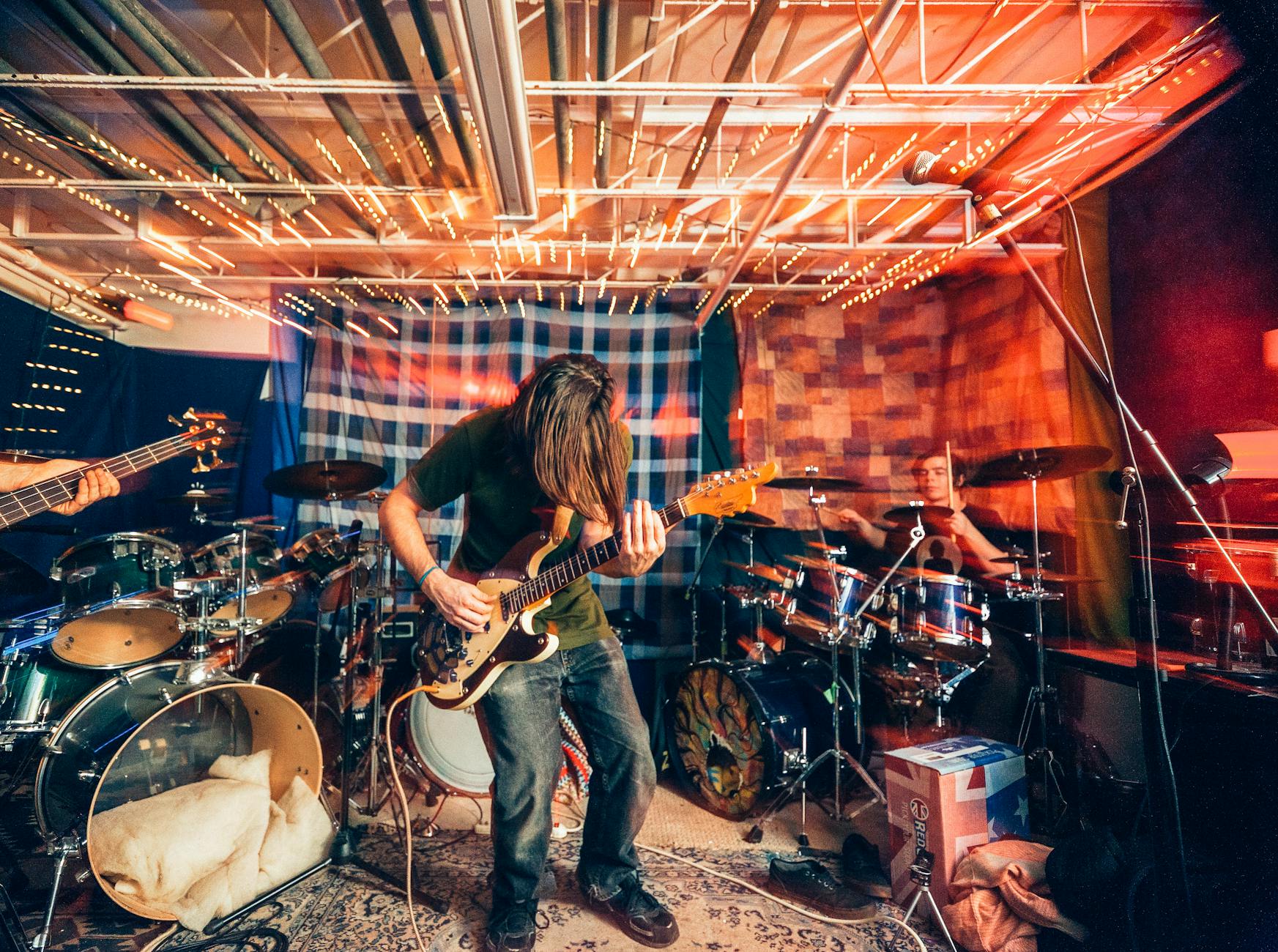
Between 1985 and 1988, a teenager named Sohrab Habibion lugged a bulky Betamax camera into punk and post-punk shows around Washington, DC. What he captured wasn’t slick production—it was sweaty clubs, blown-out sound, and raw energy. Decades later, his 60+ tapes have been digitized and uploaded to YouTube thanks to Roswell Films and the DC Public Library’s Punk Archive.
The collection is a time capsule: Fugazi tearing through songs a year before their first EP, the Descendents at their peak, the Lemonheads in their scrappy punk days, a feral GWAR in 1988, and even Dave Grohl behind the kit in Dain Bramage, years before Nirvana and Foo Fighters.
Habibion admits the footage is rough, shot by a teenager with no lighting and zero sound engineering—but that’s what makes it so authentic. It’s the kind of archival project that makes you wonder: how much of music history is still sitting in basements and closets, waiting to be rediscovered?
The Eclectic Educator is a free resource for everyone passionate about education and creativity. If you enjoy the content and want to support the newsletter, consider becoming a paid subscriber. Your support helps keep the insights and inspiration coming!
The Eclectic Educator is a free resource for everyone passionate about education and creativity. If you enjoy the content and want to support the newsletter, consider becoming a paid subscriber. Your support helps keep the insights and inspiration coming!
The Eclectic Educator is a free resource for everyone passionate about education and creativity. If you enjoy the content and want to support the newsletter, consider becoming a paid subscriber. Your support helps keep the insights and inspiration coming!
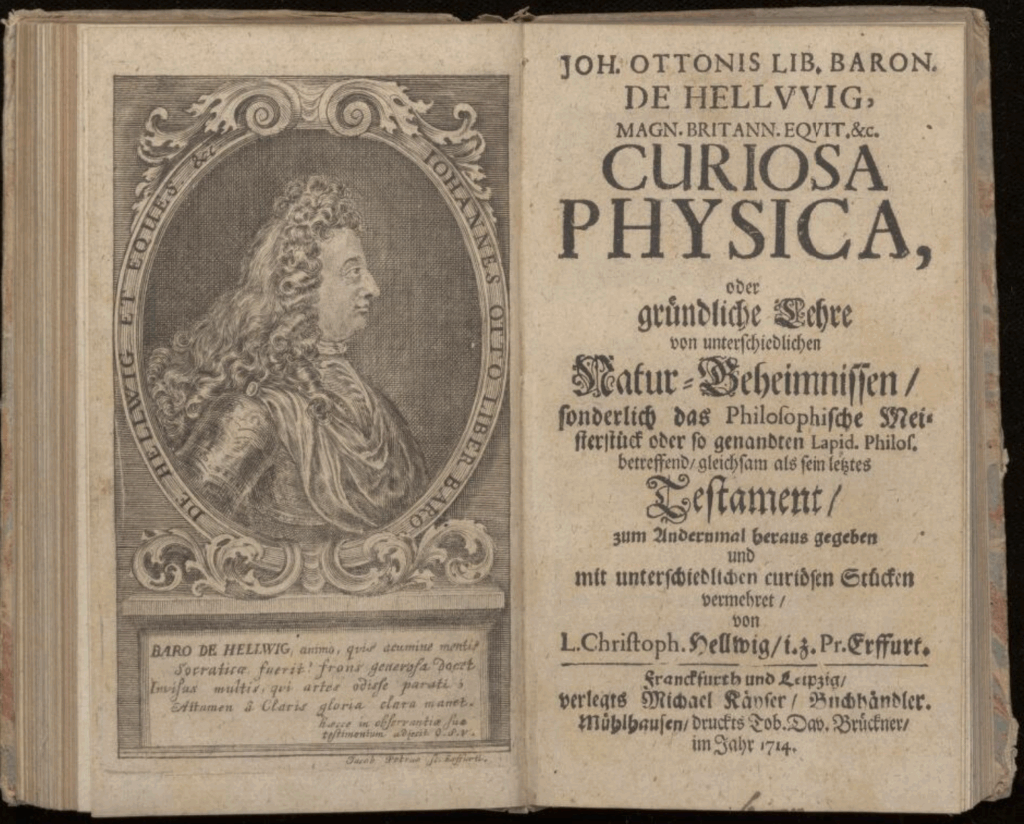
In 2018, Dan Brown (yes, thatDan Brown of The Da Vinci Code) helped fund a project at Amsterdam’s Ritman Library to digitize thousands of rare, pre-1900 books on alchemy, astrology, magic, and other occult subjects. The result, cheekily titled Hermetically Open, is now live with 2,178 digitized texts—freely available in their online reading room.
At first glance, this might feel like a niche curiosity, the kind of thing best left to academics or fantasy novelists. But the truth is, these works are a goldmine for educators looking to spark authentic learning across disciplines. They’re messy, strange, multilingual (Latin, German, Dutch, French, and English), and they blur the boundaries between science, philosophy, medicine, and mysticism. And that’s exactly why they’re valuable.
Why Teachers Should Care
For a few hundred years, it was nearly impossible to separate theology, philosophy, medicine, and natural science from alchemy and astrology. Isaac Newton himself famously spent as much time on apocalyptic prophecies and alchemical experiments as he did on calculus and optics. To engage students with these texts is to remind them that knowledge has always been interdisciplinary, networked, and evolving.
That makes them perfect material for authentic learning and connectivist classrooms: students work with primary sources, make connections across fields, and grapple with how humans have always sought to explain the world.
How Different Subjects Can Use the Collection
English & Literature (HS & College):
Analyze archaic language, quirky spellings, and “long s” typography in original texts.
Compare occult poetry or allegories to Romantic and Gothic literature.
Use passages as mentor texts for student-created “modern grimoires” or magical realism writing.
History & Social Studies (MS–HS):
Trace how alchemy influenced the rise of modern chemistry.
Explore how astrology shaped political decisions in early modern Europe.
Debate the blurred lines between science and mysticism in intellectual history.
Science (HS Chemistry & Physics):
Contrast alchemical “recipes” with modern chemical equations.
Investigate how flawed models of the universe still paved the way for discovery.
Discuss how cultural context shapes what gets counted as “science.”
Art & Design (All Grades):
Study illuminated manuscripts and esoteric symbols as design inspiration.
Create modern visual interpretations of alchemical diagrams.
Explore symbolism as a universal language across time.
Philosophy & Civics (HS & College):
Debate the tension between hidden vs. open knowledge.
Compare Platonic philosophy, Christian theology, and occult traditions.
Examine how fringe ideas challenge (and sometimes advance) mainstream thinking.
Why It Matters
When students encounter these texts, they’re not just paging through dusty old curiosities. They’re stepping into a world where knowledge wasn’t siloed, where science, spirituality, and imagination lived side by side. For teachers, this is a chance to create assessments that matter—projects where students remix history, art, and science, using both ancient texts and modern tools like AI.
It’s weird. It’s wonderful. And it’s exactly the kind of resource that can make authentic learning feel alive.
The Eclectic Educator is a free resource for everyone passionate about education and creativity. If you enjoy the content and want to support the newsletter, consider becoming a paid subscriber. Your support helps keep the insights and inspiration coming!