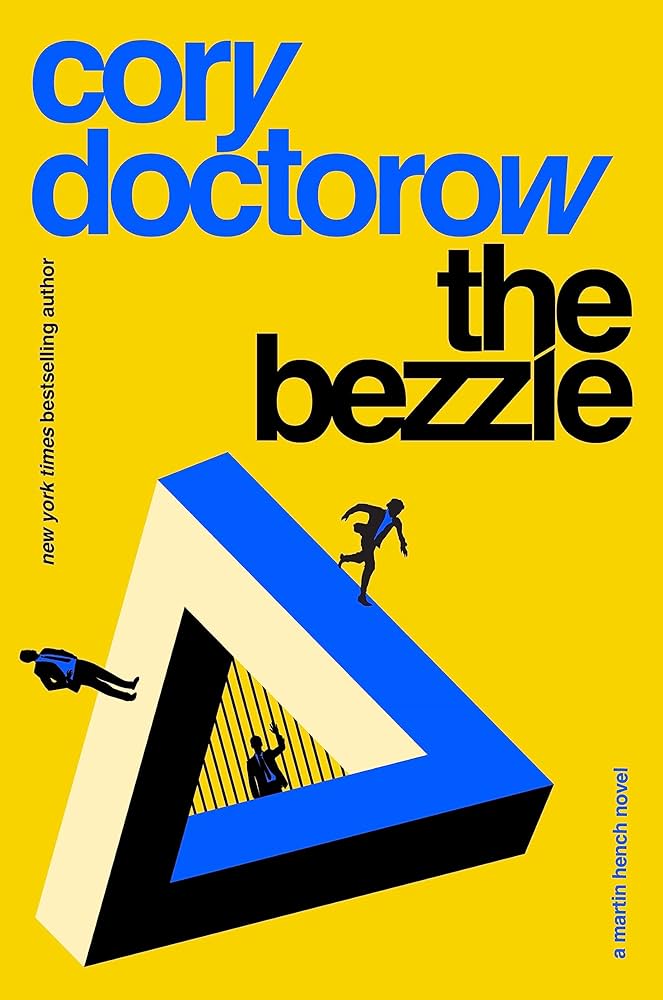
Cory Doctorow’s “The Bezzle,” a prequel to the celebrated “Red Team Blues,” revisits the life of Marty Hench, a forensic accountant with a penchant for uncovering financial scams. Doctorow’s narrative takes us back to the dot-com boom and the 2008 financial crisis, exploring the concept of the ‘bezzle’—a term coined by JK Galbraith to describe the deceptive calm before an embezzlement is discovered. This novel is not just a journey through financial intrigue but also a study of contrasts and consequences, set against the backdrop of America’s burgeoning prison-industrial complex.
The novel starts with Marty and his friend Scott Warms, who finds himself rich but disillusioned after selling his tech company. Together, they uncover a Ponzi scheme on Catalina Island, initiating a chain of events that exposes the darker sides of wealth and the legal system. Doctorow masterfully interweaves these personal dramas with broader societal critiques, especially highlighting the ruthless privatization of American prisons by private equity firms, creating a ‘bezzle’ of far greater magnitude and moral bankruptcy.
Doctorow’s prowess lies in crafting a compelling thriller and his acute observations of the technological and financial landscapes. His attention to detail, from the quirks of the dot-com era to the insidious spread of neo-Nazi police gangs, roots the narrative in a reality that is both recognizable and reprehensible. The novel’s strength also lies in its characters, particularly Marty Hench, whose journey from a sharp-minded accountant to a more reflective, albeit chastened, individual offers a nuanced exploration of friendship, loyalty, and the cost of justice.
“The Bezzle” stands out for its incisive commentary on the intersections of crime, punishment, and capitalism. Through Marty’s eyes, Doctorow delves into the mechanics of white-collar crime, juxtaposing the frictionless lives of the wealthy against the grinding hardship of prisoners and their families. This narrative is about uncovering financial fraud and exposing the societal bezzles that allow injustices to thrive unnoticed.
Doctorow’s novel resonates with the gritty realities of America’s carceral state, mirroring the detailed world-building found in science fiction and fantasy to lay bare the truths of our own world. The comparison to historical works like Dickens’ “Little Dorrit” reinforces the timelessness of these themes, emphasizing how the past and present intertwine in perpetuating systemic greed and exploitation.
In “The Bezzle,” Doctorow does more than tell a story; he invites readers to question the very fabric of society, the nature of friendship, and the price of freedom. It’s a book that thrills, educates, and disturbs, offering a mirror to the moral complexities of our times. It’s a must-read, not just for its narrative drive but for its urgent, resonant message about the world we navigate—both in the financial markets and beyond.
If You Liked This, Read Next
Red Team Blues — The first Marty Hench novel, set in Doctorow’s near-present rather than the 2006 of The Bezzle. If you liked watching Marty dismantle financial scams with forensic precision, this is the logical next stop. Same voice, same furious intelligence, different crime.
Chokepoint Capitalism — Doctorow’s nonfiction with Rebecca Giblin, making the case that Big Tech and Big Content have captured creative labor markets. If The Bezzle made you want to understand the systemic forces behind the scams rather than just the fictional version, this is the book. Dense, well-argued, and genuinely alarming.
Bad Blood by John Carreyrou — The definitive account of the Theranos fraud, told by the Wall Street Journal reporter who broke it open. Where Doctorow fictionalizes financial predation to make a point, Carreyrou documents the real thing with equal force. Reads like a thriller and is completely true.
The Big Short by Michael Lewis — If the 2008 financial crisis backdrop of The Bezzle hooked you, Lewis’s account of the handful of people who saw it coming is essential reading. The best explanation of what actually happened that most people have read.
The Eclectic Educator is a free resource for everyone passionate about education and creativity. If you enjoy the content and want to support the newsletter, consider becoming a paid subscriber. Your support helps keep the insights and inspiration coming!