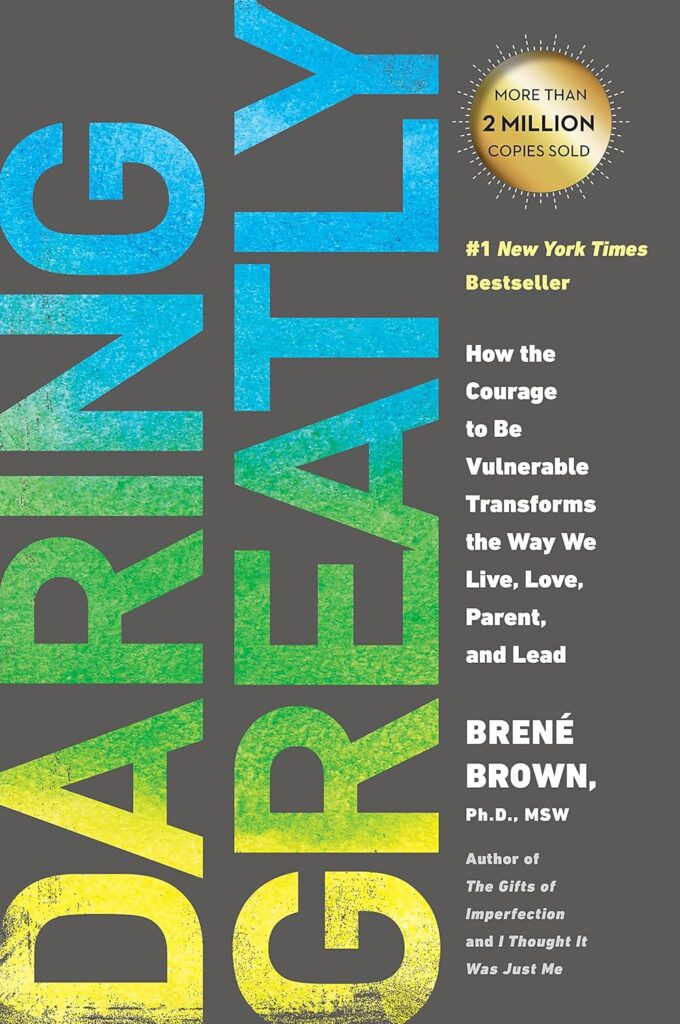
I want to be honest about my relationship with Daring Greatly before I say anything else, because I think it matters.
When Brené Brown’s TED talk went viral, I was skeptical. The vocabulary — vulnerability, wholehearted, shame resilience — sounded like the kind of therapeutic language that gets plastered on motivational posters and stripped of the difficult specificity that actually makes it useful. I’d seen the ideas travel from a research context to a corporate keynote to a school district “culture” initiative, losing precision at every step.
So I put off reading the book for longer than I should have.
I was wrong to. Daring Greatly is not what I expected. It’s a more rigorous, more honest, and more specifically useful book than the way it tends to be discussed. And for anyone who works in education — particularly anyone who coaches teachers, which requires asking adults to be vulnerable about their practice in ways that most professional norms actively discourage — it’s genuinely important.
What the Book Actually Is
Brown is a qualitative researcher who spent years studying connection, shame, and what she calls “wholeheartedness” — the capacity to engage fully in life despite uncertainty and imperfection. Daring Greatly is built on that research: real data, patterns from thousands of interviews, and a framework she developed to understand what gets in the way of genuine engagement.
The central claim is that vulnerability — defined as risk, emotional exposure, and uncertainty without guaranteed outcome — is not weakness. It is the precondition for courage, creativity, connection, and meaningful work. The armor we build to avoid vulnerability (perfectionism, cynicism, numbing, controlling) protects us in the short term and costs us everything in the long term.
The book is titled after a Theodore Roosevelt quote: the famous “man in the arena” passage, the one about the critic who sits in the cheap seats versus the person who is actually in the fight, who “dares greatly” even knowing they will fail sometimes. Brown uses it as a frame for what she’s asking: not to eliminate vulnerability, but to choose it deliberately, in service of what matters.
Why It Matters in Schools, Specifically
Teaching is one of the most vulnerable jobs there is, and we have almost no professional language for that.
Every day, teachers stand in front of 25 or 30 people and attempt to make something happen — understanding, curiosity, skill, connection — without any guarantee that it will work. The lesson they planned might fall flat. The explanation they thought was clear turned out to be confusing. A student they’ve been trying to reach for weeks shuts down at the one moment they feel like they’re finally getting through. This happens constantly, and mostly in silence, because the professional culture of teaching tends to reward certainty and penalize visible struggle.
As an instructional coach, a significant part of my work involves watching teachers teach — sitting in classrooms, observing, taking notes, then having conversations about what I saw. This is, if you think about it, a structured invitation to vulnerability. I’m asking a professional to let someone into the most imperfect part of their work, the part they haven’t figured out yet, and to talk about it honestly.
What Brown’s research makes clear is why this is so hard and why so many coaching relationships fail to produce genuine reflection: shame. Not dramatic shame, but the quiet, ambient kind — the professional fear that if you let someone see what’s not working, they’ll conclude that you are not working. That the struggle is evidence of inadequacy rather than evidence of honest effort in a genuinely difficult job.
Brown’s framework for navigating this — what she calls shame resilience, the capacity to recognize shame, reality-check the story you’re telling yourself, reach out, and speak it rather than let it drive behavior — is a practical map for conversations that coaching depends on. It’s not therapeutic language. It’s a professional development infrastructure.
The Research Versus the Brand
Here’s my honest caveat, because this book has a complicated position in the culture.
The research underlying Daring Greatly is real and legitimate. Brown’s qualitative work is careful, and her framework is grounded in patterns observed among real people. The book respects the reader’s intelligence.
But Brown has also become a brand, and the brand version of these ideas is considerably more diluted than the book version. The corporate keynote version of “vulnerability” often means “share something personal at the start of a meeting to build rapport,” which is not what Brown is describing. The school culture version tends to mean “hang growth mindset posters and say ‘we value failure,'” which is also not what Brown is describing.
The book itself is more demanding than that. It’s asking for something that is genuinely uncomfortable: not performed openness but actual risk. Not vulnerability as a tactic, but vulnerability as a condition of meaningful work. There’s a significant difference, and if you’ve been exposed to the brand version without the book version, the book may surprise you with how much harder it asks you to be on yourself.
What Resonates as an Educator
A few things from this reread that I keep thinking about:
The distinction between perfectionism and high standards. Brown is not arguing against excellence. She’s arguing against the specific cognitive trap of using perfectionism as a protective strategy — the belief that if you do everything perfectly, you can avoid criticism, judgment, and failure. That trap is everywhere in teaching and education leadership, and it produces exactly the opposite of what it promises.
The concept of “foreboding joy.” The tendency to preemptively imagine disaster when things are going well — to hold back from full engagement because full engagement feels dangerous. Teachers who’ve been through painful years sometimes develop this reflex: don’t get attached to a good moment because it will end. It’s a real pattern, and Brown names it precisely.
The arena metaphor is applied to professional learning. The person in the arena is the teacher who tries something new, has it fall apart in front of their students, and then learns from it. The person in the cheap seats is anyone who critiques without attempting. School cultures that penalize visible struggle and reward only polished performance push people out of the arena and into the cheap seats — and then wonder why professional learning doesn’t stick.
Who Should Read This
If you coach teachers or lead professional development, this book will give you a framework for understanding why the work is harder than it looks and what the emotional conditions for genuine growth actually require. Read it before you design your next coaching cycle.
If you’re a teacher who’s been in the profession long enough to have developed professional armor — the particular efficiency and distance that protects you from full engagement — this book will name what’s happening with more precision than most things you’ll find in education-specific reading.
If you’re skeptical of self-help books in general (I was), give the first three chapters a try before deciding. It earns its keep.
Rating: 4 out of 5. The research is real, the framework is useful, and the writing is clear without being condescending. The half-star off is because some sections drift toward the brand territory — the motivational phrasing that feels more like it was designed for an audience than worked out for a reader. The core is worth it.
If You Liked This, Read Next
Dare to Lead by Brené Brown — Brown’s follow-up focuses on leadership and organizations rather than on individuals. More directly applicable to school leaders and coaches.
The Gifts of Imperfection by Brené Brown — The book that preceded Daring Greatly, covering many of the same ideas with more focus on personal life than professional. A good companion.
Mindset by Carol Dweck — The growth mindset research that maps directly onto what Brown is describing about perfectionism and failure. Read together, they’re more useful than either is alone. (Affiliate link)
The Shift to Student-Led by Tucker and Novak — Connects Brown’s ideas about vulnerability and risk to the classroom specifically: what it actually means to create conditions where students (and teachers) can fail productively. (Affiliate link)
Related on this site: the Mastery post covers the long arc of skill development in teaching. Brown and Greene are in conversation, whether they know it or not — Brown asks what makes it possible to keep showing up to hard work, Greene asks what happens when you do.
The Eclectic Educator is a free resource for everyone passionate about education and creativity. If you enjoy the content and want to support the newsletter, consider becoming a paid subscriber. Your support helps keep the insights and inspiration coming!