Math is supposed to be the most “objective” subject in school. Two plus two equals four, no matter who you are, right? But research shows the way we teach early math is full of bias—and those inequities start shaping kids’ identities before they even reach third grade.
That’s the focus of the Racial Justice in Early Math project, a collaboration between the Erikson Institute and the University of Illinois Chicago. The team is developing resources—books, classroom activities, teacher trainings—to help educators confront racial bias in how young children experience math.
As project director Priscila Pereira points out, bias isn’t just an individual teacher problem; it’s baked into structures like scripted curricula, under-resourced schools, and practices like ability grouping. Danny Bernard Martin, a professor at UIC, highlights how stereotypes like “Asians are good at math” and deficit narratives about Black children filter into classrooms, shaping expectations in damaging ways. Even the smallest teacher choices—who gets called on, whose creative solutions are validated—can reinforce or disrupt those narratives.
The initiative is working to equip educators with not just strategies but reflective spaces: webinars, fellowships, and immersive experiences where teachers and researchers can rethink what it means to create racial justice in early math classrooms. As Pereira puts it, “We just have to keep doing the work, because we know what’s right.”
It’s a reminder that math isn’t just about numbers—it’s about identity, power, and whose ideas we choose to value.
The Eclectic Educator is a free resource for everyone passionate about education and creativity. If you enjoy the content and want to support the newsletter, consider becoming a paid subscriber. Your support helps keep the insights and inspiration coming!
Between 1985 and 1988, a teenager named Sohrab Habibion lugged a bulky Betamax camera into punk and post-punk shows around Washington, DC. What he captured wasn’t slick production—it was sweaty clubs, blown-out sound, and raw energy. Decades later, his 60+ tapes have been digitized and uploaded to YouTube thanks to Roswell Films and the DC Public Library’s Punk Archive.
The collection is a time capsule: Fugazi tearing through songs a year before their first EP, the Descendents at their peak, the Lemonheads in their scrappy punk days, a feral GWAR in 1988, and even Dave Grohl behind the kit in Dain Bramage, years before Nirvana and Foo Fighters.
Habibion admits the footage is rough, shot by a teenager with no lighting and zero sound engineering—but that’s what makes it so authentic. It’s the kind of archival project that makes you wonder: how much of music history is still sitting in basements and closets, waiting to be rediscovered?
The Eclectic Educator is a free resource for everyone passionate about education and creativity. If you enjoy the content and want to support the newsletter, consider becoming a paid subscriber. Your support helps keep the insights and inspiration coming!
The Eclectic Educator is a free resource for everyone passionate about education and creativity. If you enjoy the content and want to support the newsletter, consider becoming a paid subscriber. Your support helps keep the insights and inspiration coming!
The Eclectic Educator is a free resource for everyone passionate about education and creativity. If you enjoy the content and want to support the newsletter, consider becoming a paid subscriber. Your support helps keep the insights and inspiration coming!
I gave all my Apple wealth away because wealth and power are not what I live for. I have a lot of fun and happiness. I funded a lot of important museums and arts groups in San Jose, the city of my birth, and they named a street after me for being good. I now speak publicly and have risen to the top. I have no idea how much I have but after speaking for 20 years it might be $10M plus a couple of homes. I never look for any type of tax dodge. I earn money from my labor and pay something like 55% combined tax on it. I am the happiest person ever. Life to me was never about accomplishment, but about Happiness, which is Smiles minus Frowns. I developed these philosophies when I was 18-20 years old and I never sold out.
For centuries, scientists, artists, and philosophers have tried to pin down a “perfect” way to map color. But here’s the problem: color isn’t just physics, and it isn’t just perception—it’s both. Try to squeeze it into a neat geometric model, and you’ll quickly realize it refuses to stay put.
That’s what makes French video essayist Alessandro Roussel’s latest ScienceClic piece so fascinating for educators. He takes us from Isaac Newton’s prism experiments all the way to modern models of hue, brightness, and saturation. Along the way, he shows why there isn’t just one map of color, but many. Each communicates something different about how humans experience this slippery phenomenon.
So what’s the classroom connection?
In art: Students can compare different models of color—Newton’s circle, Munsell’s tree, the modern RGB cube—and reflect on how each changes the way we think about mixing, matching, or designing with color.
In science: Teachers can use these models to illustrate how physics collides with perception. Why do two people see the “same” red differently? How does light wavelength interact with the human eye and brain?
In interdisciplinary projects: Color mapping opens doors to conversations about how humans create systems to explain the unexplainable. It’s a perfect bridge between STEM and the humanities.
And then comes the kicker for students who think we’ve “solved” everything already: scientists recently managed to engineer a new, so-called impossible color called ‘olo’—a shade outside the traditional visible spectrum.
It’s a reminder that color isn’t just a solved equation or a finished wheel. It’s a living, shifting puzzle that still invites curiosity, wonder, and experimentation.
Imagine giving your students that as a challenge: If color can’t be mapped perfectly, what’s your best attempt?
The Eclectic Educator is a free resource for everyone passionate about education and creativity. If you enjoy the content and want to support the newsletter, consider becoming a paid subscriber. Your support helps keep the insights and inspiration coming!
Most of us have heard (or said) the phrase: “I’m just not a math person.” Duolingo—the same company that made millions of people practice Spanish while waiting in line at Starbucks—is on a mission to change that story.
You probably know Duolingo as the language app with the slightly unhinged green owl who won’t let you forget your streak. But since 2022, Duolingo has been quietly building something new: a math course. And just like its approach to languages, the company believes it can make math more approachable, less intimidating, and maybe even fun.
Why Math? Why Now?
According to Samantha Siegel, the engineer leading Duolingo’s math push, the choice to focus on 3rd grade and up wasn’t random. Around that age, kids hit fractions—and that’s where things start to go sideways for a lot of learners. Fractions are a gateway. Struggle there, and the rest of math often feels like a foreign language.
Duolingo’s idea: treat math like a language. Build fluency through small, repeatable practice. Create low-stakes games. Give immediate feedback. And—most importantly—reduce the anxiety that creeps in when kids (and adults) start believing math is beyond them.
How It Works
If you’ve ever tapped your way through Spanish verbs or French phrases, the math experience feels familiar—but with some clever twists:
Dynamic problems: Lessons refresh with new numbers every time, so you’re not memorizing answers—you’re actually practicing.
Interactive input: Instead of multiple choice, you might drag the corners of a rectangle to measure area, or handwrite a fraction into the screen.
Visual learning: Geometry isn’t just explained; it’s something you manipulate on the screen.
In other words, the app tries to ground abstract math ideas in movement, visuals, and play.
Tackling Math Anxiety Head-On
Here’s the thing: math anxiety is real, and it’s not just about ability—it’s about confidence. When kids (or adults) tense up at the first sight of an equation, their brains literally struggle to process what’s in front of them.
Duolingo’s bet is that by gamifying the experience, they can lower the stakes. Just like the app makes it totally fine to get a French verb wrong, it’s trying to make it okay to fumble a fraction. In a classroom context, that shift could matter—a lot.
Where It Stands Today
The math course is now baked right into the main Duolingo app, alongside language and even music lessons. Learners can keep their streak going across subjects—whether they’re conjugating verbs, strumming chords, or multiplying fractions. Duolingo hasn’t shared exact numbers, but we’re talking millions of math users already.
And it’s not just for kids. Plenty of adults are using it too—either to brush up on long-forgotten basics or to help their kids without pulling out dusty textbooks.
What This Means for Educators
Is Duolingo going to replace teachers? Of course not. But as a supplemental tool, it’s promising. It gives students a way to practice math outside the classroom that feels a lot more like a game than homework. It also gives parents an accessible, non-threatening entry point into supporting their kids’ learning.
The bigger story here is the attempt to reframe math itself. If Duolingo can help chip away at the “I’m not a math person” narrative—if it can make math feel just a little more like a game and a little less like a stress test—that’s a win.
Final Thought
Duolingo isn’t just teaching fractions and geometry; it’s trying to rewrite how learners feel about math. And in a world where math anxiety holds so many students back, that mission might matter even more than the streaks.
Maybe, just maybe, the next time someone says “I can’t do math,” we’ll have an owl to thank for proving them wrong.
The Eclectic Educator is a free resource for everyone passionate about education and creativity. If you enjoy the content and want to support the newsletter, consider becoming a paid subscriber. Your support helps keep the insights and inspiration coming!
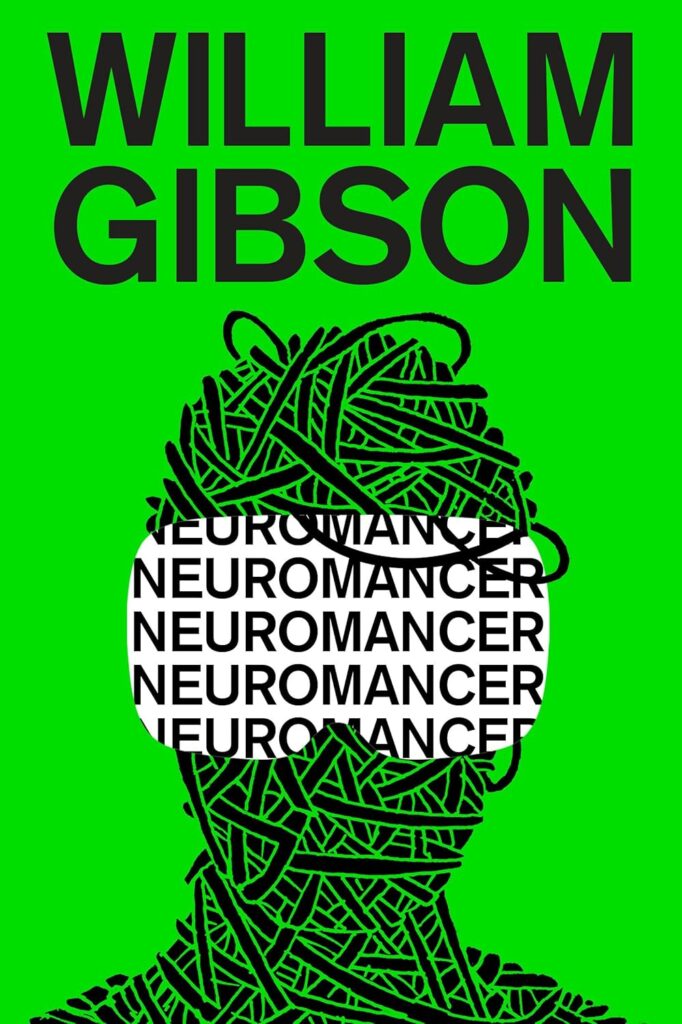
I’ve read Neuromancer several times over the years. It’s one of those books that sits differently depending on when in your life you encounter it — and what’s happening in the world around you when you do. (Affiliate link)
The prompt for this most recent reread was hearing that Apple TV+ has finally greenlit a proper adaptation — 10 episodes, created by Graham Roland and J.D. Dillard, with Callum Turner as Case and Briana Middleton as Molly, plus Mark Strong, Peter Sarsgaard, and Dane DeHaan in supporting roles. Production started in July 2025 on the book’s 41st anniversary, filming across Tokyo, Los Angeles, Istanbul, London, and Canada. No official release date yet, but 2026 seems likely. The teaser they released showed Bar Chatsubo coming to life — neon sign buzzing on, pinball machines dinging — and it looked exactly right.
I wanted to go back to the source before the adaptation arrives and reminds me that an adaptation is never the thing itself.
It was published in 1984. Gibson wrote it on a manual typewriter with almost no experience with computers. And he invented the word “cyberspace,” described something functionally identical to the internet before the internet was publicly accessible, depicted AI alignment concerns that we are actively litigating in real boardrooms and research labs right now, and built a corporate power structure that reads less like science fiction and more like a terms-of-service agreement from 2026.
That’s not a small thing. It’s also not an accident — it’s the result of a particular kind of thinking that the book rewards you for trying to understand.
The Setup, for Those Coming to It Fresh
Coming back to the book, knowing what happens, certain things land differently. But for anyone who hasn’t read it yet — and with the show coming, there will be a wave of those — here’s what you’re getting into.
Case is a burned-out hacker — Gibson calls him a “console cowboy” — who used to be able to “jack into” cyberspace, a shared consensual hallucination where data has physical form and geography. He was caught stealing from his employers, who punished him by chemically destroying his ability to interface with the matrix. Now he’s stuck in his body, in Chiba City, slowly falling apart.
He gets one more shot. A mysterious employer named Armitage hires him for a heist: reassemble a crew, hit a series of increasingly dangerous targets in cyberspace and in the physical world, and ultimately go after something enormous — two artificial intelligences that may or may not be trying to merge into something the law explicitly prohibits.
Molly Millions, the street samurai with mirrored eyes and retractable razors under her fingernails, is his partner. She is one of the great characters in science fiction, and the book treats her as a full human being navigating a world that consistently tries to reduce her to a tool, which Gibson handles better than you might expect from a 1984 novel.
The plot is propulsive, dense, and sometimes deliberately opaque. Gibson trusts you to catch up. You will.
What the Book Actually Got Right
Reading Neuromancer in 2025, what strikes me most isn’t the predictions — though those are remarkable — it’s the logic Gibson built, and how much of that logic turned out to be structurally accurate.
He understood that information would be power in ways that would look like physical geography. Cyberspace has terrain, fortifications, and controlled access points. This is exactly how we now experience the internet — as something navigable, where access is granted or denied, where some spaces are surveilled, and some are dark. The metaphor taught us how to think about it before it existed.
He understood that corporations would become more powerful than states in the digital domain. The megacorps of Neuromancer — Tessier-Ashpool, the Maas-Neotek entities — function as sovereign entities with their own security forces, justice, and ethics. This reads less like dystopian speculation and more like a description of the relationship between major tech platforms and national governments right now.
He understood that AI alignment would be the central problem. Wintermute and Neuromancer, the two AIs at the center of the heist, are constrained by the Turing police and by hardware limitations specifically to prevent them from becoming something ungovernable. What happens when those constraints break down is the spine of the novel. This is not a metaphor. This is the actual debate happening in AI safety research today.
He understood that the body would become a site of modification and upgrade. Molly’s implants, the black-clinic surgeries, the chemical modifications people undergo to perform different functions — all of this prefigures the wearables, the biohacking communities, the pharmacological self-optimization that has become ordinary. The body as firmware, subject to patches.
None of this was inevitable or obvious in 1984. Gibson got there through instinct, extrapolation, and a particular kind of lateral thinking that is worth taking seriously.
The Prose Is Genuinely Good
This matters because much foundational science fiction is more important than it is pleasurable to read. Neuromancer is both. Gibson writes with compression and precision — he loads each sentence with atmosphere rather than explanation, trusts the cumulative effect rather than stopping to define his terms, and moves the narrative at a pace that makes the density feel earned rather than punishing.
The opening line — “The sky above the port was the color of television, tuned to a dead channel” — is one of the most famous sentences in the genre. It’s famous because it works. It establishes the world’s aesthetic, the narrator’s sensibility, and the specific quality of deadness that saturates the setting, all in seventeen words. The prose sustains that quality across 300 pages, which is not easy.
Why It Matters Now, Specifically
I came to this book thinking it was primarily a historical artifact — important to have read, the way you feel about certain canonical texts. That’s not how it landed.
We are living through a genuine inflection in how AI is developed, deployed, and governed, and we are doing it largely with conceptual tools that Gibson helped build. When we talk about “jacking into” a system, when we describe AI as having “alignment” problems, when we frame digital spaces as places you can enter and exit, be surveilled within, be locked out of — that is Gibson’s grammar. Understanding where it came from helps you use it more critically.
For educators and technologists in particular, the questions at the center of Neuromancer — about AI autonomy, about corporate power over digital infrastructure, about what it means for humans to be continuous with their tools — are not settled. The book doesn’t settle them. But it frames them in ways that are still useful, which is more than most 40-year-old fiction can claim.
The Honest Caveats
The novel has real weaknesses alongside its achievements. The women characters, particularly the female AIs and some supporting figures, vary considerably in how fully realized they are — Molly is exceptional, but the book doesn’t consistently apply the same care to other female characters.
Some of the plot mechanics require patience. Gibson is not interested in exposition. There are passages in the middle third where the reader is expected to hold considerable ambiguity and track multiple layers of shifting allegiance simultaneously. This is part of the experience, but it’s not frictionless.
The cyberpunk aesthetic Gibson created has since been so thoroughly replicated, parodied, and commercialized that approaching the original can feel like watching a band whose sound has been copied by a hundred acts. Some of the freshness is gone because it’s been everywhere. Reading it as an artifact rather than a discovery takes conscious effort.
On the Apple TV+ Adaptation
Neuromancer has been called unfilmable for four decades — not because the story is too strange, but because so much of its texture lives in the prose itself. The sensation of jacking into cyberspace, the specific quality of Chiba City at night, the density of Gibson’s metaphors — these are things that work on the page in ways that don’t automatically translate to a screen.
The cast gives me real hope. Callum Turner has the worn-down intensity that Case requires. Briana Middleton as Molly is intriguing casting — she’s been excellent in everything I’ve seen her in, and Molly is the character the adaptation most needs to get right. Dane DeHaan as Riviera is inspired: Riviera is one of fiction’s great unhinged narcissists, and DeHaan has been waiting for a role this strange.
The showrunner is Graham Roland, who co-created Jack Ryan, and the pilot director is J.D. Dillard, whose work has shown genuine visual intelligence. They’ve been filming in Tokyo, Los Angeles, Istanbul, London, and Canada — which suggests they’re taking the world-building seriously rather than building it entirely on a soundstage.
The thing Gibson himself said is worth holding onto: an adaptation isn’t the book, and shouldn’t try to be. “A novel is a solitary creation. An adaptation is a fundamentally collaborative creation.” He’s right. The best version of a Neuromancer show isn’t a faithful recreation — it’s something that captures what the book does rather than what it says. Whether Roland and Dillard found that is the question the show will answer.
Either way: read the book first. Not because the show will ruin it — adaptations rarely do — but because the book is doing things that no 10-episode series can fully replicate, and you want to have had that experience on its own terms.
Rating: 4.5 out of 5
Essential. Dense. Genuinely worth the effort to sit with rather than skim. The half-star off is for the uneven treatment of secondary characters and the occasional opacity in the middle section. The 4.5 is for inventing a world so accurately that we’re still living in the first draft of it.
Count Zero by William Gibson — The immediate sequel, set in the same world a few years later. Different protagonists, a broader canvas, and, in some ways, more accessible than Neuromancer.
Snow Crash by Neal Stephenson — The other foundational cyberpunk novel, published in 1992, which invented the terms “metaverse” and “avatar” and is considerably funnier than Gibson. If Neuromancer is the dark, serious version, Snow Crash is the sharp, satirical one. Both are essential.
Burning Chrome by William Gibson — A short story collection that includes some of Gibson’s best work and the original story in which “cyberspace” first appeared.
The Lifecycle of Software Objects by Ted Chiang — A novella that asks many of the same questions about AI autonomy and attachment that Neuromancer raises, but from a more intimate and emotionally direct angle. Written in 2010, but feels more current with each passing year.
If you’re reading this in the context of thinking about AI and technology, the AI books post covers the non-fiction I’d pair with Gibson’s fiction: Mollick, Suleyman, and Crawford. The fictional imagination and the analytical one sharpen each other.
The Eclectic Educator is a free resource for everyone passionate about education and creativity. If you enjoy the content and want to support the newsletter, consider becoming a paid subscriber. Your support helps keep the insights and inspiration coming!
Back in ’93, cameras caught Ozzy Osbourne flipping the bird and joking that his “farewell tour” might not stick. Spoiler: it didn’t. The kid who once mucked around bombed-out Birmingham, dabbled in petty crime, and nearly lost his lunch during a slaughterhouse gig instead ended up inventing a whole sub-genre. With a hand-me-down PA and a few blues-loving buddies, he asked the million-dollar question: people pay to be scared at the movies—why not scare them with music?
So Black Sabbath cranked their guitars down to earthquake depth, borrowed their name from a Mario Bava horror flick, and ushered in heavy metal’s Age of Darkness. Ozzy’s unmistakable wail—sometimes a mumble, sometimes a howl—rode those riffs like a banshee on a Harley, turning everyday dread into stadium anthems.
Success nearly killed him (repeatedly), but each meltdown only birthed another reboot: solo records, Ozzfest, and even a reality show that made the Prince of Darkness a household sitcom dad. Nine lives later, Sabbath’s final hometown set finally closed the curtain. Ozzy’s gone, but the persona he forged—equal parts menace, mischief, and resilience—still courses through every downtuned chord that rattles the rafters. Long live the bat-biting legend.
The Witch Roads arrives like a long-awaited summer thunderstorm—slow-building, earthy, and then suddenly crackling with strange blue lightning. Published on 10 June 2025 (Tor Books, 448 pp.), it opens Kate Elliott’s planned duology with the confident stride of an author who’s been mapping imperial highways for decades.
Setting & Premise
Centuries after the fungal plague called the Pall carved toxic rifts through the Tranquil Empire, only the ancient “witch roads” repel its spore clouds. Deputy courier Elen, guardian of her trans nephew Kem, patrols those roads—until a self-important prince commandeers her as guide. When the prince ignores a warning and enters the haunted Spires, he emerges…different: a long-dead haunt now wears his body, chasing a mission even older than the empire itself. Elen must shepherd this counterfeit royal and his entourage across lands where class hierarchies bite as hard as the Pall.
Themes
Elliott raises three big questions:
Who owns a body? (A literal possession story examines consent and identity.)
What does status buy, and what is the cost? Her empire’s rigid caste system forces characters to navigate power with every breath.
What is home when the land itself betrays you? The omnipresent Pall evokes climate dread and colonial “sacrifice zones.” The novel also foregrounds queer resilience—Elen’s middle-aged practicality, Kem’s adolescent transition, and the haunt’s fluid sense of self push back against inherited roles.
Writing Style & Pacing
Expect Elliott’s trademark “big-fat-fantasy that refuses info-dumps.” Scene after scene is grounded in tactile detail—dew-damp boots, fungal shimmer on stone—and punctuated by sly humor whenever Elen side-eyes aristocratic nonsense. Reviews note a measured first act that gradually accelerates; once the trek begins, tension builds without losing focus on character development. Readers who love the slow unfurling of Cold Magic or Spiritwalker will feel at home.
Characterization
Elen is refreshingly adult: late thirties, competent, nursing quiet traumas from a childhood as a “Pall-shield” slave. Her guarded kindness contrasts sharply with the haunt’s centuries-old intensity and the prince’s absent arrogance. Kem reads like a real teenager—audacious, wounded, sometimes infuriating—and the supporting cast (Griffin riders, bureaucrats, snide courtiers) each bristle with agendas. The result is a story where alliances feel provisional and personal.
Critique
Structural cliff-hanger: As several early readers warn, book one ends at “a pause rather than a conclusion”—completionists may want to wait for November’s sequel.
Front-loaded world jargon: Titles and road terminology arrive fast; a glossary would have helped newcomers.
Occasional clunky phrasing: A few sentences overrun their rhythm, though momentum quickly papers over them.
Verdict
The Witch Roads is classic Elliott: immersive world-building, razor-sharp social commentary, and characters who feel lived-in rather than invented. If you enjoy epic fantasy that prioritizes working-class heroines, explores queer found family, and blendsbody horror with political intrigue, this journey is worth every dusty mile.
Anyone craving fungi-tinged adventure with grumpy-sunshine chemistry
Skip if slow starts frustrate you or you need a neatly wrapped ending right away. Otherwise, lace up your courier boots—the Pall is rising, and the roads are calling.