Tag: books

  • Random Links 3-25-2024

    close up of rusty chains
    Photo by Alex Jackson on Pexels.com


    The Eclectic Educator is a free resource for everyone passionate about education and creativity. If you enjoy the content and want to support the newsletter, consider becoming a paid subscriber. Your support helps keep the insights and inspiration coming!

  • Ten books from MIT faculty to expand your knowledge of teaching, learning, and technology

    reading

    As we head into Spring Break and, soon, into summer, you may already be building your reading list.

    I know not everyone is busy marking professional learning books like me (yes, I have a sickness), but if you are, I have some recommendations.

    Here are 10 books shared by MIT Open Learning faculty that explore teaching, learning, and technology. The books cover topics such as innovation in manufacturing, creating Android apps, sociable robots, educational technology, the science of learning, and workforce education.

    One of my favorites, Failure to Disrupt, is on the list. I believe that text is required reading for anyone in the educational technology space if you’re brave enough to admit that we are often wrong about what technology can do in our schools.


    The Eclectic Educator is a free resource for everyone passionate about education and creativity. If you enjoy the content and want to support the newsletter, consider becoming a paid subscriber. Your support helps keep the insights and inspiration coming!

  • Creativity is Humanity

    "But in the last analysis, it is the people themselves who are filed away through the lack of creativity, transformation, and knowledge in this (at best) misguided system. For apart from inquiry, apart from the praxis, individuals cannot be truly human. Knowledge emerges only through invention and re-invention, through the restless, impatient, continuing, hopeful inquiry human beings pursue in the world, with the world, and with each other." (Paulo Freire, Donaldo Macedo (Introduction), Myra Bergman Ramos (Translator), Pedagogy of the Oppressed)

    By our nature, humans were designed to create. It is the high cognitive portion of our mind, that 1% that stirs imagination and inquiry, that distinguishes us from our biological cousins on this planet.

    When we don’t participate in the creative process, or, as happens so often in our schools, when we are prevented from participating in the creative process to conform to a preconceived notion of what we should do and how we should do it, we lose our humanity and become mere machines.

    Do not waste the creative process. Do not float through your days and add nothing to the world around you.

    Do not go gentle into that good night.

    “But in the last analysis, it is the people themselves who are filed away through the lack of creativity, transformation, and knowledge in this (at best) misguided system. For apart from inquiry, apart from the praxis, individuals cannot be truly human. Knowledge emerges only through invention and re-invention, through the restless, impatient, continuing, hopeful inquiry human beings pursue in the world, with the world, and with each other.”

    Paulo Freire, Pedagogy of the Oppressed


    The Eclectic Educator is a free resource for everyone passionate about education and creativity. If you enjoy the content and want to support the newsletter, consider becoming a paid subscriber. Your support helps keep the insights and inspiration coming!

  • Keep Your Childhood Sense of Wonder

    “Masters and those who display a high level of creative energy are simply people who manage to retain a sizeable portion of their childhood spirit despite the pressures and demands of adulthood.”

    Robert Greene, Mastery
    "Masters and those who display a high level of creative energy are simply people who manage to retain a sizeable portion of their childhood spirit despite the pressures and demands of adulthood." (Robert Greene, Mastery)


    The Eclectic Educator is a free resource for everyone passionate about education and creativity. If you enjoy the content and want to support the newsletter, consider becoming a paid subscriber. Your support helps keep the insights and inspiration coming!

  • Children of Ash and Elm Book Review

    Children of Ash and Elm by Neil Price

    “Children of Ash and Elm: A History of the Vikings” by Neil Price offers a comprehensive and detailed exploration of the Viking Age, spanning from their earliest origins to their lasting impact on the modern world. Price delves deep into Viking life’s social, cultural, and political aspects, presenting a nuanced view that challenges many popular misconceptions.

    The book is not a novel but a historical account, richly detailed and engaging. Price presents a narrative that is both scholarly and accessible, weaving together archaeological findings, historical texts, and linguistic studies to create a vivid portrayal of the Viking world. The main characters in this context are the Vikings themselves, portrayed not just as raiders and warriors, but as traders, explorers, and settlers. The setting encompasses the vast expanse of the Viking influence, from the Nordic countries to the far reaches of the North Atlantic and the coasts of North America.

    Price’s writing style is eloquent and fluid, making the complex history and culture of the Vikings approachable for general readers while still offering depth and insight for scholars. In this case, the character development applies to the portrayal of the Viking society and culture. Price succeeds in humanizing the Vikings, presenting them as a complex and multifaceted people with their own values, beliefs, and social structures.

    One of the most striking aspects of “Children of Ash and Elm” is its ability to bring the Viking world to life through vivid imagery and descriptive language. Price uses a variety of sources to reconstruct the Viking Age, allowing readers to immerse themselves in the era. The book does not shy away from the more brutal aspects of Viking life, including their rituals, warfare, and social practices, providing a balanced and unvarnished view.

    Emotionally, the book is engaging and thought-provoking. It evokes a sense of wonder at the Vikings’ achievements and their resilience and a reflective consideration of their impact on the societies they encountered. Price’s analysis of Viking mythology and religion adds a fascinating layer to the narrative, revealing their actions’ spiritual and philosophical underpinnings.

    No products found.

    Through “Children of Ash and Elm,” Price communicates a theme of complexity and contradiction in the Viking age, challenging the stereotype of Vikings as mere barbaric raiders. He successfully conveys their culture’s richness, contributions to trade and exploration, and lasting impact on European history.

    The book’s primary strength lies in its thorough research and ability to present a nuanced view of the Viking era. However, some readers might find the level of detail overwhelming, especially those looking for a more casual read.

    I would highly recommend “Children of Ash and Elm” to history enthusiasts, particularly those interested in the Viking Age and scholars in the field. It offers a valuable perspective that enriches our understanding of a crucial period in European history.

    Comparing it to other works on Viking history, Price’s book stands out for its depth of research and engaging narrative. It complements other historical accounts by providing a more rounded and humanized view of the Vikings.

    Rating: 4 out of 5 stars. “Children of Ash and Elm” is a must-read for anyone interested in the Vikings, offering a comprehensive, insightful, and beautifully written account of their history and legacy.


    The Eclectic Educator is a free resource for everyone passionate about education and creativity. If you enjoy the content and want to support the newsletter, consider becoming a paid subscriber. Your support helps keep the insights and inspiration coming!

  • The Power of Learning and Combining Skills

    As educators, we can choose to ignore this truth or embrace it. 

    mastery

    One choice will further alienate our students, leaving them only wanting more from school. The other choice, to embrace, will bring dramatic change and new life to schools. 

    It’s up to us.

    Robert Greene, Mastery


    The Eclectic Educator is a free resource for everyone passionate about education and creativity. If you enjoy the content and want to support the newsletter, consider becoming a paid subscriber. Your support helps keep the insights and inspiration coming!

  • The Best Books I Didn’t Read in 2023

    a sea of books

    Last week’s newsletter focused on the best books I read in 2023. This week, I’m taking a little different trip down the literary road…

    The Eclectic Educator is a reader-supported publication. To receive new posts and support my work, consider becoming a free or paid subscriber.

    First, let’s discuss the idea of an “antilibrary” and why it’s important.

    An antilibrary, a collection of unread books, is seen as a valuable tool for intellectual growth. It’s a reminder of what you don’t know and a symbol of potential knowledge to acquire. It’s not a sign of intellectual failure but a testament to your curiosity and desire to learn more.

    And so, to the dismay of my bookshelves and perhaps my wife, I keep buying books. I’ve tried to switch to only buying ebooks, but there is something about being surrounded by physical books; the reminder that no matter how I try, I’ll never be able to read them all or know them all.

    That feeling is similar to the one I get each time I think about Carl Sagan’s Pale Blue Dot. As the earth hangs in a sunbeam, surrounded by the inky blackness of the infinite universe, so do I sit as a small speck of learning in an infinite ocean of knowledge when surrounded by books.

    It’s humbling and puts the world in perspective if you let it. Surround yourself with books, even if you’ll never get to them all.

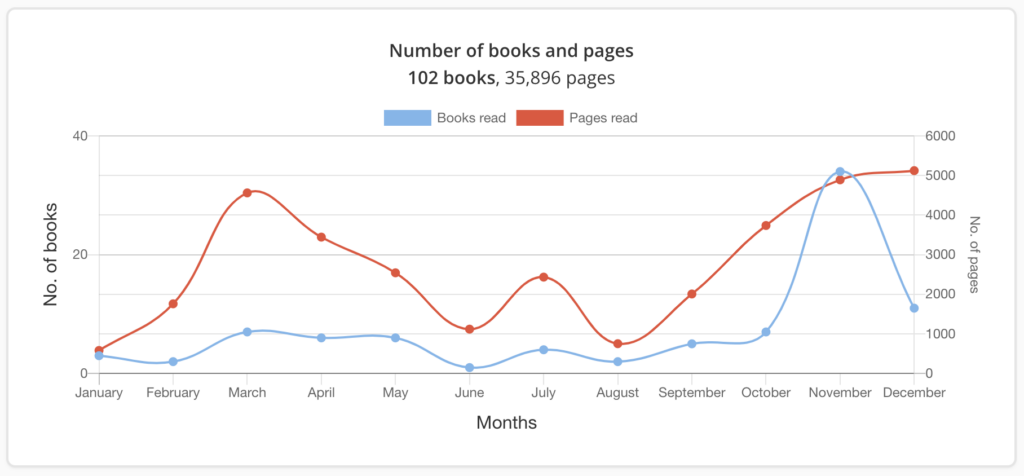
    I try to read more books every year, but I’ll never get through them all. I embrace this incredibly Sisyphean task, mostly because I already have a backlog of nearly 3,000 books on my list and because those silly publishers keep putting out new books.

    Yet, I persevere.

    There are a number of great books published in 2023 that I’d like to get to but haven’t yet—one of them is staring at me now as I write this piece. Here are some of the best books from 2023 I haven’t read (yet), but they’re now in my ever-expanding to-be-read (TBR) list:

    James McBride, The Heaven & Earth Grocery Store

    This novel by James McBride tells a story rooted in family, faith, and the search for understanding. It explores the lives of diverse characters whose paths intersect at a small grocery store, revealing the complexities of human experience through lyrical prose and deep emotional resonance.

    David Grann, The Wager

    David Grann’s “The Wager” is a gripping tale of adventure and survival. It recounts the harrowing story of shipwrecked sailors in the 18th century, who make a desperate bet for survival. The book is a thrilling blend of history and narrative, showcasing Grann’s talent for uncovering forgotten stories.

    R.F. Kuang, Yellowface

    “Yellowface” by R.F. Kuang delves into the controversial topic of cultural appropriation in the literary world. It’s a provocative exploration of identity, authorship, and the blurry line between homage and theft, framed within an engaging and thought-provoking narrative.

    Matthew Desmond, Poverty, By America

    In “Poverty, By America,” Matthew Desmond offers a groundbreaking examination of poverty in the United States. The book challenges conventional views, revealing how systemic forces and policies contribute to economic hardship and argues for fundamental changes to address this persistent issue.

    Lauren Groff, The Vaster Wilds

    Lauren Groff’s “The Vaster Wilds” is a beautifully written novel that transports readers into a world of nature and mystery. Set in an enigmatic wilderness, it weaves a tale of self-discovery and connection to the natural world, marked by Groff’s signature lyrical style and deep, reflective storytelling.

    Timothy Egan, A Fever in the Heartland: The Ku Klux Klan’s Plot to Take Over America, and the Woman Who Stopped Them

    Timothy Egan’s “A Fever in the Heartland” is a gripping historical account of the Ku Klux Klan’s insidious attempt to infiltrate American society in the early 20th century. The book also highlights the courageous efforts of those who fought against the Klan, focusing on the pivotal role of one woman.

    Michael Finkel, The Art Thief: A True Story of Love, Crime, and a Dangerous Obsession

    In “The Art Thief,” Michael Finkel narrates a riveting true story of an infamous art heist. The book blends elements of romance, crime, and suspense, offering an inside look into the high-stakes world of art theft and the obsessive love that drives it, all set against a backdrop of international intrigue.

    Benjamin Labatut, The MANIAC

    Benjamin Labatut’s “The MANIAC” is a dark and compelling narrative exploring the mind of a genius on the brink of madness. This novel blends historical facts with fiction, delving deep into the psyche of a brilliant but troubled character, set against a backdrop of scientific discovery and moral ambiguity.

    Salman Rushdie, Victory City

    “Victory City” by Salman Rushdie is an epic tale spanning centuries, centered around a mystical city that rises and falls through the ages. Rushdie’s storytelling weaves together history, mythology, and magic, creating a vivid tapestry of human triumphs and tragedies, resilience, and the power of imagination.

    Jonathan Eig, King: A Life

    Jonathan Eig’s “King: A Life” is a comprehensive and insightful biography of one of the most iconic figures in American history. The book delves into the complexities of his life, exploring his achievements, challenges, and enduring impact on civil rights and social justice, painted with meticulous research.

    Alright, there’s the list, although it’s quite incomplete. Hundreds of great books came out in 2023, and it’s our job to go out there, find them, read them, and share them with the world.

    Maybe you’ll start building your own antilibrary in 2024. If so, I’d love to hear about it.

    See you next year!


    The Eclectic Educator is a free resource for everyone passionate about education and creativity. If you enjoy the content and want to support the newsletter, consider becoming a paid subscriber. Your support helps keep the insights and inspiration coming!

  • The City of the Singing Flame

    clark ashton smith the city of the singing flame

    As I attempt to finish this year’s reading challenge, I’m looking for some shorter books than my usual fare. As luck would have it, J. Michael Straczynski shared something great on his Patreon.

    Back in 1986, Harlan Ellison did a reading of Clark Ashton Smith’s “The City of the Singing Flame,” and let me tell you, it did not disappoint.

    I’d never heard of Clark Ashton Smith, much less read any of his work. Gang, this one is an unqualified banger.

    In the recording, Ellison notes that this story was the first fantasy/sci-fi story he had ever read, and it impacted him greatly. If you’ve read Ellison’s work and read this story, you’ll see the impact clearly.

    This is the beauty of always being open to reading, listening, or watching new things. Don’t get me wrong, I’m the world champion at rewatches and rereads. But sometimes you need to broaden your horizons.

    I’m so glad I did. I’m absolutely reading more of Smith’s work in the future.


    The Eclectic Educator is a free resource for everyone passionate about education and creativity. If you enjoy the content and want to support the newsletter, consider becoming a paid subscriber. Your support helps keep the insights and inspiration coming!

  • 8 November 2023

    Quote of the Day

    “Anyone anywhere could publish to everyone everywhere.” (Lawrence Lessig, Code)

    "Anyone anywhere could publish to everyone everywhere." (Lawrence Lessig, Code)

    Ah, the dream of a democratized publishing platform. A place where all voices could be heard regardless of background or socioeconomic status.

    I’ve often said, “The greatest promise of the Internet is that it gives everyone a voice.”

    And I’ve also said, “The greatest problem of the Internet is that it gives everyone a voice.”

    It’s a bit of a Stockdale Paradox in that while we realize the great benefits of having a way to connect people around the world, sharing ideas and information in an attempt to make the world a better place, we must also realize that there are people who will take advantage of that system for their own advancement or to spread their horrible, destructive ideals.

    The only cure I know is to keep doing good things and hope that others follow suit.

    Musical Interlude

    Pegasus by Arlo Parks (ft. Phoebe Bridgers)

    Got the red eye

    Just to be near, ’cause my head eats me alive

    You’re makin’ sure I’m eatin’

    I call my mother just to tell her that I’m happy

    Long Read of the Day

    With the most recent Israeli/Palestinian conflict dominating the news cycle, it’s a good time to remind all of us that there should be a more nuanced approach to the situation. No one side is completely in the right and no one side is completely in the wrong.

    However, when calls are made from either side that inflame the situation, no one wins. There must be a measured response.

    In schools, we do our best to teach our students empathy. It’s definitely something that can be applied to this—and many other—volatile situations.

    What we should guard against is inflammatory language:

    Last week, Tlaib circulated a video on X, formerly Twitter, that sharply criticized President Joe Biden for supporting Israel’s military retaliation against Hamas in Gaza. She went on to justify a highly inflammatory Palestinian-resistance slogan. “From the river to the sea,” she wrote, “is an aspirational call for freedom, human rights, and peaceful coexistence.”

    The burden of promoting a more civil discourse shouldn’t fall only on Tlaib and others sympathetic to the Palestinians. Supporters of Israel should not assume that pro-Palestinian means pro-Hamas. Students on many campuses genuinely view Israeli administration of the Palestinian territories as immoral; to portray their activism as mere anti-Semitism is to stifle legitimate inquiry. To defend any and all Israeli military actions by pointing out that Hamas started the war is to deny Israel agency.

    Photo of the Day

    Treat yourself to the bewitching sight of barred spiral galaxy M83 — which comes alive with detail in this new image by the Webb telescope’s MIRI instrument.

    Treat yourself to the bewitching sight of barred spiral galaxy M83 — which comes alive with detail in this new image by the Webb telescope’s MIRI instrument.

    Final Thoughts

    Kentucky just wrapped the latest gubernatorial election, and, thankfully, the voters have chosen to return Andy Beshear for a second term. While there are a number of issues with the rest of the statewide government, I’m happy to have Andy still in that position.

    The alternative would have been a puppet of right-wing extremists and would likely have done little to advance anything of worth in Kentucky.

    That is, of course, my informed opinion. Which, as the great Harlan Ellison would say:

    “You are not entitled to your opinion. You are entitled to your informed opinion. No one is entitled to be ignorant.”


    The Eclectic Educator is a free resource for everyone passionate about education and creativity. If you enjoy the content and want to support the newsletter, consider becoming a paid subscriber. Your support helps keep the insights and inspiration coming!

  • Best New Books for Teachers September 2023

    photo of woman reading book
    Photo by Polina Zimmerman on Pexels.com

    September is coming, and you know what that means – a fresh start to the academic year and a chance to revamp your teaching toolkit. It’s also the perfect time to dive into some inspiring new reads that can transform your classroom experience. Whether you’re a seasoned teacher or just starting your journey, the right books can be your best friends, mentors, and even your daily dose of motivation.

    So, what’s cooking in the literary world this September 2023? We’ve scoured the shelves, talked to the experts, and even sneaked a peek into some classrooms to bring you the absolute BEST new books for teachers. These aren’t just any books; they’re game-changers, filled with innovative ideas, practical strategies, and heartwarming stories that will resonate with educators of all stripes.

    Ready to discover your next favorite book and take your teaching to the next level? Buckle up, because this list is packed with gems you won’t want to miss. Let’s dive in!

    Punished for Dreaming: How School Reform Harms Black Children and How We Heal by Bettina L. Love

    Dr. Bettina Love argues that Reagan’s War on Drugs ushered in a War on Black Children, pathologizing and penalizing them. She makes her case through the real lives of 25 Black Americans and sets out a roadmap to help repair the damage.

    No products found.

    Growing Up in Public: Coming of Age in a Digital World by Devorah Heitner

    The kids in your classrooms live their lives in a public way we could never have imagined a few decades ago. This book is a must-read for parents and teachers who need to help them navigate today’s social media-driven world in a way that’s safe and supportive.

    No products found.

    Fair Play: How Sports Shape the Gender Debates by Katie Barnes

    Title IX brought important changes to schools, especially when it came to sports. But clearly, the gender debates in sports (and the world in general) are far from over. This book evaluates multiple sides of the sensitive issue of transgender and intersex participation in sports and offers potential solutions. School sports coaches will find a lot to consider in this compelling read.

    No products found.


    The Eclectic Educator is a free resource for everyone passionate about education and creativity. If you enjoy the content and want to support the newsletter, consider becoming a paid subscriber. Your support helps keep the insights and inspiration coming!