The McMahon/Holiday Reading List: 20 History Books Worth Your Time

Sharon McMahon — “America’s Government Teacher,” former high school government teacher turned educator with a massive non-partisan following — stopped by Ryan Holiday’s Painted Porch bookstore in Bastrop, Texas, for a book conversation that got immediately added to my watch list.

I follow both of them. McMahon, because she does what great history education should do: she makes the stakes of the past feel present without manufacturing false urgency. Holiday because he reads seriously and recommends honestly, and because his bookstore is the kind of independent shop that invests in curation rather than bestseller display tables. When these two sit down to geek out about overlooked American history, the reading list they produce is worth paying attention to.

The conversation covered a lot of ground — from Booker T. Washington’s pragmatism to Taylor Branch’s monumental civil rights trilogy to the kind of narrative nonfiction that turns history into something you can’t put down. What I appreciate about both of them is the underlying argument running through the whole exchange: that knowing history isn’t a luxury or an academic exercise. It’s how you understand how the present got built and what actually holds it together.

Below is the full list they produced, with notes on the ones I’d prioritize or already recommend to others.


The Full List

Up from Slavery — Booker T. Washington
The book Holiday kept returning to throughout the conversation. Washington’s autobiography is one of the most influential American texts ever written, and it’s been criminally underread. His pragmatism, his insistence on building from where you are rather than waiting for ideal conditions — these ideas rippled through American history in ways McMahon traces brilliantly (Julius Rosenwald, Toni Morrison’s relationship to his legacy, John Lewis). Read this before almost anything else on this list.

A Slave in the White House — Elizabeth Dowling Taylor
The story of Paul Jennings, James Madison’s enslaved manservant, who witnessed some of the most consequential events in early American history and whose own story has been largely invisible to that history. The kind of primary source experience that reframes everything you thought you knew about the period.

The Mind on Fire — Mark Noll
An intellectual biography of 19th-century American Christianity and its relationship to questions of history, science, and social change. For educators considering the relationship among values, knowledge, and action, this is rich territory.

Her Right Foot — Dave Eggers
A children’s book about the Statue of Liberty — specifically about why she’s mid-stride, walking forward, and what that movement means about America’s promise and its unfulfilled obligations. Short enough to read in one sitting. Hits harder than its length suggests.

The Devil in the White City — Erik Larson
If you’ve never read Larson, start here. The 1893 World’s Fair in Chicago, the architect building a city from scratch, and a serial killer operating in its shadow. Larson is the gold standard for narrative nonfiction that reads like a novel without sacrificing accuracy. I’ve recommended this book to more people than any other on this list.

The Demon of Unrest — Erik Larson
Larson again, covering the months between Lincoln’s election and the first shots at Fort Sumter. What’s striking about this period is how many people on all sides believed the catastrophe could still be avoided right up until it wasn’t. A deeply uncomfortable read in the current climate.

Dead Wake — Erik Larson
The Lusitania. The convergence of the ship’s last voyage and the U-boat tracking it, told with the same intercutting technique that makes all of Larson’s books compulsive. Once you read one Larson,
you will read them all.

A Woman of No Importance — Sonia Purnell
Virginia Hall ran resistance operations in occupied France during World War II with a prosthetic leg, a price on her head, and constant sabotage from the OSS bureaucrats who didn’t believe a woman could do what she was doing. The title is what the Gestapo put in her file. This is one of the best narrative histories I’ve read in years.

The River of Doubt — Candice Millard
Theodore Roosevelt, after losing the 1912 election, led an expedition into an unmapped tributary of the Amazon that nearly killed him. Millard writes the whole thing with propulsive momentum and no sentimentality. Remarkable story, excellently told.

In a Sunburned Country — Bill Bryson
Bryson’s account of Australia — its history, its absurdity, its extraordinary natural world, and the peculiar fact that everything there seems designed to kill you. His best travel book, which is saying something. A palate cleanser between heavier reads.

Tunnel 29 — Helena Merriman
Thirty-five people tunneled under the Berlin Wall to freedom in 1962. Merriman spent years tracking down the survivors and reconstructed the story from their accounts. Holiday’s 2024 best-of list called it so good he sometimes had to put it down and walk around to calm down. That tracks.

Say Nothing — Patrick Radden Keefe
The Troubles in Northern Ireland through the story of the Price sisters, Jean McConville’s disappearance, and what happens to people who commit violence in the service of a cause and then have to live with what they did. Keefe is the best longform journalist working, and this is his masterwork. Required reading.

Leadership: In Turbulent Times — Doris Kearns Goodwin
Goodwin on Lincoln, FDR, LBJ, and TR — four presidents whose capacity to lead was forged through adversity and failure rather than smooth ascent. Less hagiographic than most political biographies. Useful as a study of how leadership actually develops.

Parting the Waters — Taylor Branch
Volume one of Branch’s trilogy on the civil rights movement. 900 pages. Worth every one. The most comprehensive and human account of that period in American history, and the one that connects the movement’s internal debates, personal relationships, and strategic decisions in ways no shorter account can. McMahon talked about this throughout the conversation as essential reading. She’s right.

The Year of Living Constitutionally — A.J. Jacobs
Jacobs spent a year trying to live according to the Constitution as literally as possible — including the 18th-century context, the historical debates, and the original meanings of phrases we’ve since abstracted into symbols. Funny and genuinely illuminating. Good entry point for anyone who teaches government or civics.

Why Fish Don’t Exist — Lulu Miller
Ostensibly a biography of taxonomist David Starr Jordan, this book is actually about what happens when the systems we build to make sense of the world collapse — and what it might mean to keep going anyway. One of the most unusual nonfiction books I’ve read. Harder to describe than to read.

Everything Happens for a Reason — Kate Bowler
Bowler, a historian of prosperity gospel, was diagnosed with Stage IV cancer at 35 while pregnant. This book is her account of what it’s actually like to live inside a culture that can’t tolerate the absence of meaning — and what honest faith looks like when the easy answers are stripped away. Devastating and necessary.

A Gift from the Sea — Anne Morrow Lindbergh
Written in 1955, this slim meditation on solitude, simplicity, and the pressures of modern life has sold millions of copies over seven decades because it remains true. A different pace than the rest of this list. Worth it.

Good Inside — Dr. Becky Kennedy
The parenting book that connects most directly to Self-Determination Theory — Kennedy’s framework is built around the idea that behavior is communication and that children need autonomy, connection, and competence rather than compliance. Useful for parents and anyone who works with children.

Bury the Chains — Adam Hochschild
The British abolition movement is told as the improbable story of a small group of people who decided to dismantle an institution that was economically foundational to the empire in which they lived. Hochschild is meticulous and morally serious. One of the best books on how social change actually happens.


Where I’d Start

If you’re new to this kind of narrative history and want to know where to begin, Say Nothing (Keefe), A Woman of No Importance (Purnell), and Up from Slavery (Washington) will pull you in immediately and leave you wanting more. The Devil in the White City (Larson) is the gateway drug for this entire genre. Parting the Waters (Branch) is the most important book on the list and the most demanding — save it for when you have time to commit.


The original conversation between McMahon and Holiday is worth watching in full: “Sharon McMahon’s Reading List” (from Ryan Holiday). It’s the kind of book talk that makes you want to buy five things immediately.

Affiliate disclosure: Some links above are Amazon affiliate links. If you buy through them, I earn a small commission at no extra cost to you.


The Eclectic Educator is a free resource for everyone passionate about education and creativity. If you enjoy the content and want to support the newsletter, consider becoming a paid subscriber. Your support helps keep the insights and inspiration coming!
The Pentagon’s DEI Panic

The most likely answer is that they’re afraid of Trump, but the larger problem is that the MAGA movement—including its supporters in the military and the Defense Department—is based on fear and insecurity, a sense that American culture is hostile to them and that Trump is the protector of a minority under siege. Many members of this movement believe that the “left,” or whatever remains of it now, is engaged in a war on the traditional family, on masculinity, on American capitalism, on Christmas and Christians. They see DEI as one of the many spiritual and moral pathogens that threaten to infect fine young men and women (especially white ones) and turn them into sexually decadent Marxists.

Tom Nichols hits this issue right on its head. Why is the DOD so worried about DEI? Heck, why is anyone worried about it?

Of course, the argument that some MAGAs will come back with as they want to purge the government of anything that could be misconstrued as ‘DEI’–which they don’t understand–will be this: “Well, you lefties wanted to rename all those military bases named after Confederate war heroes!”

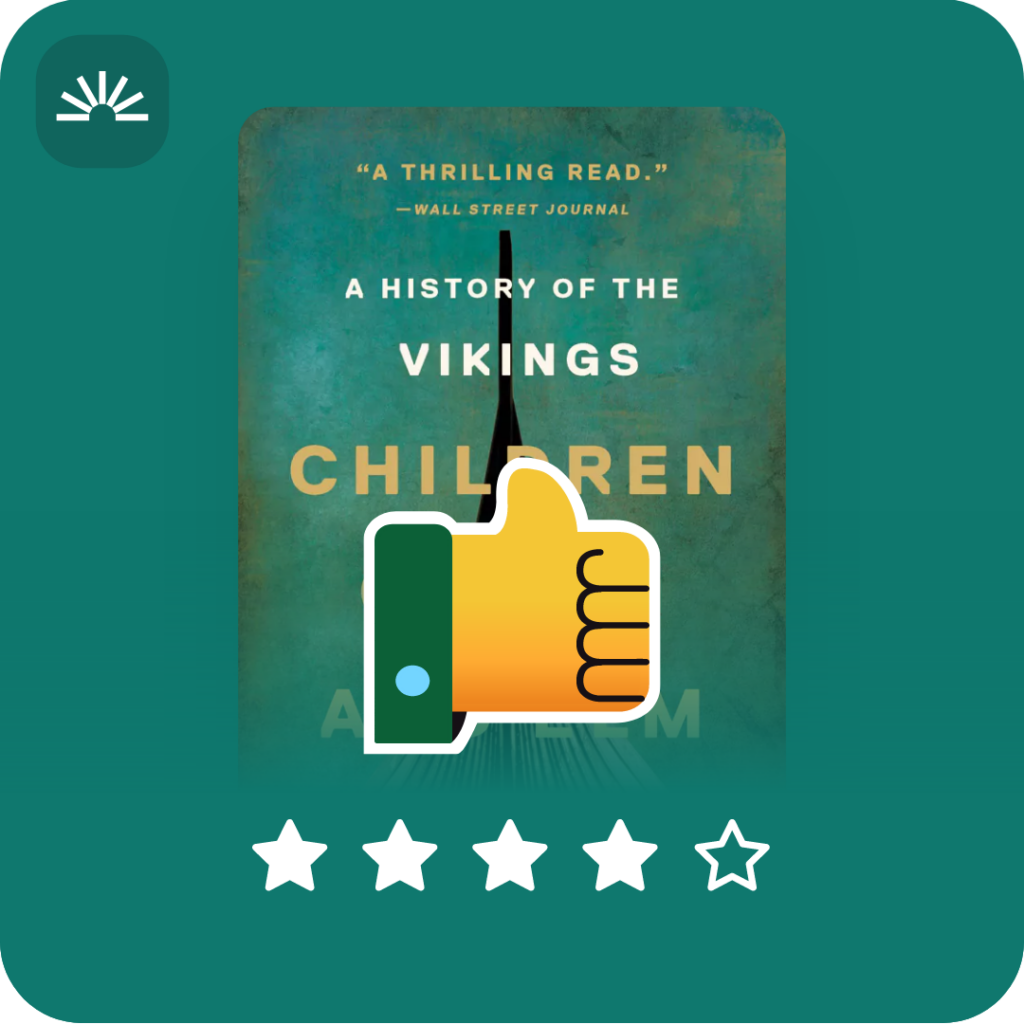
Children of Ash and Elm Book Review

Children of Ash and Elm by Neil Price

“Children of Ash and Elm: A History of the Vikings” by Neil Price offers a comprehensive and detailed exploration of the Viking Age, spanning from their earliest origins to their lasting impact on the modern world. Price delves deeply into the social, cultural, and political aspects of Viking life, presenting a nuanced view that challenges many popular misconceptions.

The book is not a novel but a historical account, richly detailed and engaging. Price presents a narrative that is both scholarly and accessible, weaving together archaeological findings, historical texts, and linguistic studies to create a vivid portrayal of the Viking world. The main characters in this context are the Vikings themselves, portrayed not just as raiders and warriors, but as traders, explorers, and settlers. The setting encompasses the vast expanse of the Viking influence, from the Nordic countries to the far reaches of the North Atlantic and the coasts of North America.

Price’s writing style is eloquent and fluid, making the complex history and culture of the Vikings approachable for general readers while still offering depth and insight for scholars. In this case, the character development applies to the portrayal of the Viking society and culture. Price succeeds in humanizing the Vikings, presenting them as a complex and multifaceted people with their own values, beliefs, and social structures.

One of the most striking aspects of “Children of Ash and Elm” is its ability to bring the Viking world to life through vivid imagery and descriptive language. Price uses a variety of sources to reconstruct the Viking Age, allowing readers to immerse themselves in the era. The book does not shy away from the more brutal aspects of Viking life, including their rituals, warfare, and social practices, providing a balanced and unvarnished view.

Emotionally, the book is engaging and thought-provoking. It evokes a sense of wonder at the Vikings’ achievements and their resilience and a reflective consideration of their impact on the societies they encountered. Price’s analysis of Viking mythology and religion adds a fascinating layer to the narrative, revealing their actions’ spiritual and philosophical underpinnings.

Through “Children of Ash and Elm,” Price communicates a theme of complexity and contradiction in the Viking age, challenging the stereotype of Vikings as mere barbaric raiders. He successfully conveys their culture’s richness, contributions to trade and exploration, and lasting impact on European history.

The book’s primary strength lies in its thorough research and ability to present a nuanced view of the Viking era. However, some readers might find the level of detail overwhelming, especially those looking for a more casual read.

I would highly recommend “Children of Ash and Elm” to history enthusiasts, particularly those interested in the Viking Age, as well as to scholars in the field. It offers a valuable perspective that enriches our understanding of a crucial period in European history.

Compared with other works on Viking history, Price’s book stands out for its depth of research and engaging narrative. It complements other historical accounts by providing a more rounded and humanized view of the Vikings.

Rating: 4 out of 5 stars. “Children of Ash and Elm” is a must-read for anyone interested in the Vikings, offering a comprehensive, insightful, and beautifully written account of their history and legacy.

If You Liked This, Read Next

The Sea Wolves by Lars Brownworth — A more accessible, narrative-driven introduction to Viking history than Price’s scholarly depth — good for readers who want to keep the momentum of discovery going without the academic density. Brownworth writes history the way a good storyteller would.

The Last Kingdom by Bernard Cornwell — The first of Cornwell’s Saxon Stories series, set during the Viking invasion of England. Pure historical fiction, but Cornwell’s research is meticulous, and Price’s nonfiction will make Cornwell’s worldbuilding feel even richer. The two books were practically made to be read together.

Norse Mythology by Neil Gaiman — The cosmological complement to Price’s archaeological and historical focus. Where Price builds the human world of the Vikings from the ground up, Gaiman reconstructs the divine one they believed in. Short, beautifully written, and deepens any understanding of what Price describes.

Northmen: The Viking Saga by John Haywood — Wider in geographic scope than Price, covering Viking expansion from North America to Russia. A good follow-up, if Children of Ash and Elm made you want to follow the routes outward from Scandinavia.


The Eclectic Educator is a free resource for everyone passionate about education and creativity. If you enjoy the content and want to support the newsletter, consider becoming a paid subscriber. Your support helps keep the insights and inspiration coming!

Juneteenth: A Celebration of Freedom

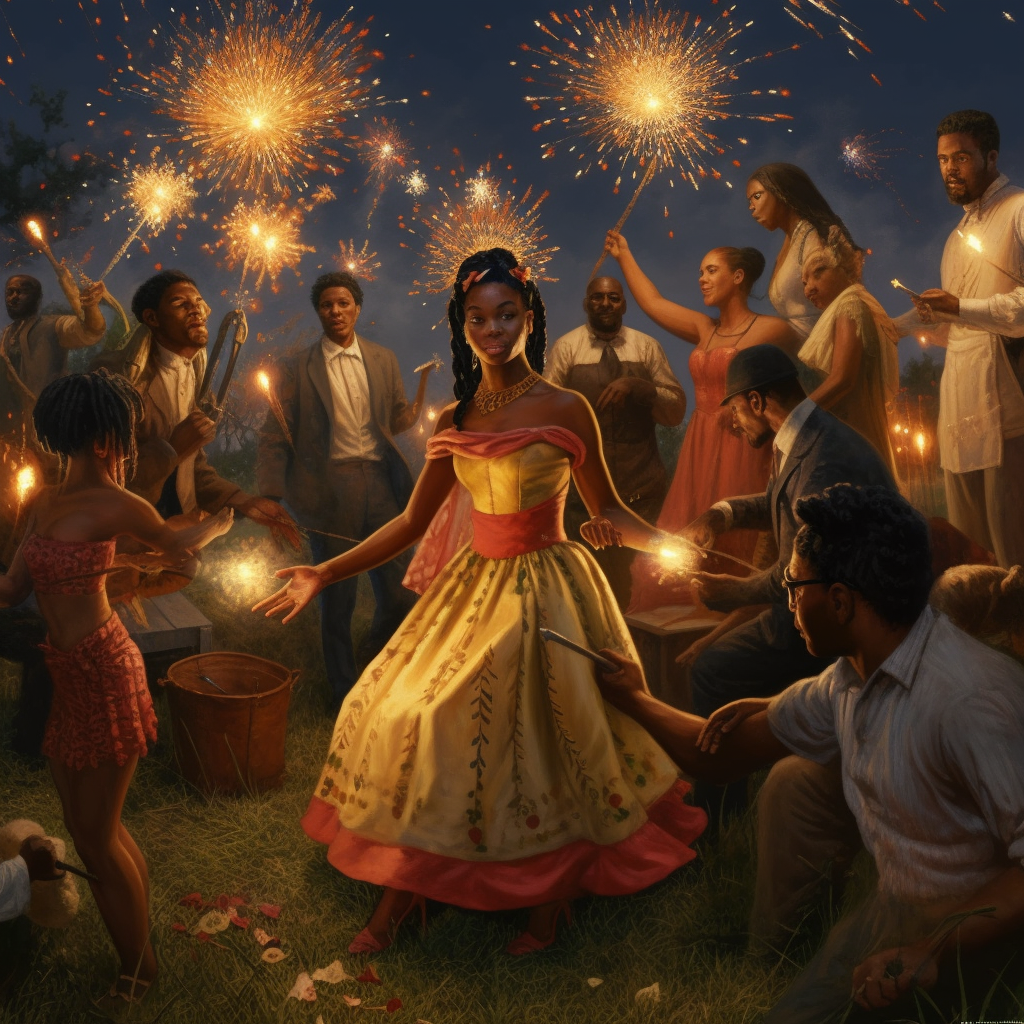
celebrating juneteenth

Introduction

It’s important to recognize and commemorate significant events in American history. Juneteenth is just such an event, celebrated on June 19th each year. Juneteenth is an important date in American history because it commemorates the end of slavery in the United States.

The History of Juneteenth

On January 1, 1863, President Abraham Lincoln issued the Emancipation Proclamation, which declared that all slaves in the Confederate states were to be set free. However, it wasn’t until two and a half years later, on June 19, 1865, that Union General Gordon Granger arrived in Galveston, Texas, to announce that the Civil War had ended and that all slaves were now free. This announcement came two months after General Robert E. Lee had surrendered at Appomattox, Virginia. The news of the Emancipation Proclamation and the end of the Civil War had not reached Texas until then.

The newly freed slaves in Texas celebrated their newfound freedom with great joy and jubilation. They held parades, sang songs, and read the Emancipation Proclamation out loud. This day became known as Juneteenth, a combination of the words “June” and “nineteenth.”

Why Juneteenth is Important

Juneteenth is an important date in American history for several reasons. First, it marks the end of slavery in the United States. Although the Emancipation Proclamation had been signed two and a half years earlier, it wasn’t until Juneteenth that the news reached all of the states. This day symbolizes the end of a dark period in American history and the beginning of a new era of freedom and equality.

Second, Juneteenth celebrates the resilience and perseverance of the African American community. Despite years of slavery and oppression, African Americans were able to maintain their culture, traditions, and sense of community. Juneteenth is a celebration of their strength and determination.

Finally, Juneteenth is a reminder that the fight for civil rights and equality is ongoing. Although slavery was abolished over 150 years ago, systemic racism and inequality still exist in America today. Juneteenth serves as a call to action to continue the work of those who fought for freedom and equality in the past and to work towards a more just and equal society for all.

Resources for Teaching about Juneteenth

10 Powerful Books for Adults, Teens, and Kids to Celebrate and Understand Juneteenth

For children:

Addy: An American Girl

In this American Girl classic, Addy Walker is a young slave living in 1864 who dreams of escaping to freedom with her family. However, their plans are foiled when their owner decides to sell Addy’s father and brother to a different plantation. Left with only her mother, Addy must escape alone and hope to reunite with her family in Philadelphia. Follow Addy’s courageous journey as she adjusts to life as a free person in the North and strives to be reunited with her loved ones.

Freedom’s Gifts: A Juneteenth Story

Young Black girl June celebrates Juneteenth, while her cousin Lillie celebrates the Fourth of July. Can June teach Lillie the importance of Juneteenth at the family picnic?

All Different Now: Juneteenth, the First Day of Freedom

This picture book tells the story of a little girl’s liberation on the first Juneteenth. The book includes notes from the author and illustrator, a timeline of notable dates, and a glossary to help children understand the significance of Juneteenth.

I Thought My Soul Would Rise and Fly: The Diary of Patsy, a Freed Girl

This Coretta Scott King Honor winner tells the story of Patsy, a 12-year-old girl living in Mars Bluff, S.C., after the Civil War. Written in diary format, the book follows Patsy as she observes the changes around her and embraces her newfound freedom to read and write. Through her own determination, Patsy creates a better life for herself and her fellow formerly enslaved people.

For teens:

Crossing Ebenezer Creek

During the Civil War, General Sherman leads Union soldiers through Georgia, setting enslaved Mariah and her younger brother Zeke free. The two join the march for protection, but as Mariah dreams of a better life for herself and her people, the harsh realities of slavery continue to weigh on her.

Stamped: Racism, Antiracism, and You

Preteens and teenagers who are too young to read Ibram X. Kendi’s Stamped from the Beginning can still learn about antiracism from his collaboration with young adult author Reynolds. The book uses critical race theory, history, and pop culture references to keep young readers engaged.

For adults:

The Deep

This novella is a fantasy story inspired by the song “The Deep” from Clipping, a Hugo Award-nominated rap group led by Daveed Diggs. It follows the descendants of African enslaved women who were thrown overboard during their journey to America, now living under the sea. Yetu, a historian, must remember her people’s traumatic past since no one else can. But she escapes to the surface, discovering the world her people left behind and the traumatic memories held there.

Between the World and Me

In this essay about race, Coates writes a letter to his son about his life as a Black man, his fears and dreams for his son, the nature of the Black body in America, and his aspirations for the Black community. Coates weaves an intimate look into Blackness in America.

Stamped from the Beginning: The Definitive History of Racist Ideas in America

In this deep dive into Black history, Ibram X. Kendi details the history of anti-Blackness in America, from the first enslaved people to today. He highlights five key historical figures in American and Black history: Cotton Mather, Thomas Jefferson, William Lloyd Garrison, W.E.B. Du Bois, and Angela Davis. Each represents the attitudes of their era and played a significant role in the fight for or against abolition, segregation, assimilation, or equal rights.

The Brightest Day: A Juneteenth Historical Romance Anthology

Romance fans will enjoy this anthology about love and hope after Juneteenth. The stories cover various topics, from the day enslaved people were freed to a Juneteenth-themed cruise, out-of-wedlock pregnancy in the early 20th century, and boxing rings during the Civil Rights Movement. Each story captures love and Black joy during difficult times.

On Juneteenth

In this book, Pulitzer Prize-winning historian Gordon-Reed discusses the history of slavery in America, leading up to the events that culminated in Juneteenth. She also weaves together American history and her own family history to pay tribute to the integral role of Black people in shaping Texas. The author previously wrote Thomas Jefferson and Sally Hemings: An American Controversy, which challenged Americans’ perception of the founding father due to his exploitative relationship with Sally Hemings, an enslaved woman on his plantation.

The 2023 Pulitzer Prize Winners

Since its founding in 1917, the Pulitzer Prize has recognized excellence in journalism, arts, and literature. The Pulitzer Prize winners for 2023 have been announced, and they represent some of the best and brightest in their respective fields.

Among the winners are journalists who exposed corruption and abuse of power, authors who wrote moving and thought-provoking works of fiction and non-fiction, and musicians who created groundbreaking new compositions. The Pulitzer Prize continues to symbolize the highest achievement in these fields, and the winners serve as inspirations to us all.

You can see the winners in all categories, including 15 Journalism categories, on the Pulitzer website. You can also watch the ceremony in full on YouTube below.

Books

Here are the 2023 Pulitzer Prize winners in the Books categories.

Fiction

Demon Copperhead,” by Barbara Kingsolver (Harper)

Trust,” by Hernan Diaz (Riverhead Books)

Finalist:

The Immortal King Rao,” by Vauhini Vara (W. W. Norton & Company)

History

Freedom’s Dominion: A Saga of White Resistance to Federal Power,” by Jefferson Cowie (Basic Books)

Finalists:

Seeing Red: Indigenous Land, American Expansion, and the Political Economy of Plunder in North America,” by Michael John Witgen (Omohundro Institute of Early American History and Culture/University of North Carolina Press)

Watergate: A New History,” by Garrett M. Graff (Avid Reader Press/Simon & Schuster)

Biography

G-Man: J. Edgar Hoover and the Making of the American Century,” by Beverly Gage (Viking)

Finalists:

His Name is George Floyd,” by Robert Samuels and Toluse Olorunnipa (Viking)

Mr. B: George Balanchine’s 20th Century,” by Jennifer Homans (Random House)

Memoir or Autobiography

Stay True,” by Hua Hsu (Doubleday)

Finalists:

Easy Beauty: A Memoir,” by Chloé Cooper Jones (Avid Reader Press/Simon & Schuster)

The Man Who Could Move Clouds: A Memoir,” by Ingrid Rojas Contreras (Doubleday)

Poetry

Then the War: And Selected Poems, 2007-2020,” by Carl Phillips (Farrar, Straus, and Giroux)

Finalists:

Blood Snow,” by dg nanouk okpik (Wave Books)

Still Life,” by the late Jay Hopler (McSweeney’s)

General Nonfiction

His Name Is George Floyd: One Man’s Life and the Struggle for Racial Justice,” by Robert Samuels and Toluse Olorunnipa (Viking)

Finalists:

Kingdom of Characters: The Language Revolution That Made China Modern,” by Jing Tsu (Riverhead Books)

Sounds Wild and Broken: Sonic Marvels, Evolution’s Creativity, and the Crisis of Sensory Extinction,” by David George Haskell (Viking)

Under the Skin: The Hidden Toll of Racism on American Lives and on the Health of Our Nation,” by Linda Villarosa (Doubleday)

Midjourney Recreates Ancient Battles

From the “This is wicked cool” department, here are some examples of Midjourney’s take on ancient battles.

I continue to be blown away by the power of AI tools. At the same time, I completely understand many of the concerns about AI replacing working writers, artists, and other creators.

There is a way forward, and I think it lies in using AI as a support tool. The possibilities for students to use AI as a support to their work are many, but we must be judicious in its usage.

Books I Read in May 2022

I’m consistently working to keep my reading on track this year. I have a book with me wherever I go (physical & ebook) and carve out a little time each day.

Some days more than others 😉

Here are the books I read/finished reading during May 2022: