There’s a particular moment in an educator’s career that I think most teachers would recognize if you described it to them. It’s the moment — usually somewhere in years three to five — when the survival phase is over. You know the management. The routines are automatic. You can get through a week without incident. And then you look around and realize you have no idea what it actually means to get better from here.
Nobody talks about this much. The professional development landscape is built around Year One problems: classroom management, lesson planning, and assessment basics. What it doesn’t have is a map for what deliberate improvement looks like once you’re past survival. What does it mean to develop genuine craft as a teacher, over years and decades, when the feedback loops are unclear and nobody’s really watching?
Mastery by Robert Greene is not an education book. It’s not written for teachers. But it’s one of the most useful things I’ve ever read about what long-term skill development actually looks like — and it maps onto teaching with uncomfortable precision.
What the Book Is
Greene built Mastery the same way he builds all his books: by working backward from outcomes. He studied the lives of history’s most accomplished practitioners across disciplines — Darwin, Leonardo da Vinci, Mozart, Temple Grandin, Benjamin Franklin, Mand ichael Faraday — and tried to identify the structural patterns underneath their development. Not the myths (genius, natural talent, fortunate circumstances), but the actual mechanics: how they moved from novice to expert, what they did during years of obscure practice, and what allowed them to eventually operate at a level that felt intuitive.
The framework he arrives at has three phases:
The Apprenticeship — the phase of deliberate absorption. The goal here isn’t status or recognition. It’s the accumulation of genuine skill through deep observation, methodical practice, and sustained exposure to the environment of your craft. Greene is sharp on the temptation to skip this: impatience, ego, the desire to be recognized before you’ve earned recognition. His case studies are full of historical figures who had to ruthlessly suppress those impulses and just learn.
The Creative-Active phase — where you take the fundamentals you’ve absorbed and start recombining them. This is where practitioners find their voice. The skills are internalized enough that experimentation becomes possible — you can break rules intelligently because you understand why they exist.
Mastery — the endpoint that is also a practice, where deep pattern recognition operates below the level of conscious thought. Masters in Greene’s framing aren’t people who think faster; they’re people who’ve compressed so much experience into their intuition that they can process situations ordinary practitioners can’t.
There are also significant chapters on mentorship and what Greene calls “social intelligence” — the capacity to navigate the human dynamics of any craft environment without letting those dynamics derail the deeper work. The mentor chapter is particularly good: Greene is clear that the right mentor relationship can compress years of development, and equally clear that most people either don’t seek mentors at all or approach the relationship the wrong way.
Why This Maps Onto Teaching
What strikes me, reading this as an instructional coach, is how precisely it describes the career arc that teachers rarely have articulated for them.
Year one is an apprenticeship by necessity. You’re absorbing everything — the management patterns, the pacing, the hundred small decisions a lesson requires, the way different students need different approaches. The goal genuinely is just to get through it, to build the basic competencies into something approaching automaticity.
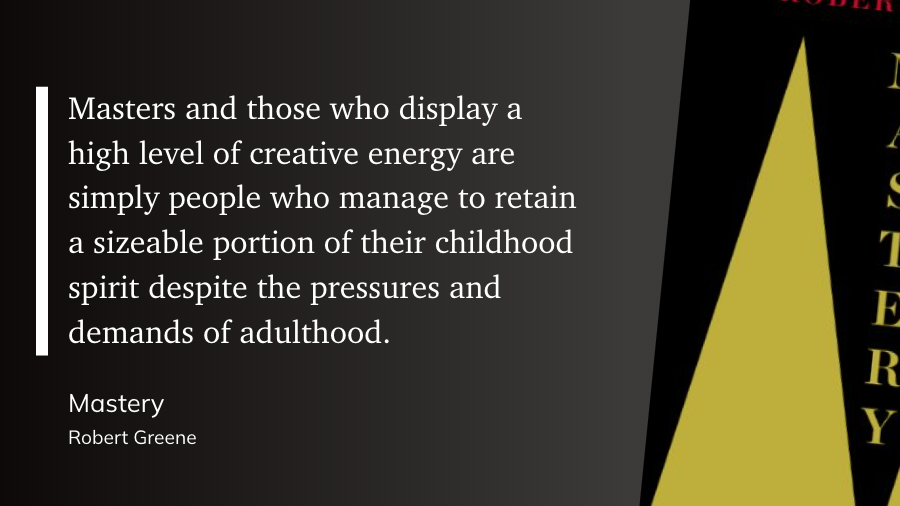
What Greene’s framework clarifies is that this phase should eventually end — not because you’ve finished learning, but because you’ve built enough foundation to move to something more experimental. The teachers I’ve worked with who plateau, who stop developing after the first few years and stay there for the next twenty, are almost universally stuck in permanent apprenticeship mode: executing a fixed repertoire of lessons and routines without ever moving to the creative experimentation that Greene says is where real development happens.
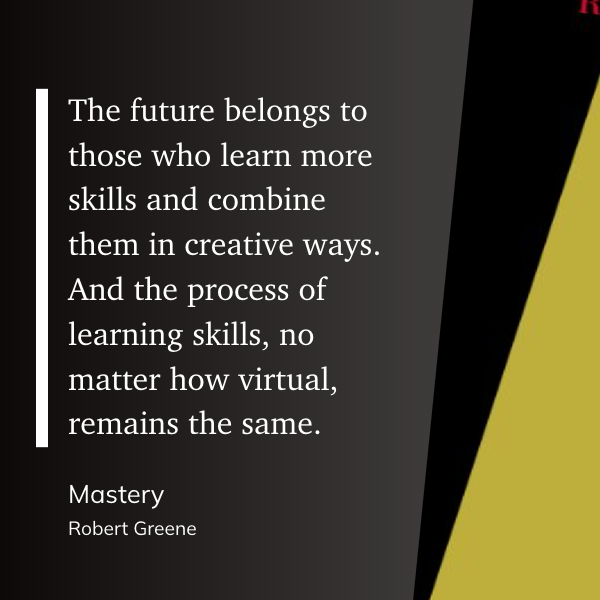
The creative-active phase in teaching looks like deliberately testing variations. Teaching the same concept three different ways to three different classes and comparing what happened. Trying a discussion structure you’ve never used. Designing an assessment from scratch rather than pulling from the file drawer. Not just executing what works but actively asking: what would work better, and how would I know?
And the mastery Greene describes — the point where you can read a classroom situation, improvise an explanation, identify a misconception before it surfaces, know which student needs what kind of push right now — that’s genuinely observable in exceptional veteran teachers. It doesn’t look like effort. It looks like presence.
The Mentor Chapter Is Worth the Price Alone
Greene’s extended treatment of mentorship is the part of this book I return to most often. His core argument: learning from a skilled practitioner in person, with direct feedback on your actual work, is categorically different from learning from books or courses. A mentor who has internalized expertise transmits not just knowledge but a way of thinking — patterns of attention, judgment under uncertainty, the tacit knowledge that can’t be written down.
For teachers, this maps directly onto instructional coaching done well. Not the generic professional development model where everyone sits in a room watching a PowerPoint, but the specific thing: someone who knows the craft watching you work, asking questions about what you were trying to do, pointing to the moment where something shifted, and asking what you noticed. That relationship, when it exists, is wildly more developmental than anything else available.
Greene is also honest about why mentorship relationships fail: ego on both sides, impatience, and a lack of clarity about what the learner actually needs. He’s not romantic about it. The good mentors he profiles tend to push hard and give uncomfortable feedback. The apprentices who benefit most are the ones who can resist defensiveness long enough to actually hear it.
What to Push Back On
Greene’s historical examples are compelling, but they’re also selected. You don’t hear about the Darwins who spent decades in careful apprenticeship and never had a breakthrough. Selection bias is baked into any framework built from case studies of extraordinary achievers, and this one is no exception.
The book also skews toward individual development in a way that can feel politically naive about institutional constraints. Teaching exists inside systems — school systems, districts, unions, standardized testing regimes, state curriculum mandates — that don’t always reward or even permit the kind of long-term, patient craft development Greene describes. A first-year teacher in a chronically under-resourced school has real structural constraints that aren’t dissolved by having the right philosophical orientation toward apprenticeship.
And Greene’s framework is implicitly competitive in places that can feel uncomfortable in a profession built on collaboration. His “social intelligence” chapter sometimes reads like a manual for navigating a corporate shark tank, which isn’t quite the right register for most school environments.
None of this makes the book less worth reading. But it’s worth being a critical reader rather than accepting the framework wholesale.
The Bottom Line
Mastery gave me a vocabulary for something I’d observed in teaching for years but couldn’t quite articulate — the difference between teachers who develop over a career and teachers who don’t, and why the ones who do seem to have treated their practice as a craft with a development arc rather than a job with an annual performance review.
If you’re in your first few years of teaching and feeling the exhaustion of the survival phase, this book won’t fix that — the survival phase is real and requires getting through it, not reframing it. But it might give you a way to think about what comes after. What you’re building toward. What it looks like to take the long view on what it means to be excellent at this.
That’s a question most of us don’t get asked enough.
Rating: 4 out of 5 stars. Occasionally overwrought, selected toward the extraordinary, and not always aware of its own blind spots — but one of the better frameworks I’ve encountered for thinking about what deliberate skill development actually requires over time.
Related on this site: the PhD reading and note-taking post covers the practical side of how I try to absorb and build on what I’m reading — the system that makes books like this one actually stick.