Avoid Raising Machines

"That we would train machines to be like us is not surprising.

The real scandal is how much we’ve trained ourselves to be like machines." (Austin Kleon, Machines That Make You Feel More Human - Austin Kleon)

“That we would train machines to be like us is not surprising.

The real scandal is how much we’ve trained ourselves to be like machines.”

Austin Kleon

It’s testing season as another school year comes to a close. The time when students get to demonstrate just how well we’ve trained them to be little machines.

We’ve covered the content, given the testing tips, and passed out the booklets or the Chromebooks.

We’ve done everything we can to prepare them for the relentless battery of standardized tests they must endure, all because someone who knows nothing about learning needs evidence that teachers have done their jobs.

They want to know how well we’ve trained our little machines.

There’s just one problem: we don’t train machines. We teach human beings.

Maybe there’s something wrong here.

The 1-Bit Great Wave

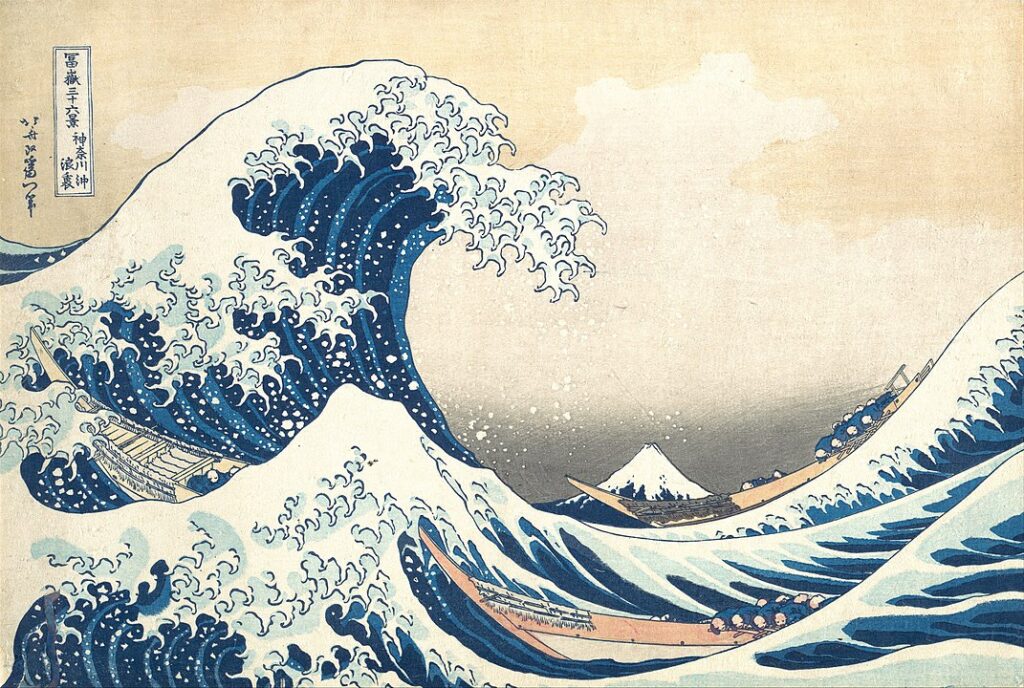
I’m sure you’re familiar with Hokusai’s “Great Wave” or have at least seen this image:

Hokusai's great wave
By Katsushika Hokusai – Metropolitan Museum of Art: entry 45434, Public Domain

I’ll go ahead and say that this print is one of the more famous art pieces in the world. It’s part of a series of 36 views of Mt. Fuji.

If you’re looking for ideas for student projects, a good starting point is having them recreate public-domain works in their own ways using whatever materials they choose.

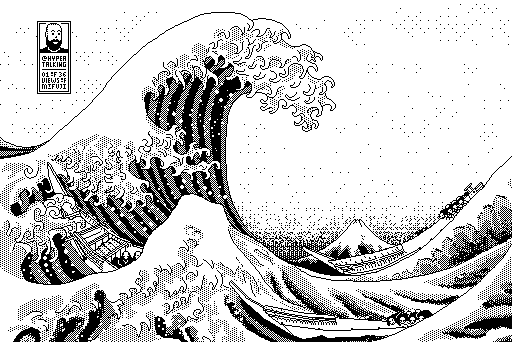
For example: let’s say they wanted to use old software to create a 1-bit version (black and white) of this image. It might look something like this:

1-bit great wave by @hypertalking

A very cool project from @hypertalking. He’s briefly recapped his process here and could inspire you or your students to get creative in unexpected ways.

The Zettelkasten Method: How I Actually Use It (A Doctoral Student’s Honest Account)

I want to start with the problem, because most Zettelkasten guides skip it.

You read something genuinely useful. You highlight it, maybe jot a note in the margin, and move on. Three months later, you’re trying to connect that idea to something you’re writing, and you cannot for the life of you remember where you read it, what exactly it said, or how it fit into whatever you were thinking at the time. The idea is gone. Not because you’re not smart enough to remember it. Because that’s not what human memory is for.

Our brains were built to make connections between things, not to be filing cabinets. The filing cabinet instinct — highlight it, dump it in Evernote, never think about it again — is exactly backward. You’re outsourcing the thinking part and keeping the forgetting part.

The Zettelkasten method fixes this. I’ve now been running my system for several years, first built it seriously when my doctoral reading volume became genuinely overwhelming, and I’m heading into year four of the dissertation — near the finish line — with a system that has become part of how I work and think across every domain of my life, not just academic writing. The dissertation is almost done. The Zettelkasten is permanent.

Here’s what I’ve learned.


What the Zettelkasten Actually Is

The words are German: Zettel means “slip of paper,” and Kasten means “box.” Slip box. That’s the whole thing — Niklas Luhmann, a German sociologist writing in the mid-twentieth century, kept a box of index cards where he recorded his ideas, one per card, linked to other cards through a numbering system he developed himself.

He published 70 books and over 400 scholarly articles. He credited the slip box. Not his intelligence, not his work ethic — the system.

What made Luhmann’s approach different from just keeping notes wasn’t the index cards. It was that the cards talked to each other. Each note referenced other notes. Ideas linked to ideas. Over time, the box developed what Luhmann called a “conversation partner” — a second mind that could surprise him with connections he hadn’t consciously made.

That’s the thing most people miss when they first hear about Zettelkasten. It’s not an organizational system. It’s a thinking system. The goal isn’t to store information — it’s to generate new ideas by forcing your notes into relationships with each other.


How I Got Here

My first encounter with anything like this was reading about how Ryan Holiday writes his books. He uses a notecard system — one idea per card, physically sorted into categories, pulled out when he’s writing. It’s not quite Zettelkasten, but it’s the same instinct: single ideas, physically handled, connected by the writer’s judgment rather than a folder hierarchy.

When I started my doctoral program and the reading volume became genuinely overwhelming — dozens of articles a week, books on top of books, sources I knew I’d need to cite but couldn’t reliably locate again — I needed something more systematic.

The Zettelkasten method, as popularized by Sönke Ahrens in How to Take Smart Notes, is what I landed on. Ahrens’s book is still the best entry point if you want to understand the theory before building the practice.


The Three Types of Notes That Actually Matter

Most Zettelkasten guides give you five or six note types and immediately make the whole thing feel complicated. In practice, I work with three:

Fleeting notes are the raw capture. Something I heard, read, or thought that seems worth keeping. No polish required. I write these in my Field Notes notebook — the one that’s always in my back pocket — with a date stamp and whatever I can get down in thirty seconds. They’re temporary. Their only job is to get the idea out of my head before I lose it.

Literature notes are what I write after sitting with a source. When I finish a book or article that matters, I go through my fleeting notes and highlights and write one note per idea — not a summary of the chapter, not a quote, but what I think this means and why it matters. In my own words. This is where the thinking starts.

Permanent notes are the keepers. These are the ideas that survive the literature note stage and earn a place in the main system. Each one stands alone — a complete thought that makes sense without context. Each one links to other permanent notes where the connection is real, not just topical.

The discipline is: no permanent note without a connection. If a new note can’t be linked to anything you already have, either the note isn’t ready yet, or you’re missing a bridge note that should exist.


My Actual Setup: Cards Plus Notion

I run a hybrid system. The physical component is 4×6 ruled notecards — the sweet spot for a single idea with enough space to actually develop it. I use a date stamp to record when a card entered the system. I write with Blackwing pencils because the erasability matters when you’re still working out what a note should say.

The cards live in a card box on my desk, organized into loose topic clusters that shift as the system grows. I don’t use a strict numbering system — I’ve found that topical clusters with cross-references work better for my brain than pure alphanumeric sequences.

The digital component is Notion. When a permanent note is fully formed, it gets entered into Notion with tags, links to related notes, and a reference to the source. This is where the search capability becomes essential — finding a note about something I read eighteen months ago takes seconds.

The hybrid approach sounds redundant, but it isn’t. Writing by hand forces slower, more deliberate thought. The physical card is where I work out what I actually think. Notion is where I store it and connect it at scale.


What This Looks Like in Practice

Here’s a concrete example from my dissertation work.

I read an article about distributed cognition — the idea that human thinking isn’t just what happens inside our skulls but includes the tools and environments we think with. I write a fleeting note while reading: distributed cognition — thinking happens in the system, not just the thinker. Interesting connection to why PKM matters?

Later, I write a literature note: Hutchins (1995) argues that cognition is distributed across people, artifacts, and the environment. Navigation example: the ship’s navigation system is the unit of cognition, not any individual sailor.

That becomes a permanent note: Tools are not just extensions of thinking — they are part of thinking. A well-designed external system (like a Zettelkasten) is literally part of the cognitive process, not a substitute for it. Linked to: notes on Vygotsky’s zone of proximal development, notes on embodied cognition, notes on why writing clarifies thinking.

Months later, I’m working on a section about student-centered learning environments. I pull the distributed cognition note. It connects, in ways I didn’t plan, to three other notes I’d written about classroom design and technology integration. The Zettelkasten hands me an argument I didn’t know I was building.

That’s the thing. It surprises you.


The Next Frontier: Obsidian + Claude Code

I’m going to be honest: I’m still experimenting with this, so take it as a field report rather than a recommendation. But it’s too interesting not to share.

Andrej Karpathy — co-founder of OpenAI, former Tesla AI director, one of the clearest thinkers working in AI today — recently published a pattern he calls the LLM Wiki. The idea is deceptively simple: instead of keeping your notes in a system that you navigate manually, you keep them as structured plain-text markdown files, and you point an LLM directly at that folder to find connections, synthesize ideas, and build new understanding across everything you’ve written.

Karpathy’s framing is sharp: the shift is from retrieval to compilation. Traditional search asks “which note answers this query?” The LLM wiki asks “build and maintain a persistent, cross-referenced knowledge base that already contains the synthesized answer.” The AI doesn’t just search your notes — over time, it helps write and maintain them, surfacing connections you didn’t consciously make.

What makes this particularly interesting for Zettelkasten practice is that it doesn’t replace the method — it extends it. The atomic note principle, the linking discipline, the permanent note as a self-contained idea: all of that still applies and in fact becomes more powerful when an LLM can read the whole vault and identify non-obvious connections across it.

The workflow I’m exploring: Obsidian as the front end (free, local files, excellent graph visualization of note connections), Claude Code as the intelligence layer pointed at the vault. You give Claude Code a schema file that tells it what the wiki is for and how it’s structured, then feed it sources — articles, book notes, research papers, your own existing notes — and it builds and maintains the wiki, linking ideas across everything you’ve given it.

Karpathy himself manages wikis of over 100 articles this way. The graph view in Obsidian, showing every connection between notes visually, is something you have to see to understand — it’s a map of how your ideas actually relate to each other, not how you filed them.

I’m at the stage of migrating some of my Notion notes into an Obsidian vault and running Claude Code against it to see what connections it surfaces that I haven’t made manually. Early results are genuinely surprising in the way the best Zettelkasten surprises are — the system finding threads you didn’t know you were pulling.

If you want to explore this yourself, Karpathy’s gist is at github.com/karpathy, and there are now several good community implementations. Start small — one topic domain, a handful of sources — and see what happens.


The Biggest Mistakes People Make

Highlighting is not note-taking. A highlight is a bookmark. It says “I thought this was interesting” and nothing else. Unless you return to it and write what you think it means, it’s not knowledge — it’s a marker in a document you’ll probably never reopen.

Too many categories too early. The instinct to organize before you have enough material always produces a structure that fights the content. Let the connections emerge from the notes themselves. Restructure when the natural clusters become clear.

Skipping the rewrite. Writing a literature note in your own words — not copying the quote, not paraphrasing loosely, but actually reconstructing the idea from scratch — is where the learning happens. It’s uncomfortable because it forces you to distinguish between what you actually understood and what you just recognized.

Treating it as a productivity system. The Zettelkasten is slow. A well-formed permanent note might take twenty minutes to write. It will pay for that time a hundred times over when you need it, but if you’re measuring output by notes per hour, you’re measuring the wrong thing.

Abandoning it when life gets busy. The system only has value if it has continuity. Even one card a week keeps it alive. The temptation during high-pressure periods is to stop feeding the system — exactly when you need it most.


The Tools

Physical:

Digital:

  • Obsidian — free, local files, excellent bi-directional linking, increasingly my recommendation for anyone starting fresh. The graph view alone is worth it.
  • Notion — what I’ve used for years and still use; better for combining notes with project management
  • Claude Code — for the Karpathy LLM Wiki pattern; points directly at your local Obsidian vault

Books:


Is It Worth It?

I’m four years into a doctoral program — near the finish line — and the Zettelkasten is the primary reason I’m not drowning. The reading has been relentless, and the connections between sources are what the work lives on. Without a system that forces me to make those connections explicit and retrievable, I’d be starting from zero every time I sat down to write.

But here’s the thing I’ve come to understand about this system: it was never just a dissertation tool. The notes I’ve written about instructional coaching, about technology in education, about how people actually learn — those connect across my classroom work, my doctoral work, my writing, my thinking in every direction. The system doesn’t belong to a project. It belongs to the thinker.

The Karpathy LLM Wiki pattern is the next chapter of that idea. If the Zettelkasten is a conversation partner you build note by note, an LLM pointed at your vault is something like that partner getting a significant intelligence upgrade. I’m genuinely excited to see where it goes.

Start small. Write one permanent note today about something you read this week. Not a summary — what you think it means. Link it to one thing you already know.

That’s the whole thing. Do it again tomorrow.


The tools I use for my Zettelkasten — notecards, date stamp, Blackwing pencils, Field Notes, and more — live on my Favorite Gear page. If you want to see how the Field Notes fit into daily planning, that post goes deeper on the daily capture side of this system.


The Eclectic Educator is a free resource for everyone passionate about education and creativity. If you enjoy the content and want to support the newsletter, consider becoming a paid subscriber. Your support helps keep the insights and inspiration coming!
Breaking Rules That Were Already Broken

Hey gang. It’s been a bit, but life has been… crazy. However, I’m rounding the bend on a number of projects and have breathing room again.

I did manage to find about an hour each week to watch the final season of Picard—by far the best season—and a quote from Captain Shaw in the final episode really struck me. His recorded review of his first officer, Seven of Nine, described how she was reckless and a rule breaker. But, very often, the rules she was breaking were probably already broken anyway.

My message to you, keep breaking the rules that are already broken. Trust me, there are plenty of them out there.

And now, for this week’s 10 Things…

10 Things Worth Sharing


The Eclectic Educator is a free resource for everyone passionate about education and creativity. If you enjoy the content and want to support the newsletter, consider becoming a paid subscriber. Your support helps keep the insights and inspiration coming!
Students need freedom to develop critical skills with edtech

My first question when working with teachers and the technology they have available in their classrooms is, “what do you want the kids to create?”

And when we look at the 4 Shifts protocol, this question from the technology infusion section is also essential:

Does technology add value so that students can do their work in better or different ways than are possible without technology?

– 4 shifts protocol

When students can use technology to create, I hope they have been equipped with the necessary training to use that technology effectively. Otherwise, there’s trouble.

I’ve come to the realization that technology will have its greatest impact in the classroom when educators allow learners to use digital technology as a self-directed learning tool. This means not just providing students with laptops and online resources, but ensuring they have the necessary skills to find, validate, apply, and curate the vast amount of information now available to them.

Rick Cave, eSchool News

Just for the Sake of Being Creative

being creative just for the sake of being creative

Sometimes, you just have to do things to flex that creative muscle.

“Do things that light your soul on fire and that help you fall in love with your life every single day. I had no clue when I started making content that I was going to be met with so much love in a place that is notorious for being unloving: the internet. do not filter yourself do not make yourself a version of you that you think is more palatable, digestible, lovable… don’t filter the humanity and the personality out of yourself. we already have that version of you. it’s everywhere.   it is everywhere. we don’t want that version of you. we want you to make content that makes you happy, that fills a creative void in your life. Do things for creative sake just because you love doing them. Don’t try and monetize everything. Don’t make every hobby a side hustle, don’t make every hobby a job, just do things because you love them and watch your life just like change. you  are suddenly doing things because they make you  happy, and that’s a really, really powerful thing.”

Elyse Meyers


The Eclectic Educator is a free resource for everyone passionate about education and creativity. If you enjoy the content and want to support the newsletter, consider becoming a paid subscriber. Your support helps keep the insights and inspiration coming!

All your base are belong to us

all your base are belong to us

Hey, y’all. We’re nearing the end of March, and for many public schools, that means Spring Break is near (or maybe already arrived). It’s a very busy time for educators as one school year ends, and plans for the next are already taking shape.

My hope for you as we approach the end of another school year is that you take the time to take care of yourself. You cannot pour from an empty cup, and it’s easy to get caught up in all the things at the end of the school year.

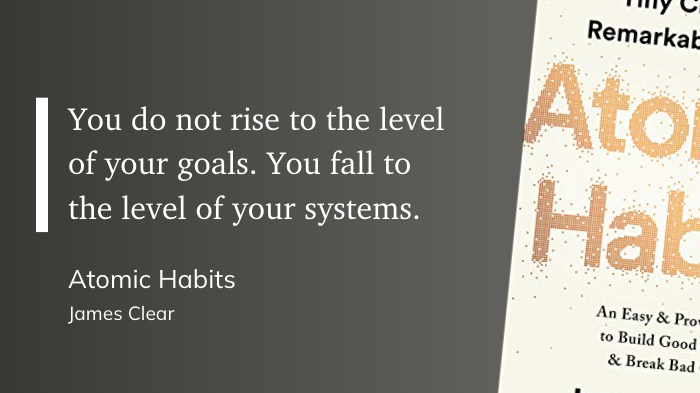
atomic habits by james clear

Take a beat, catch a deep breath, and center yourself. Rediscover what is really important to you and what you can control.

“We have so little control over our lives. The only thing we can really control is what we spend our days on.” – Austin Kleon

Anyways, here are ten things I thought were worth sharing with you this week:

10 Things Worth Sharing

  1. I worked with a senior English class this week, showing them some AI tools. They might write a book.
  2. Here’s a curated list of prompts, tools, and resources regarding the GPT-4 language model.
  3. Wanna learn financial literacy? This 300-page book was written completely with ChatGPT.
  4. The TikTok trial is a mess and is only proving that the US government is targeting this specific company over other social media platforms. Any issues with TikTok are the same with Facebook, Instagram, Snap, and many others.
  5. What is the right amount of agency to give to learners during their interactions with EdTech? Blog post and paper
  6. Are you a Wordle fan? I’m totally not, but I’ve also never liked Scrabble. Not that you care. Here’s Every Possible Wordle Solution Visualized
  7. An AI course creator – according to the page: “Start with a description and let AI-Assistant offer title and outline suggestions.”
  8. You might be violating copyright in your classroom. Maybe.
  9. Bill Gates explains why AI is as revolutionary as personal computers, mobile phones, and the Internet, and he gives three principles for how to think about it. Also, he recommends this book, this book, and this book as helpful in shaping his own thinking about AI.
  10. An Introvert’s Field Guide to Friendship: Thoreau on the Challenges and Rewards of the Art of Connection
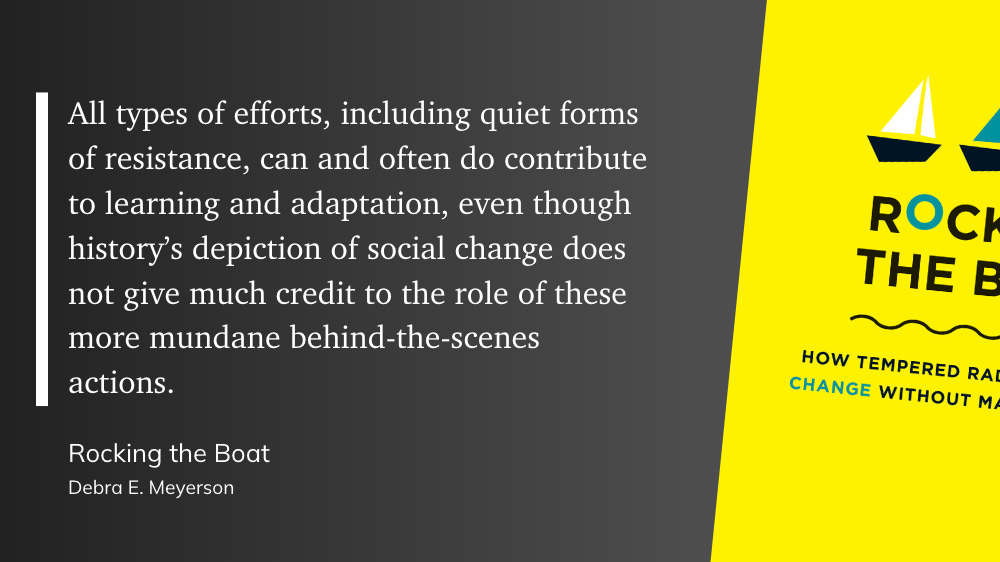
rocking the boat
Rocking the Boat by Debra Meyerson

Thanks for reading. This newsletter is a completely reader-supported publication. The best way to support it is to check out my recommendations or become a paid subscriber.

The 10 Books Every Teacher Should Read in 2023

A new year begins, full of new challenges and possibilities. But really, these challenges and possibilities aren’t new. They’re the same ones humans have faced for centuries; we experience them in a different context.

We’re all still trying to make sense of this crazy world and what part we must play in this grand performance of life. How do we make the world a better place? How do we find happiness? How do we experience true fulfillment? How do we achieve what we want in this life and, along the way, help a few other people get what they want?

As educators, that last question may be the most important one for us to answer. Without question, we have goals for our lives. But so much of the work we do every day is tied to helping other people, our students, accomplish their goals. Sometimes, our work helps students determine their goals.

Sometimes our work is helping students believe that their goals are possible; that they’re not crazy for being different and wanting something others may tell them is “stupid,” “not acceptable,” or “bad.”

We are purveyors in providing spaces for dreamers to make their dreams come true.

We must diligently provide these students with the support and resources they need to make their dreams a reality. We must create learning environments that foster creativity and exploration. We should inspire our students to take risks and challenge themselves to think outside the box. Additionally, we must equip them with the necessary skills and knowledge to help them progress steadily toward their goals.

As educators, it is our responsibility to be a source of guidance and understanding for our students, no matter how big or small their dreams may be. We must recognize the power of our influence and use it to encourage and empower our students to reach their full potential.

But for us to do all of that, we must take care of ourselves. We have to refill our cups, and we must ensure that we are working toward our own goals. Modeling success is key for our students. I can think of no greater tool to keep our minds sharp, our spirits full, and our eyes focused on the horizon of our dreams than reading great books.

Books are more than just an investment in yourself – they are a doorway to a world of knowledge. From novels and nonfiction to how-to guides, poetry, classics, and biographies, there’s something for everyone in the world of books. Reading can help you think more deeply, be kinder, gain a broader perspective, and become better at the things that matter to you. Books have been around for thousands of years and are still being published today, containing the distilled wisdom of countless hours of hard work. Why not take this opportunity to benefit from the knowledge stored within them?

With that in mind, here are 10 books – both recent and classic – that can help you achieve your 2023 goals and live a better, more fulfilling life.

Note: If you expect professional development books with 13 strategies and 27 tips to get more done in your classroom, you’ve come to the wrong list. These books help you with LIFE and living better in every area.

I’ll leave the boring, monotonous, ill-conceived PD books to other folks 😉

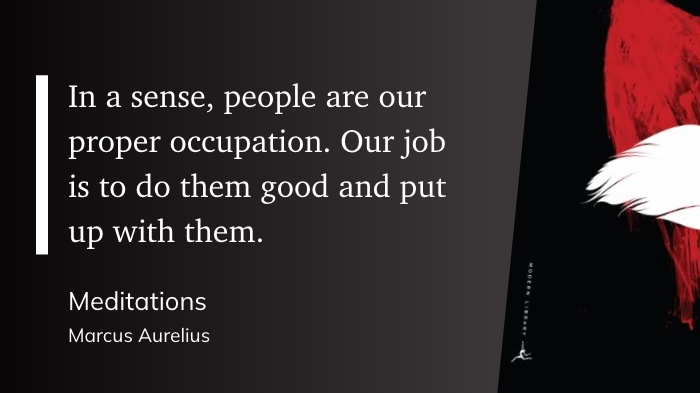
Meditations by Marcus Aurelius

Meditations by Marcus Aurelius is a collection of personal reflections written by the Roman emperor Marcus Aurelius. Written in the 2nd century AD, it is an important philosophical work exploring Stoic philosophy and its practical application in life.

mediations by marcus aurelius

Meditations is an essential read for teachers, as it offers a great insight into the Stoic philosophy and how to apply it in a practical way. It provides a framework for understanding our emotions and reactions and how to use them to our advantage. It helps to refocus our attention on what matters most in life and encourages us to be kinder and more compassionate towards others. It also offers a unique perspective on our own inner struggles and how to make peace with them. With its timeless wisdom, Meditations is an invaluable resource for teachers striving to make a difference in their students’ lives.

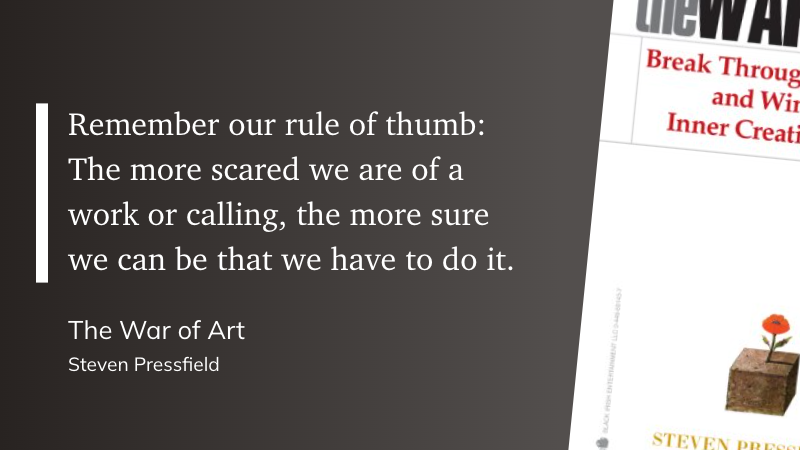
The War of Art by Steven Pressfield

The War of Art by Steven Pressfield is a must-read for teachers looking to break through creative blocks and achieve their goals. It examines the inner struggle of pursuing your dreams and offers concrete strategies to help you overcome these obstacles.

The book focuses on the concept of “resistance”, which is an inner force that can be physical, mental, or emotional and prevents us from achieving our goals. It encourages us to push through these barriers and to keep working no matter how difficult the journey may be. The War of Art is an inspirational read that provides invaluable advice for teachers looking to overcome their own struggles and help their students reach their full potential.

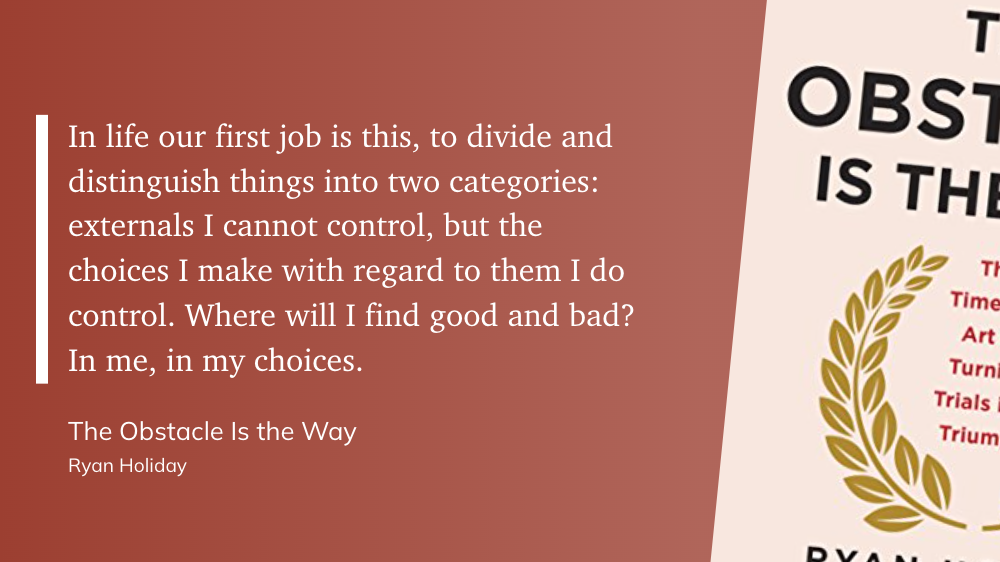
The Obstacle is The Way by Ryan Holiday

The Obstacle is The Way by Ryan Holiday is a book that explores the concept of stoicism and its practical application in everyday life. It encourages readers to confront and embrace the obstacles that stand in their way and to use them as an opportunity to grow and become stronger.

The Obstacle is The Way provides a framework for understanding life’s struggles and how to use them to your advantage. It is an essential read for teachers looking to help their students overcome their own obstacles and achieve their goals.

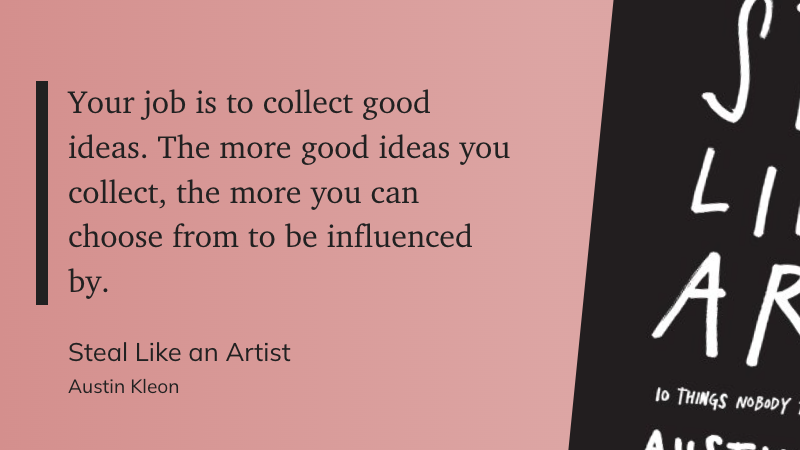
Steal Like an Artist by Austin Kleon

Steal Like an Artist by Austin Kleon is a must-read for teachers looking to find their creative spark. It encourages readers to look at the world from a different perspective and to embrace their own unique style. Through personal anecdotes, Kleon provides a framework for understanding creativity and how to use it to your advantage.

This inspirational read encourages readers to escape their comfort zones and explore their passions. Steal Like an Artist is an invaluable resource for teachers looking to foster creativity and exploration in their students.

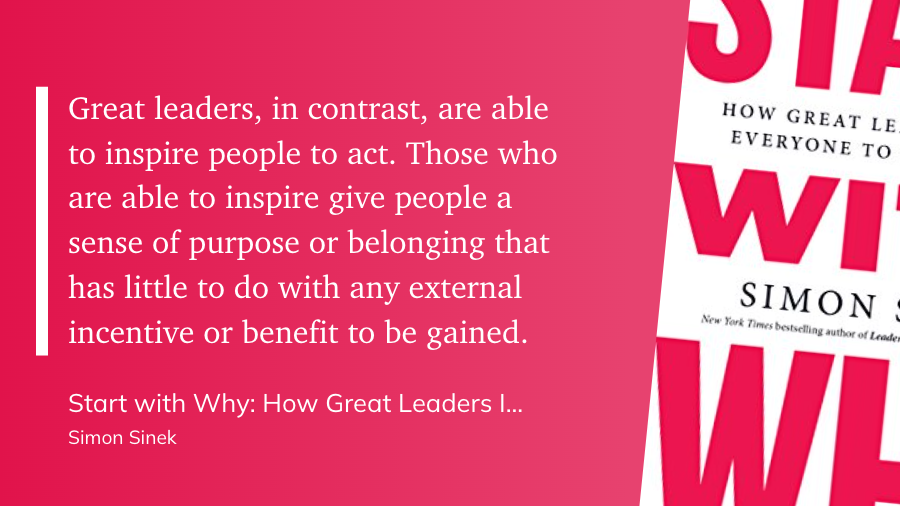
Start With Why by Simon Sinek

Start With Why by Simon Sinek is an inspirational and thought-provoking book with a simple premise – that people should start with why when making decisions and formulating strategies. The book provides clear examples of how this approach can help teachers become more successful and effective.

It advocates for an approach that puts the why before the how and what and encourages readers to find their own why. It helps teachers to understand the importance of having a clear purpose and how it can help them reach their goals. It also encourages teachers to think more deeply and creatively and helps them to understand their own values and how they can help to create a better world for their students.

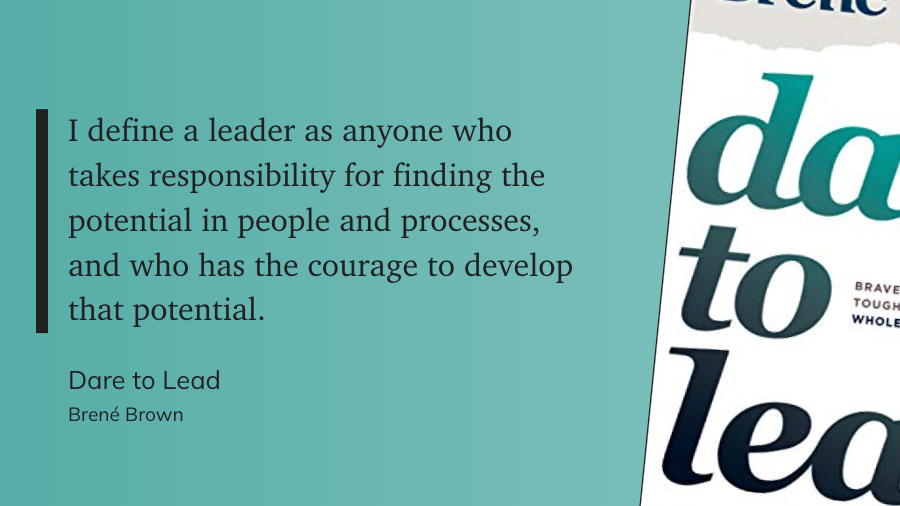
Dare to Lead by Brene Brown

Dare to Lead by Brene Brown is a powerful and inspiring book that explores the courage and vulnerability needed to lead. It examines how fear often keeps us from taking risks and how embracing vulnerability can help us achieve our goals. Through personal stories and historical examples, Dare to Lead provides a framework for understanding leadership and how to use it to create a better world for our students.

It encourages readers to be brave and take risks, to be honest, and open, and to find their own voice. It helps teachers to understand their own strengths and weaknesses and how to use them to become more effective leaders. Dare to Lead is an essential read for any teacher looking to become a better leader and foster a more positive and productive learning environment for their students.

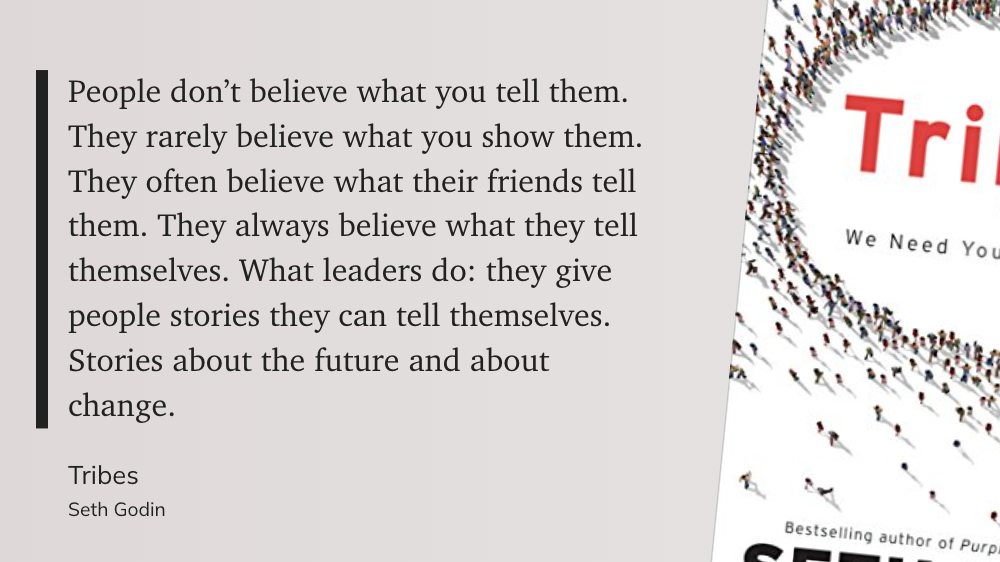
Tribes by Seth Godin

Tribes by Seth Godin is a must-read for teachers looking to make a difference in their classrooms. It examines the concept of leadership and how to use it to create positive change.

The book focuses on the concept of “tribes”, which are communities united by shared values, beliefs, and goals. It encourages readers to create their own tribes and use them to make a difference in the world. Tribes also provides readers with invaluable advice on how to effectively lead their tribes, how to inspire others and how to create a positive learning environment. It is an invaluable resource for teachers looking to empower their students, foster collaboration, and create a positive learning environment.

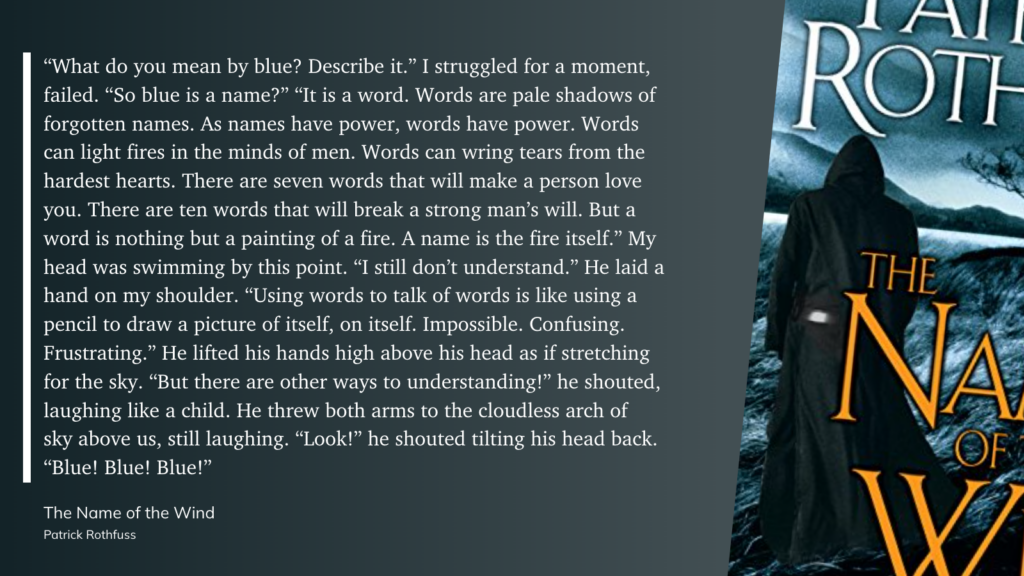
The Name of The Wind by Patrick Rothfuss

The Name of The Wind is a modern classic, praised for its beautiful prose and captivating story. It’s also one of the few books I’ve read that have caused me to weep openly.

It follows the tale of Kvothe, an orphan seeking to make his way in a world filled with danger, mystery, and wonder. Kvothe’s journey is one of self-discovery as he comes to understand the power of words and the power of stories. Through his adventures, Kvothe learns to master the power of magic and the power of his own emotions.

The Name of The Wind is an epic adventure filled with memorable characters, captivating dialogue, and lush descriptions. It is a powerful tale of self-discovery, courage, and perseverance and is a must-read for anyone looking for an unforgettable journey. Rothfuss’s writing is beautiful and engaging, and his story is filled with moments of joy, sorrow, and inspiration.

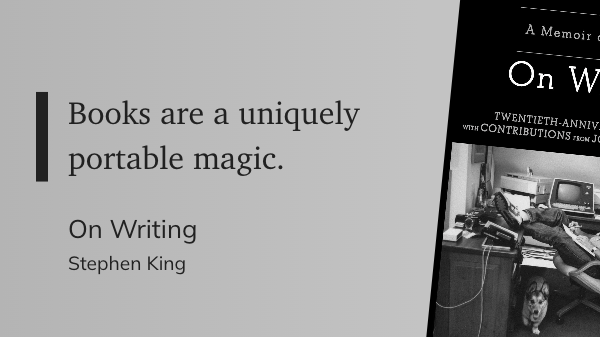
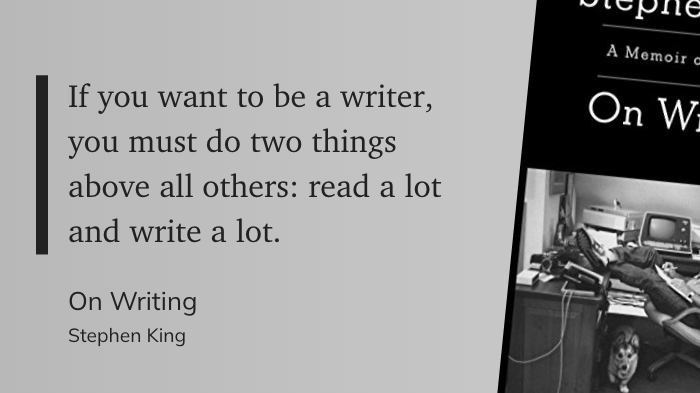
On Writing by Stephen King

On Writing is a must-read for any creative or teacher. It’s a first-person account of Stephen’s writing process and a bit of a personal memoir. He shares his stories of success, failure, and redemption while providing advice on writing style, technique, and tools.

While the book is focused on writing, you can apply the lessons to any creative endeavor, like teaching.

On Writing is an adventure in a different kind of world where the written word is powerful beyond measure. Whether you are interested in learning how to write better or want to entertain yourself with Stephen King’s witty observations, this book will not disappoint.

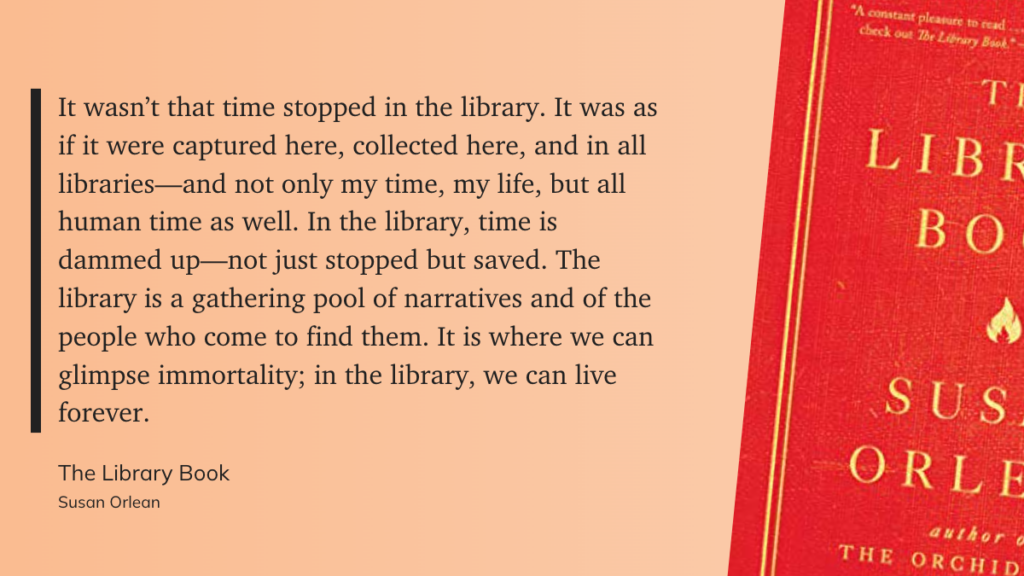
The Library Book by Susan Orlean

I had to think about this last one for a while because I didn’t want to waste the slot. There are so many great books that could go on this list. But here we are with what has become one of my favorite books.

The Library Book by Susan Orlean is an inspiring and captivating exploration of the power of libraries and the stories of the people who love them. Orlean examines the impact of libraries on our lives, from the Great Library of Alexandria to modern-day libraries. She weaves together stories of patrons, librarians, and politicians, creating a vivid and compelling narrative that highlights the importance of libraries in our society. The Library Book is an essential read for anyone looking to understand the impact libraries have on our lives and to appreciate their value.

A Final Note

As we grow and change over the years, we can gain new perspectives and lessons from books we’ve read in the past. Take some time this year to revisit some of your favorites. Thumb through Fahrenheit 451 one more time. Take a stroll down memory lane with A Tale of Two Cities or The Grapes of Wrath. Dive back into the worlds of Tolkien once again. You’ll likely find something you missed and learn something new.


The Eclectic Educator is a free resource for everyone passionate about education and creativity. If you enjoy the content and want to support the newsletter, consider becoming a paid subscriber. Your support helps keep the insights and inspiration coming!

Engaging Students with AI

While some parts of the education world are well on their way to banning everything related to AI, some of us are excited about the potential of showing students a tool that can drastically increase productivity and expand options for students to express their creativity and demonstrate learning.

One of the teachers in my teacher fellowship asked me about introducing the process of developing and marketing a mobile app to her third-grade students. They are working on a unit about economics.

I’m a fan of the 5E lesson planning framework. If you’re unfamiliar, The 5E lesson plan is a widely used instruction model consisting of five phases: Engage, Explore, Explain, Elaborate, and Evaluate.

During the engage phase, teachers can use various strategies to encourage students to discover more about the topic, such as an attention-grabbing hook, a thought-provoking question, or a hands-on activity. The engage phase’s goal is to create an atmosphere of curiosity and excitement, as well as to set the tone for the rest of the lesson.

I thought about creating something for the first part of this 5E framework to get the students interested in the topic of mobile app development. Perhaps a little video of a mobile app developer giving students an overview of the process?

I know access to mobile app developers is easy to come by for schools in large cities, but my schools aren’t in a large city. And I don’t have any contacts immediately available to speak to a class, whether in-person or remotely.

Which, if you weren’t aware, is the situation that so very many schools deal with every day. Access to experts in some fields isn’t readily available.

But there’s a solution.

With a little help from a few AI tools, here’s what I did…

Writing a Video Script with AI

I began by using a tool I had just learned about called TeacherBot. The folks at TeacherBot aim to “build the tool every teacher deserves.” You enter an idea into the prompt space, and TeacherBot gives you a useful output.

The TeacherBot user interface

I aimed to create a script for an overview video of the mobile app development process. Here’s the prompt I gave TeacherBot to begin:

You are a software programmer. You need to introduce the concepts of coding an app for Apple’s iOS to a group of third-grade students in the United States. Create a story talking about the different phases of mobile app design and development.

I asked for a “story” and specified third-grade students to hopefully keep the response at an appropriate grade level for the students

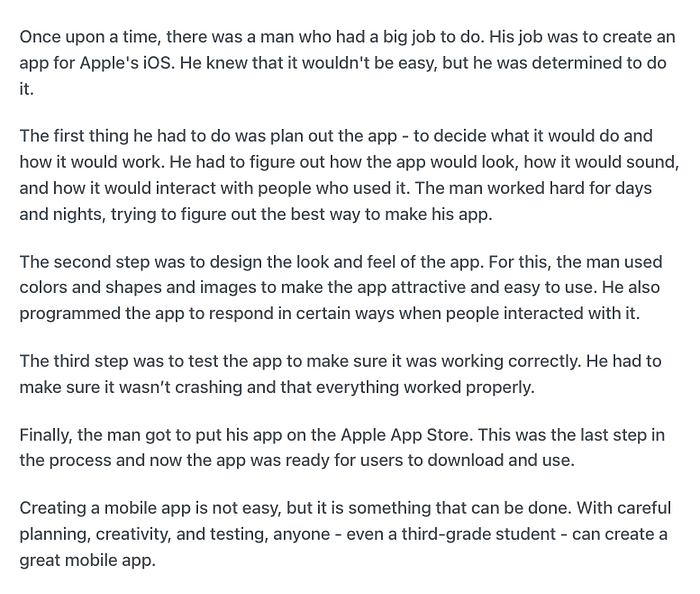
Here’s what TeacherBot gave me in return:

TeacherBot response to prompt

Is it rudimentary? Yes. But, it is designed for a 3rd-grade audience. And it’s just an overview. If I had the learning objectives for the lesson or the unit, I might have been able to craft a better prompt or tweaked the response myself. I wanted a female speaker, so I should have indicated that in the prompt. However, that was an easy fix.

Now, I needed to create my speaker.

Creating a Speaker Image to Deliver the Script

To create an image for my speaker, I headed over to Midjourney and entered the following prompt:

minority woman, photography, depth of field f2.8 3.5, 25mm lens, 8k, ultra-realistic — v 4 — q 2 — v 4 — s 750 — uplight

I won’t go into the crafting of prompts for Midjourney here. Linus Ekenstam inspired this particular prompt, and he has a wealth of knowledge on his Twitter feed on crafting prompts.

Here are the initial results from Midjourney:

All of these images would work perfectly for this task. I wanted female minority representation for this project. Why? Because students need to know that jobs in computer programming and software development aren’t just for white men.

I choose this image from the four at random:

Now, I have my script and my speaker. Time for the final step.

Creating a Video with AI

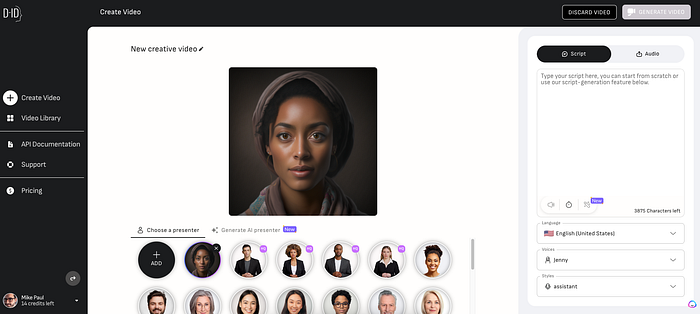
For the final step, I turned to D-ID. After creating an account, I opened the “Create Video” tool and added the image of my speaker, and pasted my script in the script box.

An image capture of the D-ID.com interface for creating a new video.
D-ID interface

I changed the language settings to give the speaker an appropriate accent but still speak in English. Here is the final result:

Now, we have a little something to use to engage our third-grade students.

Is it perfect? Of course not. Do we still have a long way to go in the world of AI? Yes.

Will we ever get to use this tool to its fullest potential if we block it in school because we’re worried about cheating?

No.

AI is a tool, just like anything else. Use it. Be aware of what it can be used for, both for “good” and for “bad” — and keep in mind that what defines those terms is highly subjective.

But always follow Brandon Sanderson‘s Zeroth Law: “Always err on the side of what is awesome.”


Thanks for reading. You can get more articles like this as part of my weekly newsletters. I send out two per week: Tuesdays are deeper dives into education topics for paid subscribers, and every Friday, I share “10 Things” I think are cool and worth your time for free.

Sign up right here to get the next issue delivered to your inbox.

Leading the Way

This is a preview of my Friday “10 Things” newsletter. Friday editions are free for everyone.

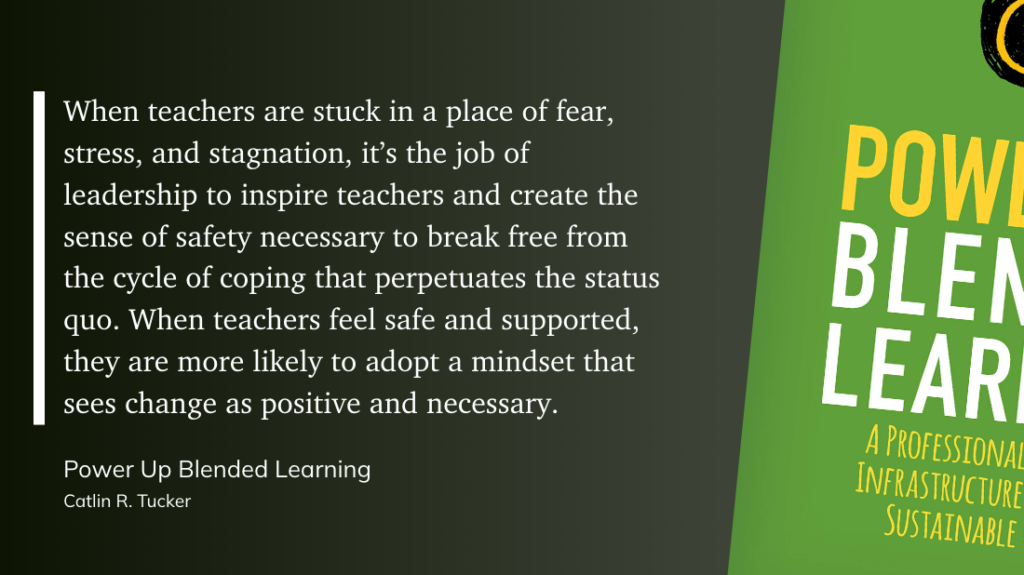
power up blended learning

Greetings, friends. It’s the second Friday of 2023. I hope you’re off to a great year. It’s also Friday the 13th, so be careful out there and watch out for hockey masks…

Here are 10 things I thought were worth sharing this week, focusing on the theme of leadership:

10 Cool Things Worth Sharing

  • Monday here in the US, we celebrate Martin Luther King, Jr.’s birthday. Here are 4 lessons from his leadership that apply in every organization I can think of but doubly so in education.
  • If there was ever a time for leadership amidst whirlwinds of change in the world of education, it’s now…

To read the rest, subscribe to my Friday “10 Things” newsletter.