We Need Easier EdTech Integrations

I won’t spend my time here griping about the overuse of technology for standardized testing and other “necessary” tests. That fight is for another day.

Today, let’s talk about how frustrating it is to use many testing services. I’ve spent most of the past two weeks getting two grade levels into two different online testing systems.

One system required an SFTP upload of a CSV file. I kept getting errors even using the company’s template and data tool. After trying a few dozen times, I gave up and sent the file to the company. The next day, the data was uploaded and corrected. I still have no clue what was wrong.

The second company uses Clever to sync students and teachers. But not to log students in for the test. No, no, they require a lockdown browser for their exam. Conveniently, they autogenerate usernames and passwords for the students.

Did I mention these elements are 11 characters or so each? And the students using them are in kindergarten?

Yep. Smiles all around.

Mind you, I have a decent amount of experience with all the tools I used to make these data uploads happen. I would venture to say that the person at most schools responsible for this process is NOT as experienced. Just a hunch.

There has to be a better way.

Oppenheimer

The full-length trailer for Christopher Nolan’s next film “Oppenheimer” is now available for viewing. It’s pretty fantastic.

The film focuses on Robert Oppenheimer, the brilliant physicist often called the “father of the atomic bomb.” The film draws from the book “American Prometheus” by Kai Bird and Martin J. Sherwin.

In the early 1940s, World War II was raging, and the US government had just launched the top-secret Manhattan Project. Its goal? To create the first atomic bomb. Enter Robert Oppenheimer, a genius with deep knowledge of theoretical physics. He was tasked with leading the scientific team at Los Alamos, New Mexico, to develop this deadly weapon.

Oppenheimer was known for his charisma and ability to bring together some of the brightest minds, like Enrico Fermi and Richard Feynman, to collaborate on this massive undertaking. The pressure was immense, as the project was a race against time and other countries to harness the power of nuclear fission.

Despite the challenges, Oppenheimer’s team succeeded, and on July 16, 1945, they witnessed the first atomic explosion in history – the Trinity Test. This changed everything; it was a game-changer in warfare, but it also weighed heavily on Oppenheimer’s conscience. He famously quoted from the Bhagavad Gita, saying, “Now I am become Death, the destroyer of worlds.”

Not long after, the atomic bombs were dropped on Hiroshima and Nagasaki, leading to Japan’s surrender and the end of World War II. But the ethical implications of these bombings were profound, and Oppenheimer struggled with the guilt of having played a key role in their development.

“American Prometheus” dives deep into the life and inner turmoil of Robert Oppenheimer, showing his brilliance, patriotism, and the painful consequences of his work. It’s a compelling story that makes us question the responsibility of scientists and governments in the pursuit of knowledge and power.

I’ve been looking forward to this one for quite a while because I find the story fascinating. The actions portrayed here still affect us today. Some lines I caught in the trailer speak to the haunting memory of these events…

“Our work here will ensure a peace mankind has never seen.”

“Until someone builds a bigger bomb.”

“You are the man who gave them the power to destroy themselves, and the world is not prepared.”

Oppenheimer releases on 21 July 2023.

The Zettelkasten Method: How I Actually Use It (A Doctoral Student’s Honest Account)

I want to start with the problem, because most Zettelkasten guides skip it.

You read something genuinely useful. You highlight it, maybe jot a note in the margin, and move on. Three months later, you’re trying to connect that idea to something you’re writing, and you cannot for the life of you remember where you read it, what exactly it said, or how it fit into whatever you were thinking at the time. The idea is gone. Not because you’re not smart enough to remember it. Because that’s not what human memory is for.

Our brains were built to make connections between things, not to be filing cabinets. The filing cabinet instinct — highlight it, dump it in Evernote, never think about it again — is exactly backward. You’re outsourcing the thinking part and keeping the forgetting part.

The Zettelkasten method fixes this. I’ve now been running my system for several years, first built it seriously when my doctoral reading volume became genuinely overwhelming, and I’m heading into year four of the dissertation — near the finish line — with a system that has become part of how I work and think across every domain of my life, not just academic writing. The dissertation is almost done. The Zettelkasten is permanent.

Here’s what I’ve learned.


What the Zettelkasten Actually Is

The words are German: Zettel means “slip of paper,” and Kasten means “box.” Slip box. That’s the whole thing — Niklas Luhmann, a German sociologist writing in the mid-twentieth century, kept a box of index cards where he recorded his ideas, one per card, linked to other cards through a numbering system he developed himself.

He published 70 books and over 400 scholarly articles. He credited the slip box. Not his intelligence, not his work ethic — the system.

What made Luhmann’s approach different from just keeping notes wasn’t the index cards. It was that the cards talked to each other. Each note referenced other notes. Ideas linked to ideas. Over time, the box developed what Luhmann called a “conversation partner” — a second mind that could surprise him with connections he hadn’t consciously made.

That’s the thing most people miss when they first hear about Zettelkasten. It’s not an organizational system. It’s a thinking system. The goal isn’t to store information — it’s to generate new ideas by forcing your notes into relationships with each other.


How I Got Here

My first encounter with anything like this was reading about how Ryan Holiday writes his books. He uses a notecard system — one idea per card, physically sorted into categories, pulled out when he’s writing. It’s not quite Zettelkasten, but it’s the same instinct: single ideas, physically handled, connected by the writer’s judgment rather than a folder hierarchy.

When I started my doctoral program and the reading volume became genuinely overwhelming — dozens of articles a week, books on top of books, sources I knew I’d need to cite but couldn’t reliably locate again — I needed something more systematic.

The Zettelkasten method, as popularized by Sönke Ahrens in How to Take Smart Notes, is what I landed on. Ahrens’s book is still the best entry point if you want to understand the theory before building the practice.


The Three Types of Notes That Actually Matter

Most Zettelkasten guides give you five or six note types and immediately make the whole thing feel complicated. In practice, I work with three:

Fleeting notes are the raw capture. Something I heard, read, or thought that seems worth keeping. No polish required. I write these in my Field Notes notebook — the one that’s always in my back pocket — with a date stamp and whatever I can get down in thirty seconds. They’re temporary. Their only job is to get the idea out of my head before I lose it.

Literature notes are what I write after sitting with a source. When I finish a book or article that matters, I go through my fleeting notes and highlights and write one note per idea — not a summary of the chapter, not a quote, but what I think this means and why it matters. In my own words. This is where the thinking starts.

Permanent notes are the keepers. These are the ideas that survive the literature note stage and earn a place in the main system. Each one stands alone — a complete thought that makes sense without context. Each one links to other permanent notes where the connection is real, not just topical.

The discipline is: no permanent note without a connection. If a new note can’t be linked to anything you already have, either the note isn’t ready yet, or you’re missing a bridge note that should exist.


My Actual Setup: Cards Plus Notion

I run a hybrid system. The physical component is 4×6 ruled notecards — the sweet spot for a single idea with enough space to actually develop it. I use a date stamp to record when a card entered the system. I write with Blackwing pencils because the erasability matters when you’re still working out what a note should say.

The cards live in a card box on my desk, organized into loose topic clusters that shift as the system grows. I don’t use a strict numbering system — I’ve found that topical clusters with cross-references work better for my brain than pure alphanumeric sequences.

The digital component is Notion. When a permanent note is fully formed, it gets entered into Notion with tags, links to related notes, and a reference to the source. This is where the search capability becomes essential — finding a note about something I read eighteen months ago takes seconds.

The hybrid approach sounds redundant, but it isn’t. Writing by hand forces slower, more deliberate thought. The physical card is where I work out what I actually think. Notion is where I store it and connect it at scale.


What This Looks Like in Practice

Here’s a concrete example from my dissertation work.

I read an article about distributed cognition — the idea that human thinking isn’t just what happens inside our skulls but includes the tools and environments we think with. I write a fleeting note while reading: distributed cognition — thinking happens in the system, not just the thinker. Interesting connection to why PKM matters?

Later, I write a literature note: Hutchins (1995) argues that cognition is distributed across people, artifacts, and the environment. Navigation example: the ship’s navigation system is the unit of cognition, not any individual sailor.

That becomes a permanent note: Tools are not just extensions of thinking — they are part of thinking. A well-designed external system (like a Zettelkasten) is literally part of the cognitive process, not a substitute for it. Linked to: notes on Vygotsky’s zone of proximal development, notes on embodied cognition, notes on why writing clarifies thinking.

Months later, I’m working on a section about student-centered learning environments. I pull the distributed cognition note. It connects, in ways I didn’t plan, to three other notes I’d written about classroom design and technology integration. The Zettelkasten hands me an argument I didn’t know I was building.

That’s the thing. It surprises you.


The Next Frontier: Obsidian + Claude Code

I’m going to be honest: I’m still experimenting with this, so take it as a field report rather than a recommendation. But it’s too interesting not to share.

Andrej Karpathy — co-founder of OpenAI, former Tesla AI director, one of the clearest thinkers working in AI today — recently published a pattern he calls the LLM Wiki. The idea is deceptively simple: instead of keeping your notes in a system that you navigate manually, you keep them as structured plain-text markdown files, and you point an LLM directly at that folder to find connections, synthesize ideas, and build new understanding across everything you’ve written.

Karpathy’s framing is sharp: the shift is from retrieval to compilation. Traditional search asks “which note answers this query?” The LLM wiki asks “build and maintain a persistent, cross-referenced knowledge base that already contains the synthesized answer.” The AI doesn’t just search your notes — over time, it helps write and maintain them, surfacing connections you didn’t consciously make.

What makes this particularly interesting for Zettelkasten practice is that it doesn’t replace the method — it extends it. The atomic note principle, the linking discipline, the permanent note as a self-contained idea: all of that still applies and in fact becomes more powerful when an LLM can read the whole vault and identify non-obvious connections across it.

The workflow I’m exploring: Obsidian as the front end (free, local files, excellent graph visualization of note connections), Claude Code as the intelligence layer pointed at the vault. You give Claude Code a schema file that tells it what the wiki is for and how it’s structured, then feed it sources — articles, book notes, research papers, your own existing notes — and it builds and maintains the wiki, linking ideas across everything you’ve given it.

Karpathy himself manages wikis of over 100 articles this way. The graph view in Obsidian, showing every connection between notes visually, is something you have to see to understand — it’s a map of how your ideas actually relate to each other, not how you filed them.

I’m at the stage of migrating some of my Notion notes into an Obsidian vault and running Claude Code against it to see what connections it surfaces that I haven’t made manually. Early results are genuinely surprising in the way the best Zettelkasten surprises are — the system finding threads you didn’t know you were pulling.

If you want to explore this yourself, Karpathy’s gist is at github.com/karpathy, and there are now several good community implementations. Start small — one topic domain, a handful of sources — and see what happens.


The Biggest Mistakes People Make

Highlighting is not note-taking. A highlight is a bookmark. It says “I thought this was interesting” and nothing else. Unless you return to it and write what you think it means, it’s not knowledge — it’s a marker in a document you’ll probably never reopen.

Too many categories too early. The instinct to organize before you have enough material always produces a structure that fights the content. Let the connections emerge from the notes themselves. Restructure when the natural clusters become clear.

Skipping the rewrite. Writing a literature note in your own words — not copying the quote, not paraphrasing loosely, but actually reconstructing the idea from scratch — is where the learning happens. It’s uncomfortable because it forces you to distinguish between what you actually understood and what you just recognized.

Treating it as a productivity system. The Zettelkasten is slow. A well-formed permanent note might take twenty minutes to write. It will pay for that time a hundred times over when you need it, but if you’re measuring output by notes per hour, you’re measuring the wrong thing.

Abandoning it when life gets busy. The system only has value if it has continuity. Even one card a week keeps it alive. The temptation during high-pressure periods is to stop feeding the system — exactly when you need it most.


The Tools

Physical:

Digital:

  • Obsidian — free, local files, excellent bi-directional linking, increasingly my recommendation for anyone starting fresh. The graph view alone is worth it.
  • Notion — what I’ve used for years and still use; better for combining notes with project management
  • Claude Code — for the Karpathy LLM Wiki pattern; points directly at your local Obsidian vault

Books:


Is It Worth It?

I’m four years into a doctoral program — near the finish line — and the Zettelkasten is the primary reason I’m not drowning. The reading has been relentless, and the connections between sources are what the work lives on. Without a system that forces me to make those connections explicit and retrievable, I’d be starting from zero every time I sat down to write.

But here’s the thing I’ve come to understand about this system: it was never just a dissertation tool. The notes I’ve written about instructional coaching, about technology in education, about how people actually learn — those connect across my classroom work, my doctoral work, my writing, my thinking in every direction. The system doesn’t belong to a project. It belongs to the thinker.

The Karpathy LLM Wiki pattern is the next chapter of that idea. If the Zettelkasten is a conversation partner you build note by note, an LLM pointed at your vault is something like that partner getting a significant intelligence upgrade. I’m genuinely excited to see where it goes.

Start small. Write one permanent note today about something you read this week. Not a summary — what you think it means. Link it to one thing you already know.

That’s the whole thing. Do it again tomorrow.


The tools I use for my Zettelkasten — notecards, date stamp, Blackwing pencils, Field Notes, and more — live on my Favorite Gear page. If you want to see how the Field Notes fit into daily planning, that post goes deeper on the daily capture side of this system.


The Eclectic Educator is a free resource for everyone passionate about education and creativity. If you enjoy the content and want to support the newsletter, consider becoming a paid subscriber. Your support helps keep the insights and inspiration coming!


The Power of Commonplace Books: A Timeless Tool for Educators

As educators, we are constantly bombarded with new ideas, insightful quotes, and pieces of information that can inspire and improve our teaching practices. The challenge is finding a way to capture and organize these gems so that they can be easily accessed and applied when needed. Enter the commonplace book, a time-honored tool for doing just that.

Saving the minutiae of everyday life isn’t a new thought. People have been doing it for thousands of years and continue to do it even today (Pinterest, anyone?).

As Seneca said,

“We should hunt out the helpful pieces of teaching and the spirited and noble-minded sayings which are capable of immediate practical application–not far far-fetched or archaic expressions or extravagant metaphors and figures of speech–and learn them so well that words become works.”

What is a Commonplace Book?

A commonplace book is a personal repository where individuals collect and organize quotes, ideas, anecdotes, and other pieces of knowledge they come across in their daily lives. It’s not just a diary or journal, it’s something you can refer to over and over again. It is a space for reflection, inspiration, and creativity.

Commonplace books take many shapes and forms, both physical and digital. Whether you keep a journal, binder, scrapbook, or even a Tumblr blog (yep, it’s still around!), the commonplace book can be an essential part of your life. Heck, even this blog is a form of commonplace book.

By keeping a commonplace book, educators can harness the power of the thoughts and ideas they encounter, making it an invaluable resource for personal growth and professional development.

Enhance Memory and Recall

Educators are lifelong learners who are constantly processing new information. Writing down ideas, quotes, and insights in a commonplace book allows us to engage with the material on a deeper level, enhancing memory and recall. This practice can be particularly beneficial for educators who want to remember important concepts and strategies they can use in their classrooms.

Foster Creativity and Innovation

Commonplace books are a breeding ground for creativity and innovation. As you collect and organize ideas, you naturally begin to make connections between seemingly unrelated concepts, sparking new insights and approaches. Educators can use these connections to develop innovative teaching strategies, create engaging lesson plans, or solve problems they face in their daily work.

Encourage Reflection and Personal Growth

By curating a collection of thoughts and ideas that resonate with us, we can create a personalized roadmap for reflection and growth. Educators can use their commonplace books to explore their own philosophies, values, and beliefs about teaching and learning. This practice can lead to greater self-awareness and help educators grow both personally and professionally.

Facilitate Collaboration and Networking

A well-maintained commonplace book can serve as a conversation starter and a networking tool. Educators can share their collections with colleagues, fostering collaboration and camaraderie. A shared passion for learning and growth can create strong professional bonds, leading to more productive and enjoyable working relationships.

Cultivate a Culture of Learning

By keeping a commonplace book, educators model a commitment to learning and growth for their students. This practice can help create a culture of curiosity and intellectual exploration within the classroom, fostering a love of learning in students that can last a lifetime.

Famous Keepers of Commonplace Books

  1. Leonardo da Vinci: The renowned artist, scientist, and inventor kept a series of notebooks that can be considered his version of a commonplace book. He filled these notebooks with sketches, observations, ideas, and notes on various subjects, from anatomy and engineering to art and philosophy. These notebooks were instrumental in shaping da Vinci’s genius and groundbreaking work.
  2. Isaac Newton: The famed mathematician and physicist maintained a commonplace book where he recorded his thoughts and ideas, including early notes on calculus and the laws of motion. Newton’s commonplace book was an essential tool in his intellectual development, allowing him to process and explore complex concepts that would later become the foundation of modern physics.
  3. Thomas Jefferson: The third President of the United States and principal author of the Declaration of Independence kept a commonplace book for much of his life. Jefferson’s book contained literary passages, political thoughts, and philosophical ideas that influenced his beliefs and actions as a statesman.
  4. John Locke: The influential philosopher and “Father of Liberalism” not only kept a commonplace book himself but also wrote a detailed guide on maintaining one. He believed that commonplace books were essential for organizing and retaining knowledge, and his own book featured a wide range of subjects, including politics, religion, and science.
  5. Virginia Woolf: The renowned author and essayist used a commonplace book to record quotes, passages, and ideas from her reading. This practice allowed her to engage with the works of other writers more deeply and inspired her own writing. Woolf’s commonplace book was an essential tool for her creative process and intellectual growth.

How to Get Started with a Commonplace Book

Creating and maintaining a commonplace book is a simple yet powerful practice. Here are a few tips to help you get started:

  1. Choose a format: Decide whether you prefer a physical notebook, a digital tool, or a combination of both. Choose a method that works best for you and your lifestyle.
  2. Develop a system: Create a system for organizing your entries, such as by topic, date, or source. This will make it easier to locate and revisit specific ideas.
  3. Make it a habit: Set aside time each day or week to review your notes, add new entries, and reflect on your collected ideas.
  4. Share your insights: Don’t keep your commonplace book a secret. Share your favorite entries with colleagues, friends, or students, and encourage them to start their own.

In conclusion, a commonplace book is an invaluable tool for educators, offering numerous benefits that can enrich their professional lives. By capturing, organizing, and reflecting on the ideas and insights they encounter, educators can cultivate a more creative, innovative, and self-aware approach to their work. So why wait? Start your own commonplace book today!


The Eclectic Educator is a free resource for everyone passionate about education and creativity. If you enjoy the content and want to support the newsletter, consider becoming a paid subscriber. Your support helps keep the insights and inspiration coming!
Breaking Rules That Were Already Broken

Hey gang. It’s been a bit, but life has been… crazy. However, I’m rounding the bend on a number of projects and have breathing room again.

I did manage to find about an hour each week to watch the final season of Picard—by far the best season—and a quote from Captain Shaw in the final episode really struck me. His recorded review of his first officer, Seven of Nine, described how she was reckless and a rule breaker. But, very often, the rules she was breaking were probably already broken anyway.

My message to you, keep breaking the rules that are already broken. Trust me, there are plenty of them out there.

And now, for this week’s 10 Things…

10 Things Worth Sharing


The Eclectic Educator is a free resource for everyone passionate about education and creativity. If you enjoy the content and want to support the newsletter, consider becoming a paid subscriber. Your support helps keep the insights and inspiration coming!

Students need freedom to develop critical skills with edtech

My first question when working with teachers and the technology they have available in their classrooms is, “what do you want the kids to create?”

And when we look at the 4 Shifts protocol, this question from the technology infusion section is also essential:

Does technology add value so that students can do their work in better or different ways than are possible without technology?

– 4 shifts protocol

When students can use technology to create, I hope they have been equipped with the necessary training to use that technology effectively. Otherwise, there’s trouble.

I’ve come to the realization that technology will have its greatest impact in the classroom when educators allow learners to use digital technology as a self-directed learning tool. This means not just providing students with laptops and online resources, but ensuring they have the necessary skills to find, validate, apply, and curate the vast amount of information now available to them.

Rick Cave, eSchool News

Just for the Sake of Being Creative

being creative just for the sake of being creative

Sometimes, you just have to do things to flex that creative muscle.

“Do things that light your soul on fire and that help you fall in love with your life every single day. I had no clue when I started making content that I was going to be met with so much love in a place that is notorious for being unloving: the internet. do not filter yourself do not make yourself a version of you that you think is more palatable, digestible, lovable… don’t filter the humanity and the personality out of yourself. we already have that version of you. it’s everywhere.   it is everywhere. we don’t want that version of you. we want you to make content that makes you happy, that fills a creative void in your life. Do things for creative sake just because you love doing them. Don’t try and monetize everything. Don’t make every hobby a side hustle, don’t make every hobby a job, just do things because you love them and watch your life just like change. you  are suddenly doing things because they make you  happy, and that’s a really, really powerful thing.”

Elyse Meyers


The Eclectic Educator is a free resource for everyone passionate about education and creativity. If you enjoy the content and want to support the newsletter, consider becoming a paid subscriber. Your support helps keep the insights and inspiration coming!

How the 4 Shifts Protocol Supports Teachers in Providing Deeper Learning Opportunities for Students

I’ve had the pleasure of working with a small cohort of teachers this year to redesign lessons for deeper learning opportunities. I called it the “Future Shift Fellowship” for two reasons: 1) I hoped that this group would begin moving our district into the future by focusing on student-centered lesson design and 2) we would be using the 4 Shifts protocol to guide our work.

To say that I’m pleased with what we’ve done this year would be an understatement. Each of the members of the cohort has stepped far beyond their comfort zone with their work. And, if you asked their students, I’m sure you’d hear how much they appreciate the opportunities for learning.

But you may be asking why we used the 4 Shifts for this work?

I’m happy to explain…

Whenever I work with teachers, my number one thought is that whatever we do together must be easy to implement. Teachers have little or no time to spend on new strategies or techniques in the classroom once the school year begins. Their days are filled with so many tasks beyond just those of teaching students that it’s difficult to squeeze in learning, even when there are demonstrable benefits to that learning.

So, any changes must be easy to make. Also, if the changes made can provide a visible impact on student learning, whether that be in the form of student engagement, assessment, or simply just changing how students talk about learning and school, then the changes are worth the time.

These two reasons above all others are why I chose to use the 4 Shifts protocol to guide the work of our fellowship.

The 4 Shifts Protocol, designed by Scott McLeod and Julie Graber, is a comprehensive framework that aims to help educators transition from traditional teaching methods to more modern, student-centered approaches that promote deeper learning opportunities. The protocol focuses on four key shifts: deeper thinking and learning, authentic work, student agency and personalized learning, and technology infusion.

  1. Deeper Thinking and Learning: This shift encourages teachers to design activities that require students to engage in higher-order thinking skills, such as analysis, evaluation, and creation, rather than just memorization and recall. By doing so, students develop critical thinking abilities and become more adept at problem-solving and decision-making.
  2. Authentic Work: The protocol emphasizes the importance of connecting classroom activities to real-world situations and contexts. This shift encourages teachers to create tasks with a genuine purpose, audience, and impact beyond the classroom, fostering relevance and meaningful student learning experiences.
  3. Student Agency and Personalized Learning: This shift focuses on providing opportunities for students to take ownership of their learning and make choices about what and how they learn. Teachers are encouraged to create learning environments that support individual learning preferences and needs, allowing students to progress at their own pace and follow their interests.
  4. Technology Infusion: The protocol recognizes the power of technology in enhancing learning experiences and facilitating the other three shifts. Teachers are encouraged to integrate technology tools and resources into their instruction, allowing students to access information, collaborate with peers, and demonstrate their learning in innovative ways.

By implementing the 4 Shifts Protocol, teachers can create more engaging and meaningful learning experiences for their students, fostering a deeper understanding and long-lasting knowledge. This approach prepares students for success in the modern world and cultivates a love for learning and a growth mindset.

Does the 4 Shifts protocol answer all the questions? Of course not. In fact, sometimes you have more questions than you started with after working through the protocol. This is why it is key to only focus on one of the shifts at a time when redesigning your lessons.

You could change a lesson to the super ultimate checks all-the-boxes learning experience in one go, but you and your students would likely be so exhausted and confused from all the changes that any benefit would be lost.

But, the protocol gives you the structure to make small changes to your lessons, whether you are a classroom teacher or an instructional coach working with teachers to make the changes.

I can’t think of a better tool to use to begin moving toward more student-centered learning.


The Eclectic Educator is a free resource for everyone passionate about education and creativity. If you enjoy the content and want to support the newsletter, consider becoming a paid subscriber. Your support helps keep the insights and inspiration coming!

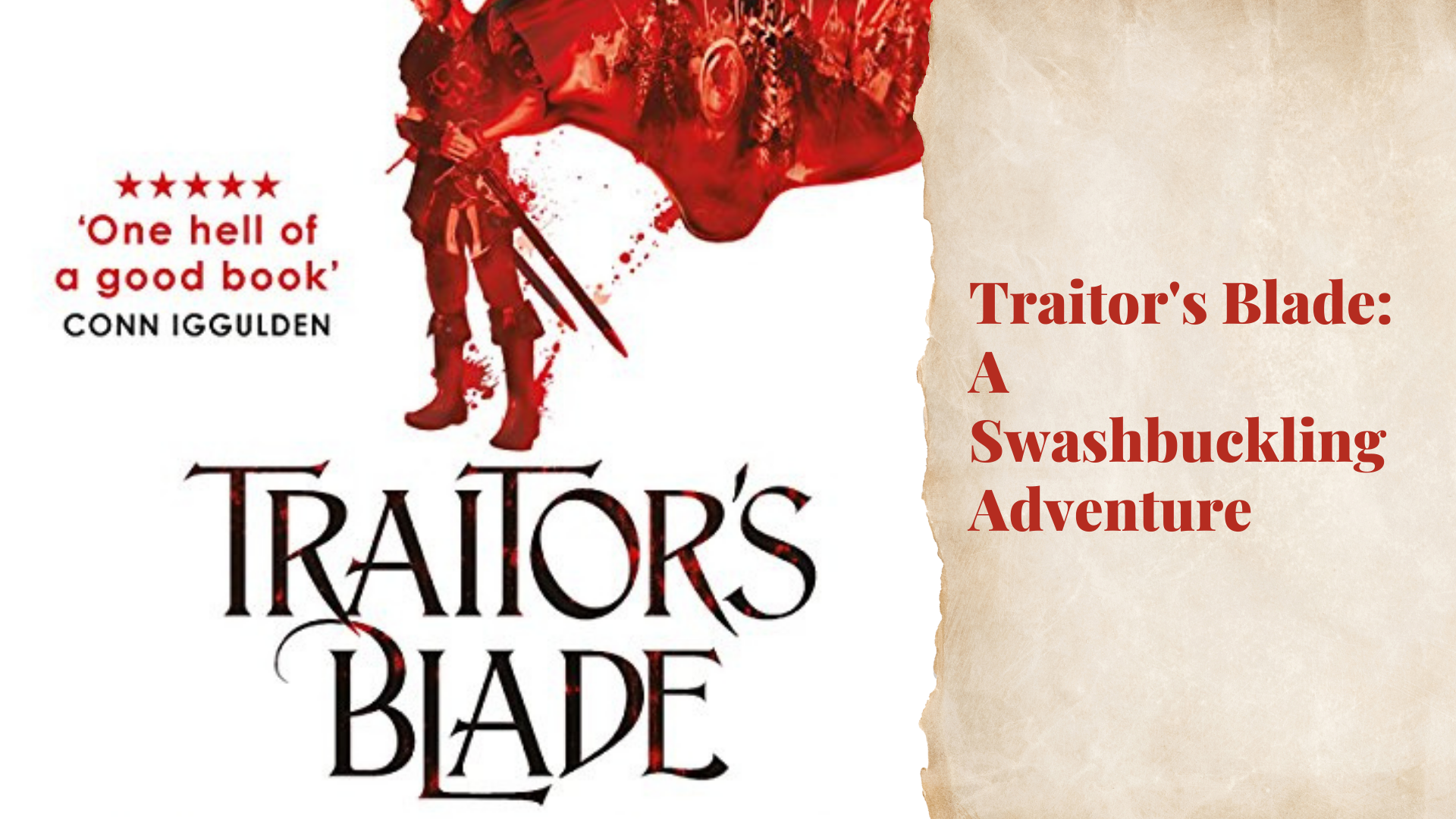
Book Review – Traitor’s Blade: The Greatcoats, Book 1

Title: Traitor’s Blade: The Greatcoats, Book 1

Author: Sebastien de Castell

Publication Date: 2014

Genre: Fantasy

Rating: [rating stars=”4.0″]

What It’s About

I have the pleasure of diving into the pages of Traitor’s Blade, the debut novel by Sebastien de Castell. This novel is the first entry in the critically-acclaimed Greatcoats series, a swashbuckling adventure set in the fictional realm of Tristia.

traitor's blade

Traitor’s Blade follows the story of Falcio Val Mond, the First Cantor of the Greatcoats, a group of traveling magistrates and warriors who once served the now-deceased King Paelis. Alongside his companions, Kest and Brasti, Falcio embarks on a thrilling journey to preserve their king’s legacy and restore justice to the kingdom. As the trio navigates the treacherous political landscape of Tristia, they must confront the formidable Dukes and Duchesses, who have plunged the realm into chaos after the king’s assassination.

De Castell masterfully weaves a tale of camaraderie, loyalty, and betrayal in a world filled with complex political intrigue and unforgettable characters. The author’s background in fencing and historical reenactment lends an authentic touch to the vivid swordplay and duels that punctuate the novel.

Falcio’s narrative voice is relatable and engaging, drawing the reader into the heart of the story. His unwavering dedication to the Greatcoats’ mission, combined with his moral compass and quick wit, make him a compelling protagonist. Meanwhile, the supporting characters, including Kest and Brasti, are well-rounded and contribute to the story’s emotional depth.

The novel’s pacing is brisk, and de Castell adeptly balances moments of humor and heartbreak with thrilling action sequences. The author also skillfully reveals the broader world of Tristia and its history, hinting at the larger narrative that will unfold in subsequent books.

traitor's blade

In conclusion, Traitor’s Blade is an exhilarating and captivating fantasy adventure that pays homage to the swashbuckling tales of old while carving out its own unique space in the genre. Sebastien de Castell has crafted a world full of intrigue and memorable characters, leaving readers eager to follow Falcio and his friends on their quest for justice. This novel is a must-read for fans of epic fantasy and those looking for an immersive, action-packed story with heart.

How I Discovered It

I wish I could say that there was great intention and planning that led me to this book or that it had been on my TBR for a long time. But that’s simply not the case. I finished another book on Scribd and was just browsing the catalog. Traitor’s Blade looked interesting, and I dove in. And I loved it!

Thoughts

As I said, I was pleasantly surprised by this book. The characters are well-developed, and you feel the sense of urgency they have throughout their travels.

In Traitor’s Blade, we join Falcio and his fellow Greatcoats, Brasti, and Kest, on a thrilling journey through a corrupt kingdom. From the very beginning, the novel charges ahead at an exhilarating pace, leaving readers breathless as they experience Falcio’s sheer determination firsthand. The relentless action and challenges faced by our heroes make for an incredibly immersive read, as they must utilize every weapon, tactic, and bit of cunning at their disposal to survive. Through it all, the witty and razor-sharp dialogue stands out as some of the finest in the fantasy genre.

traitor's blade

At the heart of this enthralling tale lies the unbreakable bond between Falcio, Brasti, and Kest, which proves to be an absolute delight to behold. Falcio’s strategic mind, Brasti’s cheeky archery skills, and Kest’s unrivaled swordsmanship make for a captivating and formidable trio. Indeed, the comparison to the Three Musketeers is apt, as the natural and playful camaraderie between these characters is one of the novel’s strongest elements. As a reader, you can’t help but laugh, smile, and feel the heartache alongside them as they battle adversity, bicker, and find themselves in the most precarious situations imaginable.

What I Liked About It

The worldbuilding in Traitor’s Blade is top-notch, with a rich history and political landscape that feels fully realized. The addition of the Greatcoats, with their unique blend of law enforcement and warrior skills, adds an intriguing layer to the story. The swordplay scenes are also incredibly well-written and exciting, making this a must-read for fans of action-packed fantasy.

What I Didn’t Like About It

One thing that might be a drawback for some readers is the occasional nonlinear storytelling, which can make the timeline of events feel a bit disjointed at times.

Who Would Like It?

As a fan of the book, I wholeheartedly recommend Traitor’s Blade to anyone looking for a fast-paced, action-packed fantasy adventure that showcases the power of friendship, loyalty, and the human spirit. Other books in the Greatcoats series include Knight’s Shadow, Saint’s Blood, and Tyrant’s Throne.

Other Books You Might Enjoy:

  1. The Lies of Locke Lamora (Gentleman Bastard #1) by Scott Lynch – A gritty, fast-paced tale of a talented con artist and his band of thieves in a richly detailed fantasy world.
  2. The Blade Itself (The First Law Trilogy #1) by Joe Abercrombie – A dark, character-driven fantasy that delves into the lives of a diverse group of protagonists, each with their own agendas and motives.
  3. The Riyria Revelations series by Michael J. Sullivan – A captivating fantasy series following a pair of thieves, Royce Melborn and Hadrian Blackwater, as they navigate a world filled with political intrigue, danger, and adventure.
  4. Kings of the Wyld (The Band #1) by Nicholas Eames – A humorous and heartfelt story about a group of retired mercenaries who reunite for one last epic quest.
  5. Six of Crows (Six of Crows #1) by Leigh Bardugo – A fast-paced, character-driven heist story set in a richly imagined world featuring a diverse and morally complex cast of characters.
  6. The Powder Mage Trilogy by Brian McClellan – A gripping tale of magic, politics, and revolution set in a unique world where powder mages wield gunpowder-based sorcery.
  7. The Night Angel Trilogy by Brent Weeks – An action-packed fantasy series following the story of a young assassin, Azoth, as he navigates the treacherous world of magic and politics.
  8. The Shadow of the Wind (The Cemetery of Forgotten Books #1) by Carlos Ruiz Zafón – A literary thriller set in post-war Barcelona, where a young boy discovers a mysterious book that changes his life and leads him on a dangerous quest.
  9. The Farseer Trilogy by Robin Hobb – A richly detailed, character-driven epic fantasy series following the life of FitzChivalry Farseer, a royal bastard turned assassin, and his complex relationships with those around him.
  10. The Broken Empire Trilogy by Mark Lawrence – A dark and compelling fantasy series about a ruthless prince, Jorg Ancrath, who embarks on a brutal journey to claim his birthright and conquer a fractured empire.

All your base are belong to us

all your base are belong to us

Hey, y’all. We’re nearing the end of March, and for many public schools, that means Spring Break is near (or maybe already arrived). It’s a very busy time for educators as one school year ends, and plans for the next are already taking shape.

My hope for you as we approach the end of another school year is that you take the time to take care of yourself. You cannot pour from an empty cup, and it’s easy to get caught up in all the things at the end of the school year.

atomic habits by james clear

Take a beat, catch a deep breath, and center yourself. Rediscover what is really important to you and what you can control.

“We have so little control over our lives. The only thing we can really control is what we spend our days on.” – Austin Kleon

Anyways, here are ten things I thought were worth sharing with you this week:

10 Things Worth Sharing

  1. I worked with a senior English class this week, showing them some AI tools. They might write a book.
  2. Here’s a curated list of prompts, tools, and resources regarding the GPT-4 language model.
  3. Wanna learn financial literacy? This 300-page book was written completely with ChatGPT.
  4. The TikTok trial is a mess and is only proving that the US government is targeting this specific company over other social media platforms. Any issues with TikTok are the same with Facebook, Instagram, Snap, and many others.
  5. What is the right amount of agency to give to learners during their interactions with EdTech? Blog post and paper
  6. Are you a Wordle fan? I’m totally not, but I’ve also never liked Scrabble. Not that you care. Here’s Every Possible Wordle Solution Visualized
  7. An AI course creator – according to the page: “Start with a description and let AI-Assistant offer title and outline suggestions.”
  8. You might be violating copyright in your classroom. Maybe.
  9. Bill Gates explains why AI is as revolutionary as personal computers, mobile phones, and the Internet, and he gives three principles for how to think about it. Also, he recommends this book, this book, and this book as helpful in shaping his own thinking about AI.
  10. An Introvert’s Field Guide to Friendship: Thoreau on the Challenges and Rewards of the Art of Connection
rocking the boat
Rocking the Boat by Debra Meyerson

Thanks for reading. This newsletter is a completely reader-supported publication. The best way to support it is to check out my recommendations or become a paid subscriber.