Sharpen Your Collective Spears: How to Write SMART Goals That Actually Move a PLC

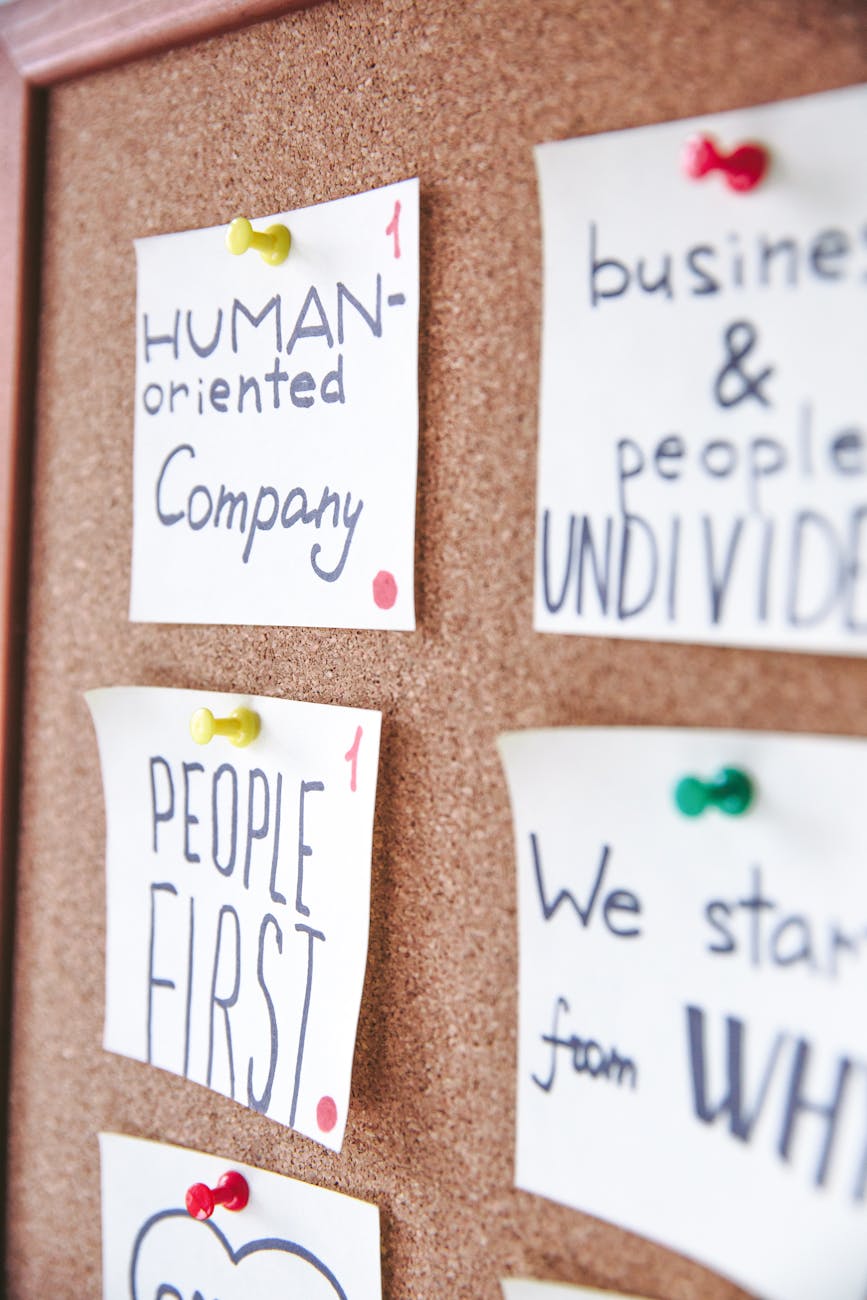
notes on board
Photo by Polina Zimmerman on Pexels.com

“In a world of infinite meetings, the scarcest resource is a goal people still remember after the coffee goes cold.”—my inner monologue every Tuesday at 7:45 a.m.

The bell hasn’t even rung when the dread kicks in. Our math PLC shuffles into a windowless room, walls plastered with mission statements no one can quite quote. The agenda glows on the projector—review data → craft SMART goal → adjourn—and someone opens last year’s spreadsheet. The cursor blinks like a taunting metronome:

Specific? “Raise Algebra II mastery five percent.”
Measurable? “Benchmarks track that.”
Achievable? “If the moon aligns with spring break.”
Relevant? “District said so.”
Time-bound? “May 15—graduation is May 16.”

Click Save. Google Drive adopts another orphan destined to be rediscovered—unfed and unloved—during next August’s in-service.


SMART ≠ Smart Enough

George T. Doran’s 1981 article introduced SMART as a managerial life-hack for middle managers drowning in vague memos. It worked because clarity beats wish-craft, so the acronym stuck. But teaching isn’t widget manufacturing, and a Professional Learning Community (PLC) is not middle management. Drop the vanilla acronym into a PLC and you often get tidy compliance—polite, forgettable, and incapable of nudging practice. (community.mis.temple.edu)

I’m not here to bury SMART; I’m here to jailbreak it. A goal that’s merely Specific and Measurable can still be pedagogically hollow. “Cover Unit 9 by Friday” is S-M-A-R-T and about as inspiring as a DMV form.

To make SMART sparkle inside a PLC, we have to graft it onto four live wires:

  • The Science of Learning & Development (SoLD)—brains toggle between threat and reward;
  • Connectivism—knowledge flows through networks, not warehouses;
  • Authentic learning anchored in your district’s Portrait of a Learner;
  • and the 4 Shifts Protocol, an instructional OSHA for deeper learning.

Flash these firmware updates onto the SMART scaffold, and the goal begins to breathe.


SoLD: Wiring the Goal to the Brain

Why does vanilla SMART sputter? Because it’s silent on how humans learn. SoLD research shows brains remain plastic when three conditions coexist: high challenge, high belonging, and obvious relevance. Stress without support drowns the prefrontal cortex in cortisol; stress with support sparks focus and growth. (soldalliance.org)

SoLD’s three non-negotiables translate into PLC design questions:

  1. Do learners feel seen?
  2. Is the work just beyond current mastery?
  3. Can every brain tag the task as useful outside class?

Compare two drafts:

VanillaIncrease correct factoring of polynomials by five percent.
SoLD-TunedBy March 1, our Algebra II PLC will co-design three community-based modeling tasks—housing prices, local wage growth, skateboard trajectories—to lift correct use of multiple representations from 52 % to 75 %, measured by a shared rubric at a public expo.

The rewrite injects authenticity (local data), public exhibition (belonging + accountability), and the sort of demanding lift brains find exhilarating instead of paralyzing.


Connectivism: Goals as Network Packets

George Siemens argued that learning is less about what you know and more about how quickly knowledge flows through your network. In PLC terms, the nodes are you, your colleagues, that teacher on Instagram who posts slick Desmos hacks, and the treasure trove of lesson plans fermenting in Google Drive. A goal that stops at student data is a half-closed circuit—knowledge stagnates; momentum dies. (jotamac.typepad.com)

A network-savvy SMART goal spells out connection rituals:

  • a shared Drive folder where every lesson artifact lives;
  • a standing five-minute “What I tried this week” round-robin at each PLC;
  • a Friday Google Classroom prompt where teachers asynchronously swap feedback clips.

Bandwidth is a pedagogy. If the SMART statement doesn’t declare how the signal moves—from teacher to teacher and from student back to teacher—the circuit stays dark.


Authentic Learning & the Portrait of a Learner

Your district likely brandishes a glossy “Portrait of a Graduate”—creative problem-solver, compassionate collaborator, civic-minded innovator. Trouble is, many goals never leave the gated community of state standards; they measure skill fragments in lab conditions and call it progress. Authentic learning demands the opposite: skills unleashed in messy, consequential contexts, judged by audiences who care. Real-world stakes super-charge motivation and memory. (Edutopia)

That shows up in the Relevant clause. Instead of “aligns with KY Standard A2.Q.E,” try:

Students will design statistical dashboards for the city’s housing task force and defend their recommendations at a public forum.

Now the graduate-profile competencies are mission requirements, not hallway décor.


The 4 Shifts Protocol: Deeper-Learning Guardrails

Scott McLeod and Julie Graber’s 4 Shifts—deeper thinking, authentic work, student agency, technology infusion—work like a four-question crash test. Ask them of every draft goal: Does the task demand real cognitive wrestling? Will the product matter outside class? Do learners steer key decisions? Does tech amplify learning rather than merely digitize worksheets? If you answer “no” to any, keep writing. (dangerouslyirrelevant.org)

Most beige goals die on question 2: they yield products destined for the recycling bin, not the community or the Web.


Crafting Goals for PLCs, Not in PLCs

Here’s how our team writes without turning the meeting into a TED-style slog:

We walk in with evidence, not impressions—photos, student reflections, screenshots. We verb-hack mushy words like improve into verbs that signal complexity: design, simulate, defend. Every first-person singular becomes we—collective efficacy is grammatically plural. Before anyone clicks Save, we schedule two mid-cycle check-ins and agree on which artifacts (videos, drafts, rubric snapshots) will anchor them. Finally, we script a diffusion ritual—maybe a 60-second TikTok recap or a slide deck for the next faculty meeting. When sharing is baked into the goal, it doesn’t depend on hero-level willpower later.


A Full-Stack Example

Here’s a possible Algebra II goal :

By April 30, our Grade 10 math PLC will co-create, peer-review, and teach two interdisciplinary projects where students build interactive dashboards using local housing and wage data. At least 80 % of students will accurately interpret variability and propose actionable recommendations, judged by a shared rubric and showcased during a public “Data Night.” The team will meet every other Wednesday to iterate, store artifacts in a shared Drive folder, and survey students’ sense of belonging before and after the unit.

Break-down:

  • SoLD — belonging survey + public showcase.
  • Connectivism — Drive folder, peer-review rhythm, community data partnership.
  • Authentic Learning — city-council-relevant dashboards.
  • 4 Shifts — deeper thinking (stats modeling), authentic work (public policy), agency (students choose variables), tech infusion (interactive dashboards).

The acronym didn’t change, but the genome inside is worlds away from “raise scores five percent by May.”


Dumpster Fires I’ve Authored (So You Don’t Have To)

I’ve written SMART goals that cratered spectacularly. Patterns emerge:

  • Input worship—“cover all twelve units” tracks what teachers do, not what kids learn.
  • Equity blindness—averages hide who’s drowning.
  • Ankle-high ambition—easy feels achievable, but starves growth.
  • Write-once, read-never—static goals in dynamic systems rot.

The fix is unglamorous: reopen the document, ask where belonging, relevance, or cognitive demand evaporated, and then rewrite.


Why This Matters More Than Benchmarks

A well-coded SMART goal has just two outcomes: teacher practice shifts and student cognition blooms. Everything else—acronyms, rubrics, meeting norms—is scaffolding. When a goal hits all four live wires, classrooms feel weird in the best sense. Students argue over data visualizations. Parents cheer on their children in Instagram stories from public showcases. Teachers trade spreadsheet formulas like favorite playlists. One morning, you realize no one’s counting ceiling tiles; everyone’s too busy debugging and learning in real time.

If that sounds utopian, remember: it’s biology plus bandwidth plus sentences you’ll actually reread. The brain loves hard problems in safe rooms. Networks love traffic. A SMART goal that guarantees both is no longer paperwork—it’s propulsion.


Your Turn

Open last year’s PLC folder, find the stalest goal, and run it through SoLD, Connectivism, authentic relevance, and the 4 Shifts. Rewrite until it hums like good sci-fi—plausible, provocative, people-centric. Then ship it. Invite your students, your admin, and your Instagram teacher circle to poke holes. Iterate. Repeat.

If this dive hit home, subscribe to The Eclectic Educator—my Friday dispatch where pedagogy meets punk rock—and forward this post to your PLC before the next calendar-driven time heist. Let’s make SMART stand for something again.

Oh, and you might want to pick up a copy of Read This Before Our Next Meeting, because most PLCs are 45-minute time vampires and this 90-minute read shows you how to turn them into fast, decision-driven sprints.


The Eclectic Educator is a free resource for everyone passionate about education and creativity. If you enjoy the content and want to support the newsletter, consider becoming a paid subscriber. Your support helps keep the insights and inspiration coming!


Book Review: Mastery by Robert Greene

a close up shot of a woman molding a clay
Photo by cottonbro studio on Pexels.com

There’s a particular moment in an educator’s career that I think most teachers would recognize if you described it to them. It’s the moment — usually somewhere in years three to five — when the survival phase is over. You know the management. The routines are automatic. You can get through a week without incident. And then you look around and realize you have no idea what it actually means to get better from here.

Nobody talks about this much. The professional development landscape is built around Year One problems: classroom management, lesson planning, and assessment basics. What it doesn’t have is a map for what deliberate improvement looks like once you’re past survival. What does it mean to develop genuine craft as a teacher, over years and decades, when the feedback loops are unclear and nobody’s really watching?

Mastery by Robert Greene is not an education book. It’s not written for teachers. But it’s one of the most useful things I’ve ever read about what long-term skill development actually looks like — and it maps onto teaching with uncomfortable precision.


What the Book Is

Greene built Mastery the same way he builds all his books: by working backward from outcomes. He studied the lives of history’s most accomplished practitioners across disciplines — Darwin, Leonardo da Vinci, Mozart, Temple Grandin, Benjamin Franklin, Mand ichael Faraday — and tried to identify the structural patterns underneath their development. Not the myths (genius, natural talent, fortunate circumstances), but the actual mechanics: how they moved from novice to expert, what they did during years of obscure practice, and what allowed them to eventually operate at a level that felt intuitive.

The framework he arrives at has three phases:

The Apprenticeship — the phase of deliberate absorption. The goal here isn’t status or recognition. It’s the accumulation of genuine skill through deep observation, methodical practice, and sustained exposure to the environment of your craft. Greene is sharp on the temptation to skip this: impatience, ego, the desire to be recognized before you’ve earned recognition. His case studies are full of historical figures who had to ruthlessly suppress those impulses and just learn.

The Creative-Active phase — where you take the fundamentals you’ve absorbed and start recombining them. This is where practitioners find their voice. The skills are internalized enough that experimentation becomes possible — you can break rules intelligently because you understand why they exist.

Mastery — the endpoint that is also a practice, where deep pattern recognition operates below the level of conscious thought. Masters in Greene’s framing aren’t people who think faster; they’re people who’ve compressed so much experience into their intuition that they can process situations ordinary practitioners can’t.

There are also significant chapters on mentorship and what Greene calls “social intelligence” — the capacity to navigate the human dynamics of any craft environment without letting those dynamics derail the deeper work. The mentor chapter is particularly good: Greene is clear that the right mentor relationship can compress years of development, and equally clear that most people either don’t seek mentors at all or approach the relationship the wrong way.


Why This Maps Onto Teaching

What strikes me, reading this as an instructional coach, is how precisely it describes the career arc that teachers rarely have articulated for them.

Year one is an apprenticeship by necessity. You’re absorbing everything — the management patterns, the pacing, the hundred small decisions a lesson requires, the way different students need different approaches. The goal genuinely is just to get through it, to build the basic competencies into something approaching automaticity.

What Greene’s framework clarifies is that this phase should eventually end — not because you’ve finished learning, but because you’ve built enough foundation to move to something more experimental. The teachers I’ve worked with who plateau, who stop developing after the first few years and stay there for the next twenty, are almost universally stuck in permanent apprenticeship mode: executing a fixed repertoire of lessons and routines without ever moving to the creative experimentation that Greene says is where real development happens.

The creative-active phase in teaching looks like deliberately testing variations. Teaching the same concept three different ways to three different classes and comparing what happened. Trying a discussion structure you’ve never used. Designing an assessment from scratch rather than pulling from the file drawer. Not just executing what works but actively asking: what would work better, and how would I know?

And the mastery Greene describes — the point where you can read a classroom situation, improvise an explanation, identify a misconception before it surfaces, know which student needs what kind of push right now — that’s genuinely observable in exceptional veteran teachers. It doesn’t look like effort. It looks like presence.


The Mentor Chapter Is Worth the Price Alone

Greene’s extended treatment of mentorship is the part of this book I return to most often. His core argument: learning from a skilled practitioner in person, with direct feedback on your actual work, is categorically different from learning from books or courses. A mentor who has internalized expertise transmits not just knowledge but a way of thinking — patterns of attention, judgment under uncertainty, the tacit knowledge that can’t be written down.

For teachers, this maps directly onto instructional coaching done well. Not the generic professional development model where everyone sits in a room watching a PowerPoint, but the specific thing: someone who knows the craft watching you work, asking questions about what you were trying to do, pointing to the moment where something shifted, and asking what you noticed. That relationship, when it exists, is wildly more developmental than anything else available.

Greene is also honest about why mentorship relationships fail: ego on both sides, impatience, and a lack of clarity about what the learner actually needs. He’s not romantic about it. The good mentors he profiles tend to push hard and give uncomfortable feedback. The apprentices who benefit most are the ones who can resist defensiveness long enough to actually hear it.


What to Push Back On

Greene’s historical examples are compelling, but they’re also selected. You don’t hear about the Darwins who spent decades in careful apprenticeship and never had a breakthrough. Selection bias is baked into any framework built from case studies of extraordinary achievers, and this one is no exception.

The book also skews toward individual development in a way that can feel politically naive about institutional constraints. Teaching exists inside systems — school systems, districts, unions, standardized testing regimes, state curriculum mandates — that don’t always reward or even permit the kind of long-term, patient craft development Greene describes. A first-year teacher in a chronically under-resourced school has real structural constraints that aren’t dissolved by having the right philosophical orientation toward apprenticeship.

And Greene’s framework is implicitly competitive in places that can feel uncomfortable in a profession built on collaboration. His “social intelligence” chapter sometimes reads like a manual for navigating a corporate shark tank, which isn’t quite the right register for most school environments.

None of this makes the book less worth reading. But it’s worth being a critical reader rather than accepting the framework wholesale.


The Bottom Line

Mastery gave me a vocabulary for something I’d observed in teaching for years but couldn’t quite articulate — the difference between teachers who develop over a career and teachers who don’t, and why the ones who do seem to have treated their practice as a craft with a development arc rather than a job with an annual performance review.

If you’re in your first few years of teaching and feeling the exhaustion of the survival phase, this book won’t fix that — the survival phase is real and requires getting through it, not reframing it. But it might give you a way to think about what comes after. What you’re building toward. What it looks like to take the long view on what it means to be excellent at this.

That’s a question most of us don’t get asked enough.

Rating: 4 out of 5 stars. Occasionally overwrought, selected toward the extraordinary, and not always aware of its own blind spots — but one of the better frameworks I’ve encountered for thinking about what deliberate skill development actually requires over time.

Get Mastery by Robert Greene


Related on this site: the PhD reading and note-taking post covers the practical side of how I try to absorb and build on what I’m reading — the system that makes books like this one actually stick.

8 Strategies to Improve Organizational Learning in Public Schools

pile of covered books
Photo by Pixabay on Pexels.com

Professional learning communities (PLCs) are pivotal in fostering meaningful and sustainable changes in the ever-evolving education landscape. Drawing from extensive research and real-world examples, here are eight strategies that PLCs can implement to improve organizational learning in public schools.

1. Empower Teachers as Leaders and Change Agents

One of the most effective ways to enhance the impact of PLCs is by empowering teachers to take on leadership roles. Teachers are not just implementers of change but also key drivers. By recognizing their agency and providing opportunities for leadership, schools can leverage their educators’ unique insights and expertise. Empowered teachers can lead initiatives that align with the broader goals of school improvement, creating a more dynamic and responsive educational environment.

2. Develop a Shared Vision and Culture

A clear, shared vision is fundamental to driving deeper learning and student success. Establishing a school-wide culture that values continuous learning and promotes collective responsibility for student outcomes is crucial. Schools prioritizing creating and sustaining a positive organizational culture are often more successful in implementing and maintaining changes. This shared vision should be reflected in the school’s daily practices, language, and interactions.

3. Promote Collaborative Inquiry and Reflection

Collaboration and reflective practice are cornerstones of effective PLCs. By fostering a culture of collaborative inquiry, teachers can engage in joint problem-solving and share best practices. Structured collaboration allows teachers to collaborate on curriculum design, student assessment, and instructional strategies, leading to more cohesive and effective teaching practices. Regularly scheduled meetings and collaborative planning sessions are essential for this process.

4. Use Data to Inform Practice

Data-driven decision-making is a powerful tool for improving instructional practices. Within PLCs, teachers should use student performance data to identify areas for improvement, develop targeted interventions, and monitor the effectiveness of these interventions. By grounding changes in evidence, teachers can tailor their strategies to meet the specific needs of their students, ensuring that their efforts are both effective and efficient.

5. Engage in Continuous Professional Development

Ongoing professional development is vital for keeping teachers abreast of the latest educational research and practices. Providing job-embedded professional development opportunities, such as workshops, coaching, and peer observations, can help teachers refine their pedagogical approaches. Professional development should be context-specific and aligned with the school’s goals and vision, ensuring it is relevant and practical for teachers.

6. Leverage Technology to Enhance Learning

Technology, when used purposefully, can significantly enhance teaching and learning. Incorporating digital tools and resources can facilitate student collaboration, communication, and critical thinking. Teachers should be supported in integrating technology to enrich the learning experience rather than merely automating traditional practices. This approach can help students develop essential 21st-century skills and engage more deeply with the curriculum.

7. Build Strong Community Partnerships

Developing partnerships with local businesses, organizations, and experts can extend learning beyond the classroom and provide students with real-world experiences. These partnerships offer additional resources and expertise, making education more relevant and meaningful for students. Engaging the community in the learning process can also create a supportive network that enhances the overall educational experience.

8. Cultivate Trust and Professionalism

A culture of trust and professionalism is essential for fostering innovation and continuous improvement. When teachers feel supported and valued, they are more likely to take risks, experiment with new approaches, and learn from their successes and failures. Building a trusting and professional environment involves creating conditions where teachers can collaborate openly, share ideas, and work together towards common goals.

Implementing these eight strategies can significantly enhance organizational learning within public schools. By empowering teachers, fostering collaboration, using data effectively, engaging in continuous professional development, leveraging technology, building community partnerships, and cultivating a culture of trust, PLCs can drive positive and meaningful changes that lead to improved student outcomes and a more dynamic learning environment.

Martinez, M. R., McGrath, D. R., & Foster, E. (2016). How deeper learning can create a new vision for teaching. The National Commission on Teaching & America’s Future. Retrieved from NCTAF.

Seashore, K. R. (2009). Leadership and change in schools: Personal reflections over the last 30 years. Journal of Educational Change, 10(2-3), 129-140. doi:10.1007/s10833-009-9111-4.


The Eclectic Educator is a free resource for everyone passionate about education and creativity. If you enjoy the content and want to support the newsletter, consider becoming a paid subscriber. Your support helps keep the insights and inspiration coming!