Juneteenth: A Celebration of Freedom

celebrating juneteenth

Introduction

It’s important to recognize and commemorate significant events in American history. Juneteenth is just such an event, celebrated on June 19th each year. Juneteenth is an important date in American history because it commemorates the end of slavery in the United States.

The History of Juneteenth

On January 1, 1863, President Abraham Lincoln issued the Emancipation Proclamation, which declared that all slaves in the Confederate states were to be set free. However, it wasn’t until two and a half years later, on June 19, 1865, that Union General Gordon Granger arrived in Galveston, Texas, to announce that the Civil War had ended and that all slaves were now free. This announcement came two months after General Robert E. Lee had surrendered at Appomattox, Virginia. The news of the Emancipation Proclamation and the end of the Civil War had not reached Texas until then.

The newly freed slaves in Texas celebrated their newfound freedom with great joy and jubilation. They held parades, sang songs, and read the Emancipation Proclamation out loud. This day became known as Juneteenth, a combination of the words “June” and “nineteenth.”

Why Juneteenth is Important

Juneteenth is an important date in American history for several reasons. First, it marks the end of slavery in the United States. Although the Emancipation Proclamation had been signed two and a half years earlier, it wasn’t until Juneteenth that the news reached all of the states. This day symbolizes the end of a dark period in American history and the beginning of a new era of freedom and equality.

Second, Juneteenth celebrates the resilience and perseverance of the African American community. Despite years of slavery and oppression, African Americans were able to maintain their culture, traditions, and sense of community. Juneteenth is a celebration of their strength and determination.

Finally, Juneteenth is a reminder that the fight for civil rights and equality is ongoing. Although slavery was abolished over 150 years ago, systemic racism and inequality still exist in America today. Juneteenth serves as a call to action to continue the work of those who fought for freedom and equality in the past and to work towards a more just and equal society for all.

Resources for Teaching about Juneteenth

10 Powerful Books for Adults, Teens, and Kids to Celebrate and Understand Juneteenth

For children:

Addy: An American Girl

In this American Girl classic, Addy Walker is a young slave living in 1864 who dreams of escaping to freedom with her family. However, their plans are foiled when their owner decides to sell Addy’s father and brother to a different plantation. Left with only her mother, Addy must escape alone and hope to reunite with her family in Philadelphia. Follow Addy’s courageous journey as she adjusts to life as a free person in the North and strives to be reunited with her loved ones.

Freedom’s Gifts: A Juneteenth Story

Young Black girl June celebrates Juneteenth, while her cousin Lillie celebrates the Fourth of July. Can June teach Lillie the importance of Juneteenth at the family picnic?

All Different Now: Juneteenth, the First Day of Freedom

This picture book tells the story of a little girl’s liberation on the first Juneteenth. The book includes notes from the author and illustrator, a timeline of notable dates, and a glossary to help children understand the significance of Juneteenth.

I Thought My Soul Would Rise and Fly: The Diary of Patsy, a Freed Girl

This Coretta Scott King Honor winner tells the story of Patsy, a 12-year-old girl living in Mars Bluff, S.C., after the Civil War. Written in diary format, the book follows Patsy as she observes the changes around her and embraces her newfound freedom to read and write. Through her own determination, Patsy creates a better life for herself and her fellow formerly enslaved people.

For teens:

Crossing Ebenezer Creek

During the Civil War, General Sherman leads Union soldiers through Georgia, setting enslaved Mariah and her younger brother Zeke free. The two join the march for protection, but as Mariah dreams of a better life for herself and her people, the harsh realities of slavery continue to weigh on her.

Stamped: Racism, Antiracism, and You

Preteens and teenagers who are too young to read Ibram X. Kendi’s Stamped from the Beginning can still learn about antiracism from his collaboration with young adult author Reynolds. The book uses critical race theory, history, and pop culture references to keep young readers engaged.

For adults:

The Deep

This novella is a fantasy story inspired by the song “The Deep” from Clipping, a Hugo Award-nominated rap group led by Daveed Diggs. It follows the descendants of African enslaved women who were thrown overboard during their journey to America, now living under the sea. Yetu, a historian, must remember her people’s traumatic past since no one else can. But she escapes to the surface, discovering the world her people left behind and the traumatic memories held there.

Between the World and Me

In this essay about race, Coates writes a letter to his son about his life as a Black man, his fears and dreams for his son, the nature of the Black body in America, and his aspirations for the Black community. Coates weaves an intimate look into Blackness in America.

Stamped from the Beginning: The Definitive History of Racist Ideas in America

In this deep dive into Black history, Ibram X. Kendi details the history of anti-Blackness in America, from the first enslaved people to today. He highlights five key historical figures in American and Black history: Cotton Mather, Thomas Jefferson, William Lloyd Garrison, W.E.B. Du Bois, and Angela Davis. Each represents the attitudes of their era and played a significant role in the fight for or against abolition, segregation, assimilation, or equal rights.

The Brightest Day: A Juneteenth Historical Romance Anthology

Romance fans will enjoy this anthology about love and hope after Juneteenth. The stories cover various topics, from the day enslaved people were freed to a Juneteenth-themed cruise, out-of-wedlock pregnancy in the early 20th century, and boxing rings during the Civil Rights Movement. Each story captures love and Black joy during difficult times.

On Juneteenth

In this book, Pulitzer Prize-winning historian Gordon-Reed discusses the history of slavery in America, leading up to the events that culminated in Juneteenth. She also weaves together American history and her own family history to pay tribute to the integral role of Black people in shaping Texas. The author previously wrote Thomas Jefferson and Sally Hemings: An American Controversy, which challenged Americans’ perception of the founding father due to his exploitative relationship with Sally Hemings, an enslaved woman on his plantation.

Friday Assorted Links

The 11 Most Beautiful Post Offices Around the World

I’m a Student. You Have No Idea How Much We’re Using ChatGPT

– I’m halfway through Cory Doctorow’s latest novel, Red Team Blues. It’s pretty great.

These glacier photos are breathtaking

– Matt Damon on brainstorming and collaboration

The Hero’s Journey, according to Joseph Campbell


The Eclectic Educator is a free resource for everyone passionate about education and creativity. If you enjoy the content and want to support the newsletter, consider becoming a paid subscriber. Your support helps keep the insights and inspiration coming!

The 1-Bit Great Wave

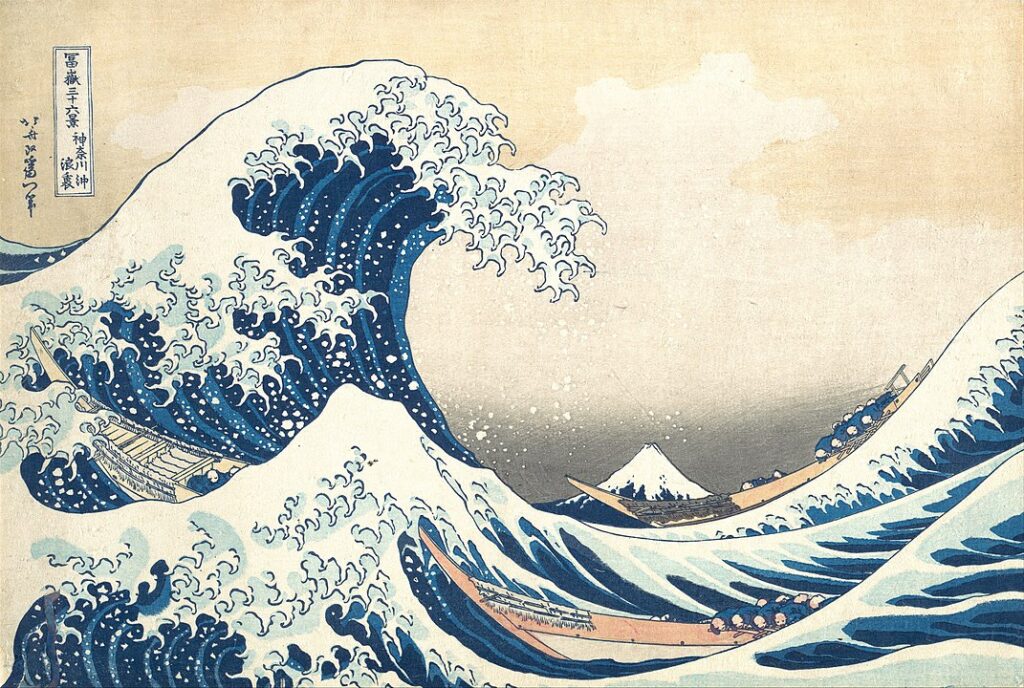
I’m sure you’re familiar with Hokusai’s “Great Wave” or have at least seen this image:

Hokusai's great wave
By Katsushika Hokusai – Metropolitan Museum of Art: entry 45434, Public Domain

I’ll go ahead and say that this print is one of the more famous art pieces in the world. It’s part of a series of 36 views of Mt. Fuji.

If you’re looking for ideas for student projects, a good starting point is having them recreate public-domain works in their own ways using whatever materials they choose.

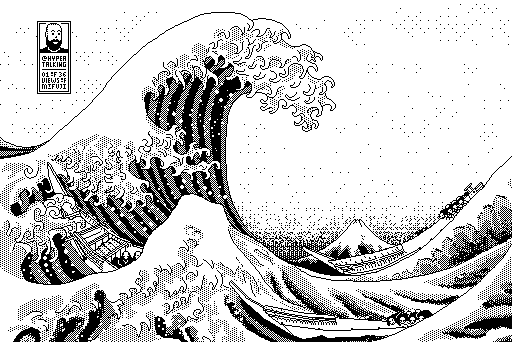
For example: let’s say they wanted to use old software to create a 1-bit version (black and white) of this image. It might look something like this:

1-bit great wave by @hypertalking

A very cool project from @hypertalking. He’s briefly recapped his process here and could inspire you or your students to get creative in unexpected ways.

Trust and Vulnerability in Schools

"We need to trust to be vulnerable, and we need to be vulnerable in order to build trust." (Brené Brown, Dare to Lead)

“We need to trust to be vulnerable, and we need to be vulnerable in order to build trust.”

Brené Brown, Dare to Lead

Trust and vulnerability are two essential elements for a productive and effective learning environment. In schools, teachers, coaches, and administrators must establish trust with their students and colleagues to achieve academic success. Trust is a crucial element in creating a positive and safe learning environment. It can be defined as the firm belief in the reliability, truth, or ability of someone or something. When teachers trust their students, they provide them with the freedom to take risks and make mistakes without fear of judgment. Vulnerability, on the other hand, is the quality or state of being exposed to the possibility of being attacked or harmed, either physically or emotionally. When teachers are vulnerable with their students, they create a connection that can lead to more profound learning experiences.

Why Teachers Must Trust Students and Be Vulnerable

Establishing trust with students is critical in creating a positive and safe learning environment. When teachers trust their students, they provide them with the freedom to take risks and make mistakes without fear of judgment. Students who feel trusted are more likely to take academic risks, which can lead to deeper learning experiences. Trust also allows students to feel comfortable sharing their thoughts and feelings, which can help teachers better understand their students’ needs and respond accordingly.

A student who trusts their teacher is optimistic that the teacher will act in a certain way even though the student does not know whether the teacher will do so. If the student knew that this would occur, no trust would be necessary. The intriguing thing about trust is that it makes us rely on other people without knowing whether this reliance is warranted. We often find ourselves in situations in which trust is needed. This is also true for students at school. In many cases, students do not know whether what the teacher teaches is worth knowing. They simply trust that the teacher will select relevant content and appropriate learning methods for their lessons. Also, when it comes to testing their intellectual competences what they have learnt in class, students trust that the teacher will provide them with helpful and encouraging feedback, that the teacher will not make fun of their errors and that the teacher will recognise the effort and progress that the students have made.

Monika Platz, Trust Between Teacher and Student in Academic Education at School

Additionally, teachers who are vulnerable with their students create a connection that can lead to more profound learning experiences. By sharing their own experiences and struggles, teachers can help students understand that it is okay to make mistakes and that learning is a process.

Your students need to see you struggle. They need to know that it’s ok not to know everything. When I’m visiting classrooms, the number one idea I try to convey to students is that it’s perfectly fine not to get “it” right on the first try. There is a benefit to the productive struggle.

This can help students develop a growth mindset, where they believe that they can improve their abilities through hard work and dedication.

The Significance of Teachers Trusting Other Teachers

Trusting other teachers is crucial in building a strong professional community. In a school setting, teachers should be able to rely on each other for support, brainstorming, and collaboration. When teachers trust each other, they are more likely to share ideas and resources, and they can provide each other with constructive feedback. This collaboration can lead to improved teaching practices, increased student engagement, and, ultimately, better academic outcomes.

When teachers trust other teachers, they are more likely to seek out feedback and support. When the #observeme movement began, it was all about teachers being open and vulnerable with each other. It wasn’t some teachers believing that they had it all together and were experts.

They genuinely wanted feedback from their peers. You can’t get better professional learning than this. Peer-to-peer feedback is a huge boost to your teaching practice.

Whether teachers are working on instruction, developing curriculum, or discussing students, they value the opportunity to collaborate. In our school, the literacy coach held periodic workshops with teachers from all departments. These volunteer workshops focused on different techniques and were always full. Teachers saw the workshops as an opportunity to work with colleagues from other departments and to learn new strategies and protocols. In an atmosphere of trust, they were willing to take the risks that new learning requires. Once teachers experienced the value of this kind of collaboration, they began to use the new strategies in their own classrooms with their students.

Jane Modoono, The Trust Factor

Vulnerability can lead to a culture of continuous improvement, where teachers are constantly looking for ways to improve their practice. This can lead to better academic outcomes for students, as teachers constantly seek to improve their teaching practices.

The Importance of Coaches and Administrators Trusting Teachers and Being Vulnerable

Coaches and administrators play a vital role in creating a culture of trust and vulnerability within a school. When coaches and administrators trust their teachers, they give them the autonomy to make decisions that benefit their students. This can lead to a sense of empowerment among teachers, which can lead to better academic outcomes for students.

Additionally, when coaches and administrators are vulnerable with their teachers, they create a space where teachers can share their thoughts and feelings without fear of repercussions. I am the first person to admit I don’t have all my ish together at times. Especially when trying something new. I’m learning right alongside the teachers and students I work with most of the time. Communicating your own faults opens so many doors with others.

This communication can lead to improved teaching practices, increased teacher satisfaction, and, ultimately, better academic outcomes. When coaches and administrators are vulnerable, they demonstrate that it is okay to make mistakes and that learning is a process. This can lead to a culture of continuous improvement, where teachers are constantly seeking to improve their teaching practices.

Conclusion

In conclusion, trust and vulnerability are essential components of a productive and effective learning environment. Teachers must establish trust with their students and be vulnerable to create a safe and positive learning environment. Trusting other teachers is critical in building a strong professional community, while coaches and administrators must trust teachers and be vulnerable to create a culture of open communication and collaboration. By prioritizing trust and vulnerability in schools, we can create an environment where everyone can learn and grow together.

As educators, it is our responsibility to create a culture of trust and vulnerability in our schools. By doing so, we can create an environment where students feel safe to take academic risks, and teachers feel empowered to improve their teaching practices. When prioritizing trust and vulnerability, we can create an environment where everyone can learn and grow together.


The Eclectic Educator is a free resource for everyone passionate about education and creativity. If you enjoy the content and want to support the newsletter, consider becoming a paid subscriber. Your support helps keep the insights and inspiration coming!

Midjourney Recreates Ancient Battles

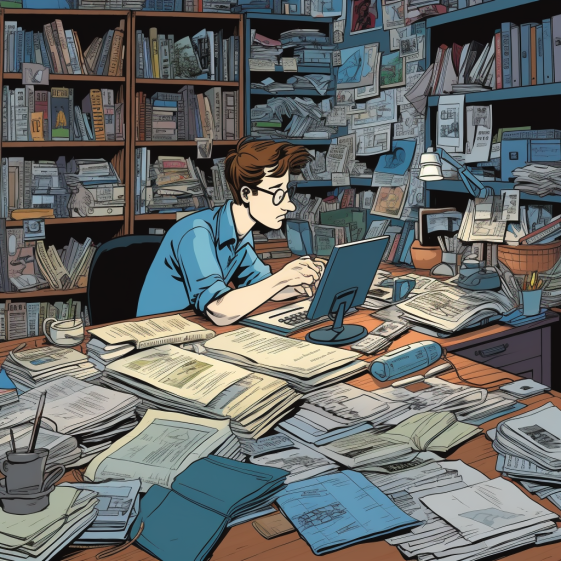
From the “This is wicked cool” department, here are some examples of Midjourney’s take on ancient battles.

I continue to be blown away by the power of AI tools. At the same time, I completely understand many of the concerns about AI replacing working writers, artists, and other creators.

There is a way forward, and I think it lies in using AI as a support tool. The possibilities for students to use AI as a support to their work are many, but we must be judicious in its usage.

The Library is a Safe Place

I had no idea that Wil Wheaton graced my home state with his presence back in March at the Southern Kentucky Book Fest. I can’t tell you how bummed I am that I missed seeing him speak.

Neverminding my failure to stay on top of cool things, Mr. Wheaton was nice enough to post a copy of his remarks on his site. I’m just a few years younger than Wil and not only empathize with his childhood experiences but can say I had my own version of them.

I also totally agree that “the library is a safe place” for everyone.

In order to survive, I disassociated for much of my childhood, but I clearly remember the books. That’s where I found comfort, companionship, inspiration and validation. It’s where the imagination that powers everything I do creatively in my life today was born. And it all started in that library, with that librarian. She was one of the first people I can remember asking me, “What do you like? What’s important to you? What do you want to know more about? How can I help you find it?”

That moment was so special and meaningful, not just then, but for years after. When I got older, I began to learn that so much of what had been presented to me as truth in school wasn’t just false, it was propaganda. I remember the first time I saw a banned books display at a bookstore in the mall when we were on location for Stand By Me. I wanted to read all of them, because I’d figured out that if They didn’t want me to, there must be something pretty great inside.

I read To Kill A Mockingbird, and began thinking about racism and injustice.

I read 1984 and Brave New World, and began thinking about autocrats, and what it meant to be truly free to choose our own destinies.

I read Johnny Got His Gun, and All Quiet on the Western Front, and saw firsthand the horrors of war.

– Wil Wheaton

You can read his full remarks right here.

Would AIs make better professionals than humans?

Doug Johnson posits:

One quality that AI may put to extremely positive use would be objectivity – a lack of personal biases or prejudices. Properly programmed, my financial advisor AI should not be advising me to invest in areas where the advisor would get the biggest fee, but where I would stand to make the biggest return at the lowest risk. Would my AI dentist or doctor only recommend those procedures and medications that have proven rate of effectiveness not the most kickback from pharmaceutical companies? Would an AI intelligence agent be more likely to uncover double-agents in the office?

Of course, the burning question in education is “Would AIs make better teachers than humans?”

We Need Easier EdTech Integrations

I won’t spend my time here griping about the overuse of technology for standardized testing and other “necessary” tests. That fight is for another day.

Today, let’s talk about how frustrating it is to use many testing services. I’ve spent most of the past two weeks getting two grade levels into two different online testing systems.

One system required an SFTP upload of a CSV file. I kept getting errors even using the company’s template and data tool. After trying a few dozen times, I gave up and sent the file to the company. The next day, the data was uploaded and corrected. I still have no clue what was wrong.

The second company uses Clever to sync students and teachers. But not to log students in for the test. No, no, they require a lockdown browser for their exam. Conveniently, they autogenerate usernames and passwords for the students.

Did I mention these elements are 11 characters or so each? And the students using them are in kindergarten?

Yep. Smiles all around.

Mind you, I have a decent amount of experience with all the tools I used to make these data uploads happen. I would venture to say that the person at most schools responsible for this process is NOT as experienced. Just a hunch.

There has to be a better way.

The Zettelkasten Method: How I Actually Use It (A Doctoral Student’s Honest Account)

I want to start with the problem, because most Zettelkasten guides skip it.

You read something genuinely useful. You highlight it, maybe jot a note in the margin, and move on. Three months later, you’re trying to connect that idea to something you’re writing, and you cannot for the life of you remember where you read it, what exactly it said, or how it fit into whatever you were thinking at the time. The idea is gone. Not because you’re not smart enough to remember it. Because that’s not what human memory is for.

Our brains were built to make connections between things, not to be filing cabinets. The filing cabinet instinct — highlight it, dump it in Evernote, never think about it again — is exactly backward. You’re outsourcing the thinking part and keeping the forgetting part.

The Zettelkasten method fixes this. I’ve now been running my system for several years, first built it seriously when my doctoral reading volume became genuinely overwhelming, and I’m heading into year four of the dissertation — near the finish line — with a system that has become part of how I work and think across every domain of my life, not just academic writing. The dissertation is almost done. The Zettelkasten is permanent.

Here’s what I’ve learned.


What the Zettelkasten Actually Is

The words are German: Zettel means “slip of paper,” and Kasten means “box.” Slip box. That’s the whole thing — Niklas Luhmann, a German sociologist writing in the mid-twentieth century, kept a box of index cards where he recorded his ideas, one per card, linked to other cards through a numbering system he developed himself.

He published 70 books and over 400 scholarly articles. He credited the slip box. Not his intelligence, not his work ethic — the system.

What made Luhmann’s approach different from just keeping notes wasn’t the index cards. It was that the cards talked to each other. Each note referenced other notes. Ideas linked to ideas. Over time, the box developed what Luhmann called a “conversation partner” — a second mind that could surprise him with connections he hadn’t consciously made.

That’s the thing most people miss when they first hear about Zettelkasten. It’s not an organizational system. It’s a thinking system. The goal isn’t to store information — it’s to generate new ideas by forcing your notes into relationships with each other.


How I Got Here

My first encounter with anything like this was reading about how Ryan Holiday writes his books. He uses a notecard system — one idea per card, physically sorted into categories, pulled out when he’s writing. It’s not quite Zettelkasten, but it’s the same instinct: single ideas, physically handled, connected by the writer’s judgment rather than a folder hierarchy.

When I started my doctoral program and the reading volume became genuinely overwhelming — dozens of articles a week, books on top of books, sources I knew I’d need to cite but couldn’t reliably locate again — I needed something more systematic.

The Zettelkasten method, as popularized by Sönke Ahrens in How to Take Smart Notes, is what I landed on. Ahrens’s book is still the best entry point if you want to understand the theory before building the practice.


The Three Types of Notes That Actually Matter

Most Zettelkasten guides give you five or six note types and immediately make the whole thing feel complicated. In practice, I work with three:

Fleeting notes are the raw capture. Something I heard, read, or thought that seems worth keeping. No polish required. I write these in my Field Notes notebook — the one that’s always in my back pocket — with a date stamp and whatever I can get down in thirty seconds. They’re temporary. Their only job is to get the idea out of my head before I lose it.

Literature notes are what I write after sitting with a source. When I finish a book or article that matters, I go through my fleeting notes and highlights and write one note per idea — not a summary of the chapter, not a quote, but what I think this means and why it matters. In my own words. This is where the thinking starts.

Permanent notes are the keepers. These are the ideas that survive the literature note stage and earn a place in the main system. Each one stands alone — a complete thought that makes sense without context. Each one links to other permanent notes where the connection is real, not just topical.

The discipline is: no permanent note without a connection. If a new note can’t be linked to anything you already have, either the note isn’t ready yet, or you’re missing a bridge note that should exist.


My Actual Setup: Cards Plus Notion

I run a hybrid system. The physical component is 4×6 ruled notecards — the sweet spot for a single idea with enough space to actually develop it. I use a date stamp to record when a card entered the system. I write with Blackwing pencils because the erasability matters when you’re still working out what a note should say.

The cards live in a card box on my desk, organized into loose topic clusters that shift as the system grows. I don’t use a strict numbering system — I’ve found that topical clusters with cross-references work better for my brain than pure alphanumeric sequences.

The digital component is Notion. When a permanent note is fully formed, it gets entered into Notion with tags, links to related notes, and a reference to the source. This is where the search capability becomes essential — finding a note about something I read eighteen months ago takes seconds.

The hybrid approach sounds redundant, but it isn’t. Writing by hand forces slower, more deliberate thought. The physical card is where I work out what I actually think. Notion is where I store it and connect it at scale.


What This Looks Like in Practice

Here’s a concrete example from my dissertation work.

I read an article about distributed cognition — the idea that human thinking isn’t just what happens inside our skulls but includes the tools and environments we think with. I write a fleeting note while reading: distributed cognition — thinking happens in the system, not just the thinker. Interesting connection to why PKM matters?

Later, I write a literature note: Hutchins (1995) argues that cognition is distributed across people, artifacts, and the environment. Navigation example: the ship’s navigation system is the unit of cognition, not any individual sailor.

That becomes a permanent note: Tools are not just extensions of thinking — they are part of thinking. A well-designed external system (like a Zettelkasten) is literally part of the cognitive process, not a substitute for it. Linked to: notes on Vygotsky’s zone of proximal development, notes on embodied cognition, notes on why writing clarifies thinking.

Months later, I’m working on a section about student-centered learning environments. I pull the distributed cognition note. It connects, in ways I didn’t plan, to three other notes I’d written about classroom design and technology integration. The Zettelkasten hands me an argument I didn’t know I was building.

That’s the thing. It surprises you.


The Next Frontier: Obsidian + Claude Code

I’m going to be honest: I’m still experimenting with this, so take it as a field report rather than a recommendation. But it’s too interesting not to share.

Andrej Karpathy — co-founder of OpenAI, former Tesla AI director, one of the clearest thinkers working in AI today — recently published a pattern he calls the LLM Wiki. The idea is deceptively simple: instead of keeping your notes in a system that you navigate manually, you keep them as structured plain-text markdown files, and you point an LLM directly at that folder to find connections, synthesize ideas, and build new understanding across everything you’ve written.

Karpathy’s framing is sharp: the shift is from retrieval to compilation. Traditional search asks “which note answers this query?” The LLM wiki asks “build and maintain a persistent, cross-referenced knowledge base that already contains the synthesized answer.” The AI doesn’t just search your notes — over time, it helps write and maintain them, surfacing connections you didn’t consciously make.

What makes this particularly interesting for Zettelkasten practice is that it doesn’t replace the method — it extends it. The atomic note principle, the linking discipline, the permanent note as a self-contained idea: all of that still applies and in fact becomes more powerful when an LLM can read the whole vault and identify non-obvious connections across it.

The workflow I’m exploring: Obsidian as the front end (free, local files, excellent graph visualization of note connections), Claude Code as the intelligence layer pointed at the vault. You give Claude Code a schema file that tells it what the wiki is for and how it’s structured, then feed it sources — articles, book notes, research papers, your own existing notes — and it builds and maintains the wiki, linking ideas across everything you’ve given it.

Karpathy himself manages wikis of over 100 articles this way. The graph view in Obsidian, showing every connection between notes visually, is something you have to see to understand — it’s a map of how your ideas actually relate to each other, not how you filed them.

I’m at the stage of migrating some of my Notion notes into an Obsidian vault and running Claude Code against it to see what connections it surfaces that I haven’t made manually. Early results are genuinely surprising in the way the best Zettelkasten surprises are — the system finding threads you didn’t know you were pulling.

If you want to explore this yourself, Karpathy’s gist is at github.com/karpathy, and there are now several good community implementations. Start small — one topic domain, a handful of sources — and see what happens.


The Biggest Mistakes People Make

Highlighting is not note-taking. A highlight is a bookmark. It says “I thought this was interesting” and nothing else. Unless you return to it and write what you think it means, it’s not knowledge — it’s a marker in a document you’ll probably never reopen.

Too many categories too early. The instinct to organize before you have enough material always produces a structure that fights the content. Let the connections emerge from the notes themselves. Restructure when the natural clusters become clear.

Skipping the rewrite. Writing a literature note in your own words — not copying the quote, not paraphrasing loosely, but actually reconstructing the idea from scratch — is where the learning happens. It’s uncomfortable because it forces you to distinguish between what you actually understood and what you just recognized.

Treating it as a productivity system. The Zettelkasten is slow. A well-formed permanent note might take twenty minutes to write. It will pay for that time a hundred times over when you need it, but if you’re measuring output by notes per hour, you’re measuring the wrong thing.

Abandoning it when life gets busy. The system only has value if it has continuity. Even one card a week keeps it alive. The temptation during high-pressure periods is to stop feeding the system — exactly when you need it most.


The Tools

Physical:

Digital:

  • Obsidian — free, local files, excellent bi-directional linking, increasingly my recommendation for anyone starting fresh. The graph view alone is worth it.
  • Notion — what I’ve used for years and still use; better for combining notes with project management
  • Claude Code — for the Karpathy LLM Wiki pattern; points directly at your local Obsidian vault

Books:


Is It Worth It?

I’m four years into a doctoral program — near the finish line — and the Zettelkasten is the primary reason I’m not drowning. The reading has been relentless, and the connections between sources are what the work lives on. Without a system that forces me to make those connections explicit and retrievable, I’d be starting from zero every time I sat down to write.

But here’s the thing I’ve come to understand about this system: it was never just a dissertation tool. The notes I’ve written about instructional coaching, about technology in education, about how people actually learn — those connect across my classroom work, my doctoral work, my writing, my thinking in every direction. The system doesn’t belong to a project. It belongs to the thinker.

The Karpathy LLM Wiki pattern is the next chapter of that idea. If the Zettelkasten is a conversation partner you build note by note, an LLM pointed at your vault is something like that partner getting a significant intelligence upgrade. I’m genuinely excited to see where it goes.

Start small. Write one permanent note today about something you read this week. Not a summary — what you think it means. Link it to one thing you already know.

That’s the whole thing. Do it again tomorrow.


The tools I use for my Zettelkasten — notecards, date stamp, Blackwing pencils, Field Notes, and more — live on my Favorite Gear page. If you want to see how the Field Notes fit into daily planning, that post goes deeper on the daily capture side of this system.


The Eclectic Educator is a free resource for everyone passionate about education and creativity. If you enjoy the content and want to support the newsletter, consider becoming a paid subscriber. Your support helps keep the insights and inspiration coming!

The Power of Commonplace Books: A Timeless Tool for Educators

As educators, we are constantly bombarded with new ideas, insightful quotes, and pieces of information that can inspire and improve our teaching practices. The challenge is finding a way to capture and organize these gems so that they can be easily accessed and applied when needed. Enter the commonplace book, a time-honored tool for doing just that.

Saving the minutiae of everyday life isn’t a new thought. People have been doing it for thousands of years and continue to do it even today (Pinterest, anyone?).

As Seneca said,

“We should hunt out the helpful pieces of teaching and the spirited and noble-minded sayings which are capable of immediate practical application–not far far-fetched or archaic expressions or extravagant metaphors and figures of speech–and learn them so well that words become works.”

What is a Commonplace Book?

A commonplace book is a personal repository where individuals collect and organize quotes, ideas, anecdotes, and other pieces of knowledge they come across in their daily lives. It’s not just a diary or journal, it’s something you can refer to over and over again. It is a space for reflection, inspiration, and creativity.

Commonplace books take many shapes and forms, both physical and digital. Whether you keep a journal, binder, scrapbook, or even a Tumblr blog (yep, it’s still around!), the commonplace book can be an essential part of your life. Heck, even this blog is a form of commonplace book.

By keeping a commonplace book, educators can harness the power of the thoughts and ideas they encounter, making it an invaluable resource for personal growth and professional development.

Enhance Memory and Recall

Educators are lifelong learners who are constantly processing new information. Writing down ideas, quotes, and insights in a commonplace book allows us to engage with the material on a deeper level, enhancing memory and recall. This practice can be particularly beneficial for educators who want to remember important concepts and strategies they can use in their classrooms.

Foster Creativity and Innovation

Commonplace books are a breeding ground for creativity and innovation. As you collect and organize ideas, you naturally begin to make connections between seemingly unrelated concepts, sparking new insights and approaches. Educators can use these connections to develop innovative teaching strategies, create engaging lesson plans, or solve problems they face in their daily work.

Encourage Reflection and Personal Growth

By curating a collection of thoughts and ideas that resonate with us, we can create a personalized roadmap for reflection and growth. Educators can use their commonplace books to explore their own philosophies, values, and beliefs about teaching and learning. This practice can lead to greater self-awareness and help educators grow both personally and professionally.

Facilitate Collaboration and Networking

A well-maintained commonplace book can serve as a conversation starter and a networking tool. Educators can share their collections with colleagues, fostering collaboration and camaraderie. A shared passion for learning and growth can create strong professional bonds, leading to more productive and enjoyable working relationships.

Cultivate a Culture of Learning

By keeping a commonplace book, educators model a commitment to learning and growth for their students. This practice can help create a culture of curiosity and intellectual exploration within the classroom, fostering a love of learning in students that can last a lifetime.

Famous Keepers of Commonplace Books

  1. Leonardo da Vinci: The renowned artist, scientist, and inventor kept a series of notebooks that can be considered his version of a commonplace book. He filled these notebooks with sketches, observations, ideas, and notes on various subjects, from anatomy and engineering to art and philosophy. These notebooks were instrumental in shaping da Vinci’s genius and groundbreaking work.
  2. Isaac Newton: The famed mathematician and physicist maintained a commonplace book where he recorded his thoughts and ideas, including early notes on calculus and the laws of motion. Newton’s commonplace book was an essential tool in his intellectual development, allowing him to process and explore complex concepts that would later become the foundation of modern physics.
  3. Thomas Jefferson: The third President of the United States and principal author of the Declaration of Independence kept a commonplace book for much of his life. Jefferson’s book contained literary passages, political thoughts, and philosophical ideas that influenced his beliefs and actions as a statesman.
  4. John Locke: The influential philosopher and “Father of Liberalism” not only kept a commonplace book himself but also wrote a detailed guide on maintaining one. He believed that commonplace books were essential for organizing and retaining knowledge, and his own book featured a wide range of subjects, including politics, religion, and science.
  5. Virginia Woolf: The renowned author and essayist used a commonplace book to record quotes, passages, and ideas from her reading. This practice allowed her to engage with the works of other writers more deeply and inspired her own writing. Woolf’s commonplace book was an essential tool for her creative process and intellectual growth.

How to Get Started with a Commonplace Book

Creating and maintaining a commonplace book is a simple yet powerful practice. Here are a few tips to help you get started:

  1. Choose a format: Decide whether you prefer a physical notebook, a digital tool, or a combination of both. Choose a method that works best for you and your lifestyle.
  2. Develop a system: Create a system for organizing your entries, such as by topic, date, or source. This will make it easier to locate and revisit specific ideas.
  3. Make it a habit: Set aside time each day or week to review your notes, add new entries, and reflect on your collected ideas.
  4. Share your insights: Don’t keep your commonplace book a secret. Share your favorite entries with colleagues, friends, or students, and encourage them to start their own.

In conclusion, a commonplace book is an invaluable tool for educators, offering numerous benefits that can enrich their professional lives. By capturing, organizing, and reflecting on the ideas and insights they encounter, educators can cultivate a more creative, innovative, and self-aware approach to their work. So why wait? Start your own commonplace book today!


The Eclectic Educator is a free resource for everyone passionate about education and creativity. If you enjoy the content and want to support the newsletter, consider becoming a paid subscriber. Your support helps keep the insights and inspiration coming!